
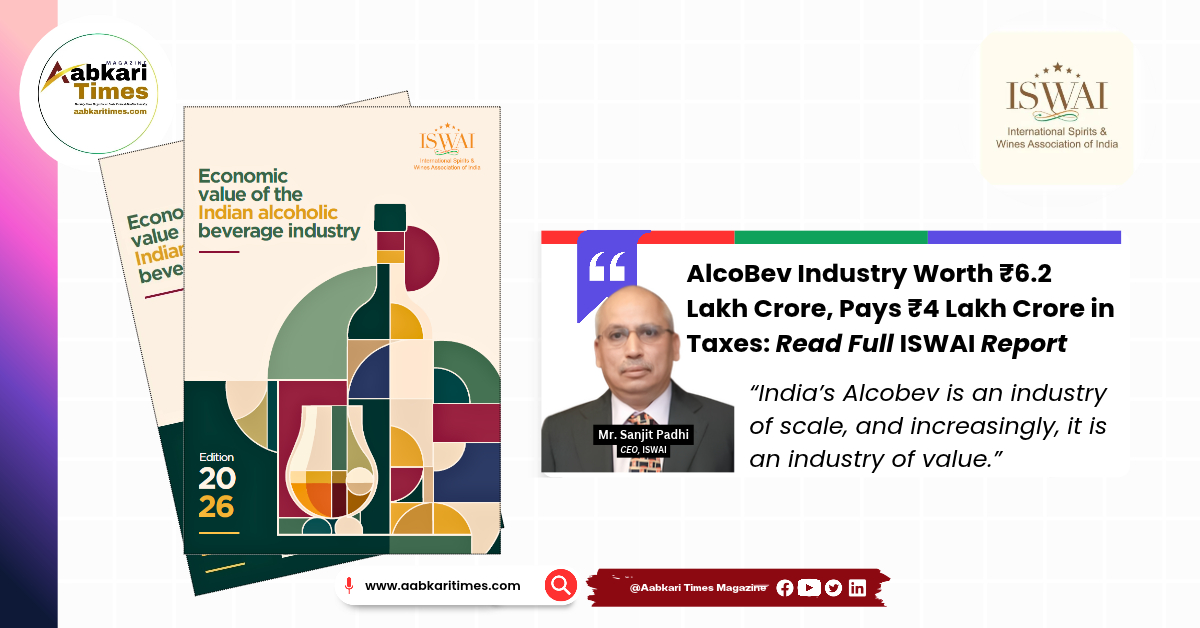
New Delhi: India’s alcoholic beverages industry had an estimated market size of ₹6.2 lakh crore in CY2025, about 1.8% of the country’s nominal GDP, according to a report released by the International Spirits and Wines Association of India (ISWAI). The study, titled The Economic Value of the Indian Alcoholic Beverage Industry 2026, also estimates the sector’s tax contribution at around ₹4 lakh crore in FY2024-25.
The tax figure covers both central and state levies. It amounts to roughly 6.6% of India’s total tax collections and 11.3% of indirect tax collections. For states, the dependence is higher. Across the 28 states and three Union Territories assessed, alcohol-related revenue makes up about 19% of their own tax revenue, and several large states draw more than 20% from the sector.
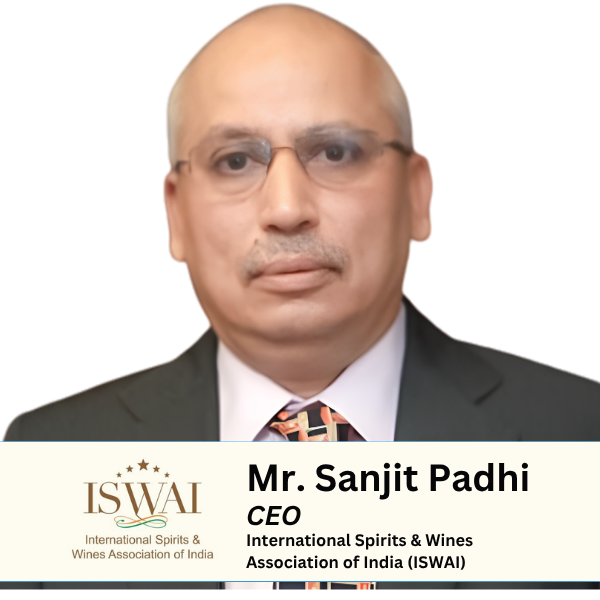 Mr. Sanjit Padhi, CEO, International Spirits and Wines Association of India (ISWAI), said, “India’s Alcobev is an industry of scale, and increasingly, it is an industry of value. The next opportunity is to drive premiumisation, strengthen value chains and build globally competitive Indian businesses.”
 India’s Alcobev Market Sees Growing Interest in Low-Alcohol and Fruit-Flavoured Drinks
 Amrut Kranthi Indian Single Malt Whisky Makes Its Festive Debut This Diwali
Alcohol-related revenues account for approximately 19% of the states’ own tax revenues across the 28 states and three Union Territories assessed in the report, with several large states deriving more than 20% of their own tax revenues from the sector. These revenues contributed to the fiscal capacity of governments to support expenditure across areas including infrastructure, healthcare, education and social welfare.
The report links the industry to a wide employment base. It estimates that between 24.2 lakh and 25.5 lakh farms supply agricultural inputs such as grains, sugarcane, molasses, barley and grapes, supporting the livelihoods of 121.4 lakh to 128.1 lakh farmers. Alcohol-licensed food and beverage outlets employ an estimated 9.2 lakh to 11 lakh people, while organised off-premise retail supports another 4.8 lakh jobs. Taken together, agriculture, F&B services and retail account for about 144 lakh jobs. The country has around 1.32 lakh licensed on-premise and off-premise outlets.
Mr. Arvind Mehta, Former Secretary, Finance Commission, said, “The numbers tell a compelling story- ₹6.2 lakh crore in economic value, ₹4 lakh crore in taxes, and millions of livelihoods supported. The alcoholic beverages industry is an important contributor to India’s economic story.”
Premiumisation has been identified as the main growth driver. The premium segment grew at a CAGR of 10.2% between 2022 and 2025, against 1.1% for the cheap category and 1.4% for regular products.
The report also tracks the sector’s effect on allied industries. AlcoBev accounts for about 70% of India’s container glass demand, in a domestic market valued at around ₹10,000 crore. It generates roughly ₹5,800 crore of annual activity in transport and logistics, and between 14% and 19% of F&B industry revenue is linked to alcohol sales.
On regulation, the report notes that the industry operates under widely varying state rules on taxation, licensing, pricing, distribution and compliance. It acknowledges reforms in several states around transparency and digitisation, and suggests that greater regulatory consistency, rationalised taxes and pricing, digital compliance and category-neutral rules could attract further investment.
The 2026 edition follows ISWAI’s 2023 report and draws on inputs from domestic and international companies, associations, independent experts and research sources.
About the Author