
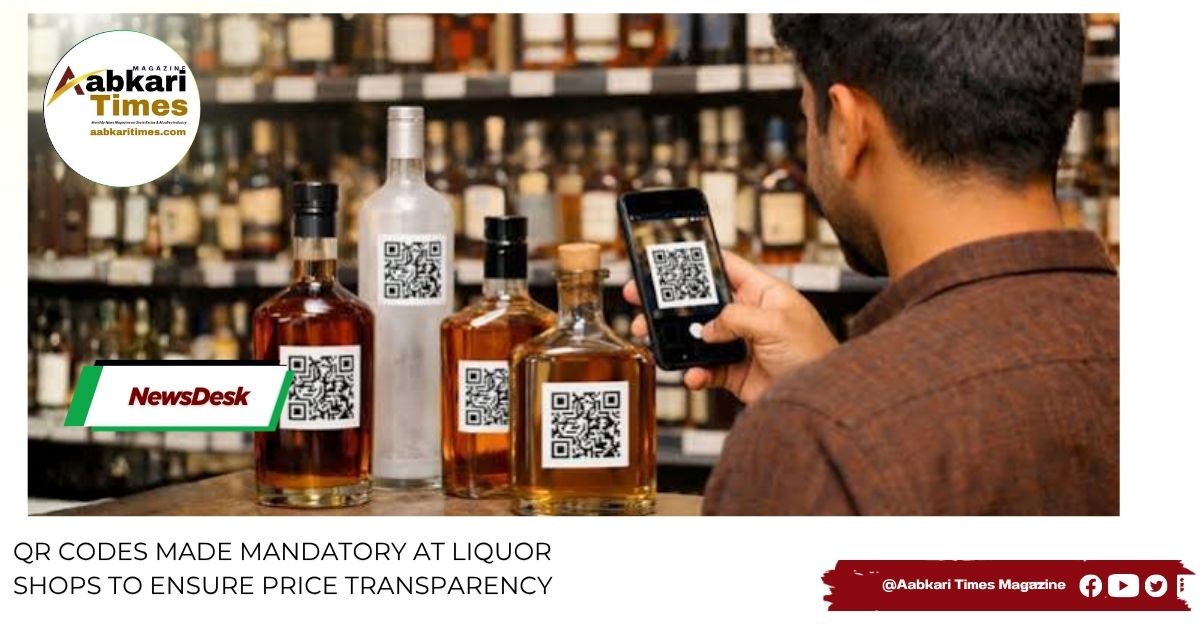
In a major move to curb irregularities in liquor sales, the Excise Department has made it mandatory for all liquor shops to display QR codes. The initiative is aimed at preventing overcharging, underpricing, and other violations of pricing regulations across the state.
Under the new system, customers will be able to scan the QR code using their smartphones and instantly access the official price list of liquor products for their district. This will allow consumers to verify whether a retailer is charging the correct price.
Action Against Overcharging and Undercutting
The Excise Department had been receiving frequent complaints that some liquor outlets were either charging prices above the Maximum Retail Price (MRP) or selling products below the prescribed minimum selling price in violation of regulations. Authorities viewed these practices as a serious breach of excise rules and decided to introduce stricter monitoring measures.
 Delhi Dry Days on October 9-10 Liquor Shops to Remain Closed Amid Public Order Concerns
 Andhra Pradesh Extends Deadline for Applications for 807 Liquor Shops to October 6
According to the Excise Commissioner, every liquor shop will now be required to display a QR code generated through the department’s e-Excise portal. Once scanned, the code will direct consumers to the official rate list applicable in that particular district.
Consumers Can Verify Prices Instantly
The new system will enable customers to check prices on the spot and ensure that retailers are following government-approved pricing norms. If any shop is found selling liquor below the minimum prescribed price or above the MRP, strict action will be taken.
Officials have warned that violators may face heavy penalties, and in serious cases, the liquor shop’s licence may also be suspended or cancelled.
Detailed Guidelines Issued
The Excise Department has issued detailed instructions regarding the implementation of the QR code system. The QR codes will be printed on durable A3-sized sticker sheets to ensure visibility and prevent damage.
Each liquor shop will receive five QR code stickers. Three of these must be displayed prominently in areas visible to customers, while the remaining two will be kept as reserve copies for replacement if needed.
Excise officials will periodically scan the QR codes to verify that they are functioning properly and displaying accurate information. Once the installation process is completed across all liquor outlets, a compliance report will be submitted to the Excise Commissioner’s office.
Strengthening Transparency and Consumer Protection
The initiative is expected to improve transparency in liquor retailing, protect consumer interests, and strengthen regulatory compliance. By giving customers direct access to official pricing information, the Excise Department hopes to eliminate pricing discrepancies and ensure a fair and accountable retail environment..
Government Likely to Surpass Excise Revenue Target After Successful Auction of Liquor Shops
The Excise Department has successfully completed the auction process for all 3,553 liquor shops across the state, significantly boosting the government’s revenue prospects for the financial year 2026–27.
With the successful completion of the auction process, the government has also abandoned its earlier contingency plan of forming a corporation to directly operate liquor shops in case a significant number of outlets remained unsold.
Revenue Expected to Exceed Target
For FY 2026–27, the government had set an excise revenue target of ₹20,279 crore. According to the latest estimates, revenue from liquor shop auctions is expected to contribute approximately ₹18,676.80 crore, while an additional ₹1,775 crore is projected from other excise-related sources.
As a result, total excise revenue is expected to reach around ₹20,481.80 crore, exceeding the annual target by nearly ₹200 crore. The projected figure also represents a 12.33% increase compared to the previous financial year.
Challenging Auction Process
The road to achieving this result was not without difficulties. As of 31 March, nearly 670 liquor shops had failed to attract bidders, putting approximately ₹1,800 crore of potential revenue at risk.
To address the situation, the Excise Department revised reserve prices and, with the intervention of a Cabinet Sub-Committee, conducted the auction process in 24 phases. During the initial 19 days, when several auctions remained incomplete, the state was estimated to be losing ₹12–13 crore per day in potential revenue.
However, stronger bidding in the later phases helped offset these losses and ensured that all remaining shops were eventually allotted.
No Need for Government-Run Retail Operations
With all liquor outlets now successfully auctioned, the government will no longer need to enter the retail liquor business directly. Officials believe the outcome demonstrates strong market confidence and will help ensure stable excise revenue collections throughout the year
Excise Commissioner Conducts Surprise Inspection in Samba
The Excise Commissioner conducted a surprise inspection on 27 April at various liquor manufacturing units and bottling plants located in Samba district. The primary objective of the inspection was to ensure compliance with production standards, quality control measures, and excise regulations.
During the visit, the Commissioner carried out a detailed review of stock registers, security hologram systems, and sanitation and housekeeping arrangements at the facilities. The inspection focused on verifying that manufacturing and bottling operations were being conducted in accordance with prescribed norms and regulatory requirements.
The Commissioner issued clear instructions that any violation of excise rules or involvement in illegal activities would not be tolerated. Officials were directed to maintain continuous monitoring and regular inspections to prevent revenue leakage and ensure that consumers receive products meeting approved quality standards.
The surprise inspection created considerable attention among liquor manufacturers and unit operators, highlighting the department’s commitment to strict regulatory enforcement. The Commissioner emphasized that similar inspections would continue in the future as part of the department’s efforts to strengthen compliance, safeguard government revenue, and maintain product quality across the industry.
About the Author