
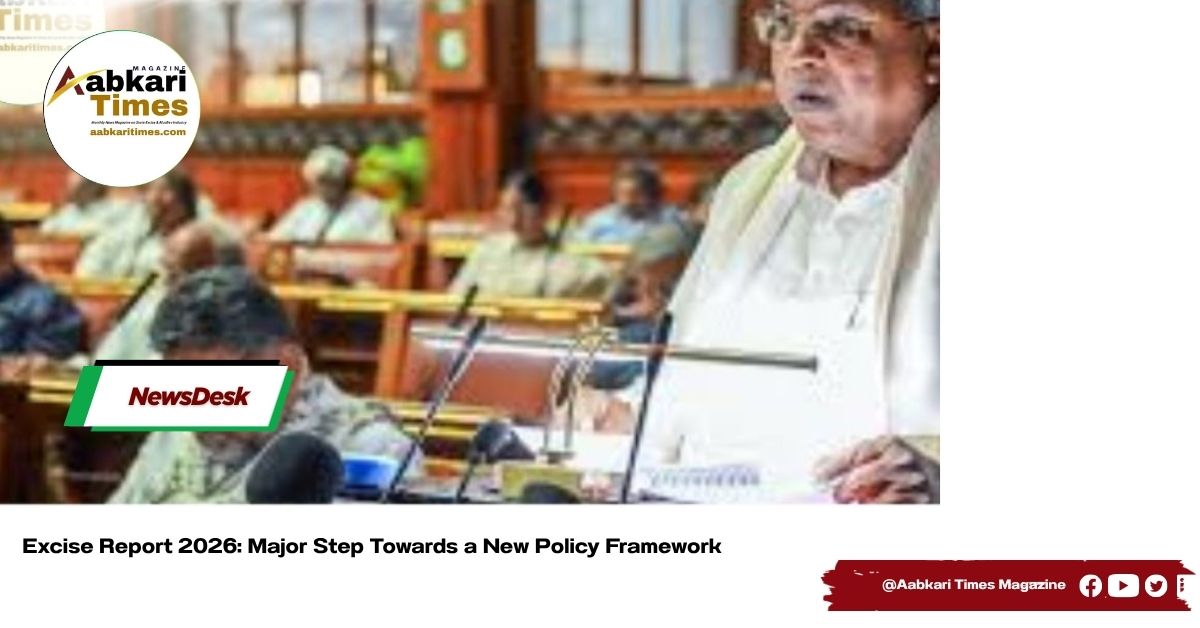
The Resource Mobilisation Committee, constituted by the Karnataka Government, has released its draft report proposing wide-ranging reforms in the state’s excise administration and liquor policy.
Titled “Karnataka State Excise Reforms 2026,” the report outlines significant recommendations covering liquor policy, taxation, social impact management, and revenue structure. The proposed reforms are aimed at modernizing the excise framework while ensuring a more balanced and sustainable regulatory environment.
According to the report, the primary objective is to reduce the social harms associated with alcohol consumption while making the state’s taxation and regulatory system more transparent, scientific, and accountable. The recommendations seek to improve governance, enhance regulatory efficiency, and create a more rational excise structure that balances public welfare concerns with revenue generation.
 Kerala Government Plans Strict Action Against Bars Serving Alcohol to People Below 23
 Odisha Bans New Liquor Shops for Three Years, CM Mohan Charan Majhi Announces Zero-Tolerance Policy on Drugs
The draft report is expected to serve as the foundation for future policy decisions and could lead to substantial changes in Karnataka’s alcohol regulation and excise administration in the coming years.
Report Questions Existing Excise Structure
The draft report argues that the current excise framework is based on a system that is nearly six decades old and is no longer aligned with present-day social and economic realities.
In the report’s foreword, Committee Chairman Dr. K.P. Krishnan states that the existing excise structure does not adequately tax alcoholic beverages according to their actual social costs. According to the committee, the present system imposes relatively lower taxes on cheaper, high-alcohol-content products, while premium alcoholic beverages often face a higher tax burden.
The report suggests that this imbalance may inadvertently encourage the consumption of lower-priced, stronger alcoholic products, thereby increasing social harm. As a result, the fundamental objective of the taxation system—to address the social costs associated with alcohol consumption—is weakened.
The committee has therefore recommended a reassessment of the taxation framework to ensure that excise duties are more closely linked to alcohol content and social impact, creating a more rational and effective regulatory system.
Alcohol Causes Social Costs of ₹51,000 Crore Annually: Committee Report
According to the report, the social cost arising from alcohol consumption in Karnataka is estimated at nearly 2% of the state’s Gross State Domestic Product (GSDP), amounting to approximately ₹51,000 crore per year.
The committee has recommended that alcohol taxation should be linked directly to the actual alcohol content in beverages rather than the product category alone. To achieve this, it has proposed the introduction of a “Litre of Alcohol in Beverage (LAIB)” model.
Under the proposed LAIB system, excise duties would be calculated based on the quantity of pure alcohol contained in a beverage. The committee believes this approach would create a more scientific and equitable taxation framework, discourage the consumption of high-alcohol products, and better account for the social costs associated with alcohol use.
The recommendation forms part of the broader excise reforms suggested in the draft report, which aims to make Karnataka’s alcohol taxation system more transparent, evidence-based, and aligned with public health objectives while maintaining revenue generation for the state.
Concerns Raised Over Road Accidents and Domestic Violence
The report also highlights the social harms associated with alcohol consumption, identifying road accidents, domestic violence, health-related issues, and the adverse impact on the incomes of poor households as major areas of concern.
However, the committee has clarified that its objective is not to impose complete prohibition on alcohol. The report notes that total prohibition could potentially lead to an increase in illicit liquor production, bootlegging, and smuggling activities, creating additional regulatory and public safety challenges.
Instead, the committee has recommended a more balanced approach focused on technology-driven monitoring and regulation. Key suggestions include the adoption of digital tracking systems, enhanced supply-chain monitoring, and transparent distribution mechanisms to improve compliance, reduce illegal trade, and ensure effective oversight of the alcohol sector.
According to the report, a modern, technology-based regulatory framework would be more effective in minimizing alcohol-related social harms while maintaining control over the legal alcohol market and protecting government revenue.
Committee Consulted Multiple Departments and Institutions
During the preparation of the report, the committee held extensive consultations with several government departments, industry bodies, and expert organizations. These discussions involved representatives from the Finance Department, Excise Department, Health Department, and Police Department, along with research institutions such as NIMHANS and industry groups including the Brewers Association of India. Several liquor manufacturing companies also participated in the consultation process.
Committee Chairman Dr. K. P. Krishnan said that the report marks an important step towards creating a more responsible, transparent, and socially accountable excise administration system in the state. He expressed confidence that, after incorporating feedback from the government and the public, the recommendations would provide a strong foundation for Karnataka’s new liquor policy.
According to Dr. Krishnan, the proposed reforms aim to balance revenue generation with social responsibility, while ensuring that the excise framework remains transparent, efficient, and responsive to the state’s evolving economic and public policy needs.
Committee Constituted Under the Chairmanship of Dr. K. P. Krishnan
This important committee was chaired by Dr. K. P. Krishnan. The panel comprised a distinguished group of experts and former senior officials with extensive experience in governance, finance, and public policy.
The committee included former Securities and Exchange Board of India Chairman Najib Shah, retired IAS officer Dr. H. Shashidhar, and Dr. Krishna Raj of Institute for Social and Economic Change.
Also serving on the committee was Trilokesh Kumar Singh, representing the Finance Department. He additionally performed the responsibilities of Member Secretary of the committee and played a key role in coordinating its work and deliberations.
The committee brought together expertise from administration, economics, public finance, and regulatory affairs to formulate recommendations aimed at modernizing Karnataka’s excise policy and regulatory framework.
About the Author