
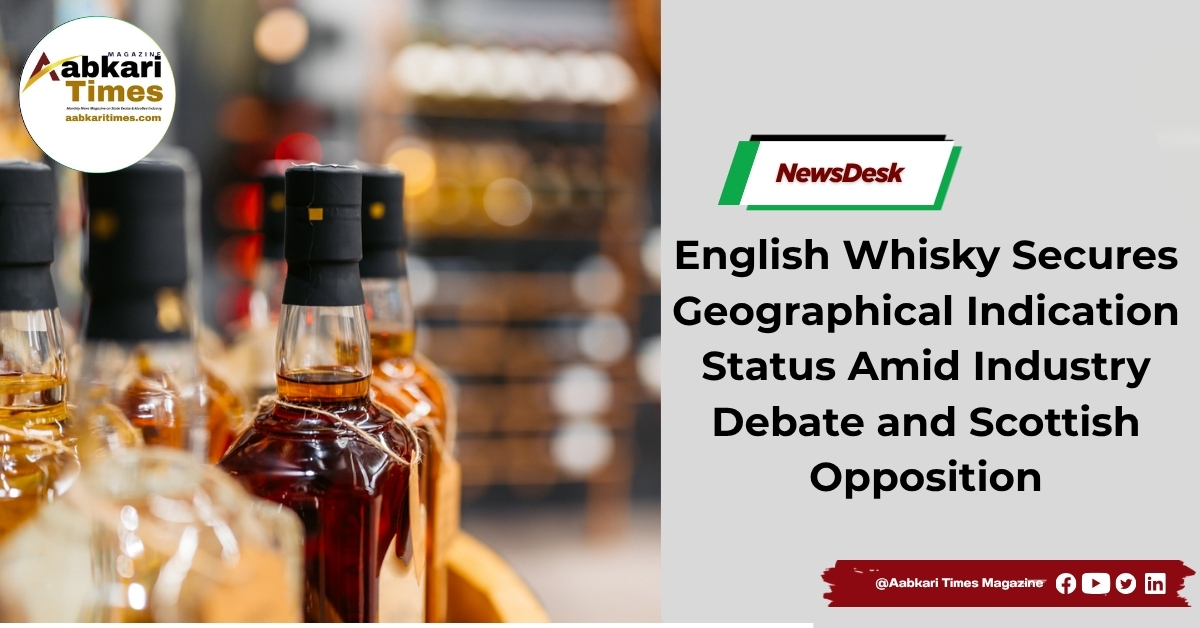
England’s new whisky GI aims to protect the category’s identity and strengthen global recognition, but disagreements over single malt production standards have triggered an industry dispute.
English whisky has entered a significant new phase after securing Geographical Indication (GI) status in September 2026, establishing a legally protected identity for the country’s growing whisky industry. The approval by the UK Department for Environment, Food and Rural Affairs (DEFRA) marks an important milestone for English distillers, offering greater recognition of the category’s provenance and production standards. However, the decision has received a mixed response, with concerns over the definition of English single malt prompting opposition from sections of the wider UK whisky industry.
The application was submitted in February 2022 by the English Whisky Guild (EWG), a trade body representing producers seeking a common framework for the category. The approval comes amid rapid growth in English whisky production. While the country had just over a dozen producers a decade ago, the number of active and emerging distilleries is now estimated to have exceeded 70. The sector includes established names such as Cotswolds Distillery, The Lakes Distillery, Spirit of Yorkshire and The English Distillery, alongside smaller craft producers.
 Amrut Kranthi Indian Single Malt Whisky Makes Its Festive Debut This Diwali
 Adie Broswon Expands MOOOZ Sparkle Jamun Vodka Distribution Across North India
Developing a common specification required balancing different production philosophies and distillation methods. One key point of debate concerned the requirement for English single malt whisky to undergo at least two distillations using copper pot stills. Following objections from craft distillers, the criteria were broadened to permit batch distillation using hybrid pot-column stills. Nevertheless, some producers continue to question how the wording should be interpreted, particularly regarding equipment configurations and the definition of separate distillation stages.
The most significant opposition has come from the Scotch Whisky Association (SWA), which argues that the English single malt definition could create confusion among consumers. The concern centres on the requirement for distillation at a single distillery, rather than requiring every stage of production to take place at the same site. Wendy Chamberlain, chair of the Scotch Whisky All-Party Parliamentary Group, also raised concerns about this distinction during a parliamentary debate in September 2026. Following the approval, the SWA lodged an appeal, supported by concerns expressed jointly with the Irish Whiskey Association and Welsh Whisky Association over the process and future application of the specification.
Despite the dispute, supporters believe the GI will strengthen English whisky’s credibility in domestic and international markets. Mark Riley, managing director of Witchmark Distillery, has highlighted the value of a protected definition for emerging producers, giving consumers, retailers and export partners greater clarity about the category. The specification also provides scope for differentiation through maturation choices, while requirements concerning locally sourced water and UK-grown grain reinforce provenance.
David Thompson of Spirit of Yorkshire has emphasised the importance of using UK-grown cereals, noting that consumers increasingly want transparency about the origin and production of the products they buy.
Although disagreements over production standards remain unresolved, the English whisky GI provides a formal foundation for the category’s future development. Its long-term impact will depend on how effectively it balances consumer clarity, production diversity and international recognition as English distillers compete in the global whisky market.
About the Author