
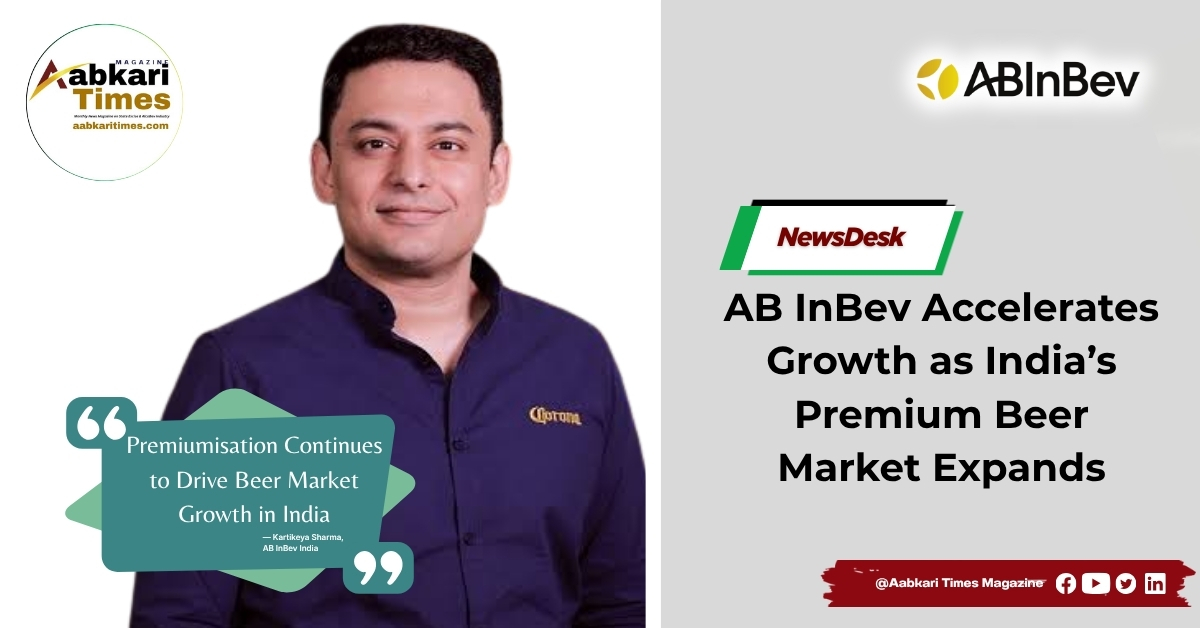
AB InBev Gains Ground in India as Premium Beer Segment Expands
Double-digit growth, rising demand for premium brands and a shift towards canned and lower-alcohol beer are strengthening the brewer’s position in India
 Anheuser-Busch InBev (AB InBev), the world’s largest brewing company, outperformed India’s beer industry in the first half of 2026, benefiting from growing consumer demand for premium products, increasing adoption of canned beer and favourable excise policy changes in key states.
According to comments by a company executive, Kartikeya Sharma,President, South Asia, AB InBev reported by The Times of India, AB InBev achieved strong double-digit growth between January and June, compared with approximately 12% growth for the Indian beer industry. The company accounted for around 20% of the market during the period, with India’s total beer market estimated at nearly 20 million hectolitres. Supply-chain challenges and aluminium can shortages associated with the conflict in West Asia posed operational hurdles, but demand for premium offerings continued to support business performance.
 UP Excise Links SBI E-Pay to Portal: Liquor Retailers Can Now Pay Wholesalers Online
 Karnataka AIB Policy Beer Sales Surge 49.69%, but IML Drives 82% of Incremental Revenue
Premium Brands Drive Business Growth
India’s premium beer segment expanded by approximately 20% in the first half of 2026, reflecting consumers’ increasing preference for higher-value products. Regulatory developments in Maharashtra and Karnataka also contributed to the segment’s momentum.
AB InBev’s portfolio includes Budweiser, Corona and Hoegaarden, which have played an important role in its performance. Premium products account for approximately 65% of the company’s sales volume in India, underlining the importance of premiumisation to its growth strategy.
The company’s focus on premium brands comes as consumers increasingly explore different beer styles and price points, creating opportunities for established international labels as well as new product offerings.
Canned Beer Gains Importance
Packaging is another important factor shaping competition in the Indian beer market. Cans offer portability and convenience, making them increasingly relevant for consumers and distribution channels.
Sharma indicated that cans represent around 28% of the overall beer market, while AB InBev holds more than 40% of the canned beer segment. The company is continuing to strengthen its position in this category as demand for alternative packaging formats increases.
However, shortages of aluminium cans have presented supply challenges, highlighting the importance of reliable packaging availability as manufacturers seek to expand sales.
State Excise Reforms Influence Beer Consumption
Changes in state-level taxation and excise frameworks are also influencing beer consumption patterns. According to Sharma, markets where the tax differential between beer and spirits has become more balanced have experienced stronger beer demand.
Maharashtra reportedly recorded growth of around 40% in its beer market, illustrating the potential impact of regulatory conditions on consumption and category expansion.
Karnataka has also become an important market for lower-alcohol beer following changes to its excise framework. Sharma said sales of beer containing less than 5% alcohol by volume (ABV) doubled within three months, reaching approximately 20% of the state’s beer sales.

The state’s more detailed alcohol-content labelling requirements are also creating opportunities for brewers to develop products targeted at different consumer preferences.
Low- and No-Alcohol Beer on the Radar
AB InBev is exploring opportunities in low-alcohol and non-alcoholic beer, including products with alcohol concentrations of 2%, 2.5% and 0% ABV. Such offerings could help the company address a broader range of consumption occasions and consumer preferences.
Greater regulatory flexibility may encourage brewers to experiment with new formulations, broaden their portfolios and introduce products across different price segments. The development of lower-alcohol alternatives could also provide additional avenues for innovation in markets where excise rules permit such products.
The company is further evaluating new capabilities and considering imported products as a way to test consumer interest before committing to wider commercial expansion.
Innovation to Shape Future Growth
AB InBev’s India strategy is increasingly centred on premium brands, packaging development and product diversification. While supply constraints remain a challenge, the company is looking to capitalise on rising demand for premium beer and changing consumption patterns across key markets.
The performance of Maharashtra and Karnataka also highlights how state excise policies can influence category growth and create opportunities for new product formats.
As India’s beer market evolves, the brewer’s ability to maintain premium brand momentum, secure packaging supplies and respond to regulatory changes will be important to sustaining its growth trajectory.
About the Author