

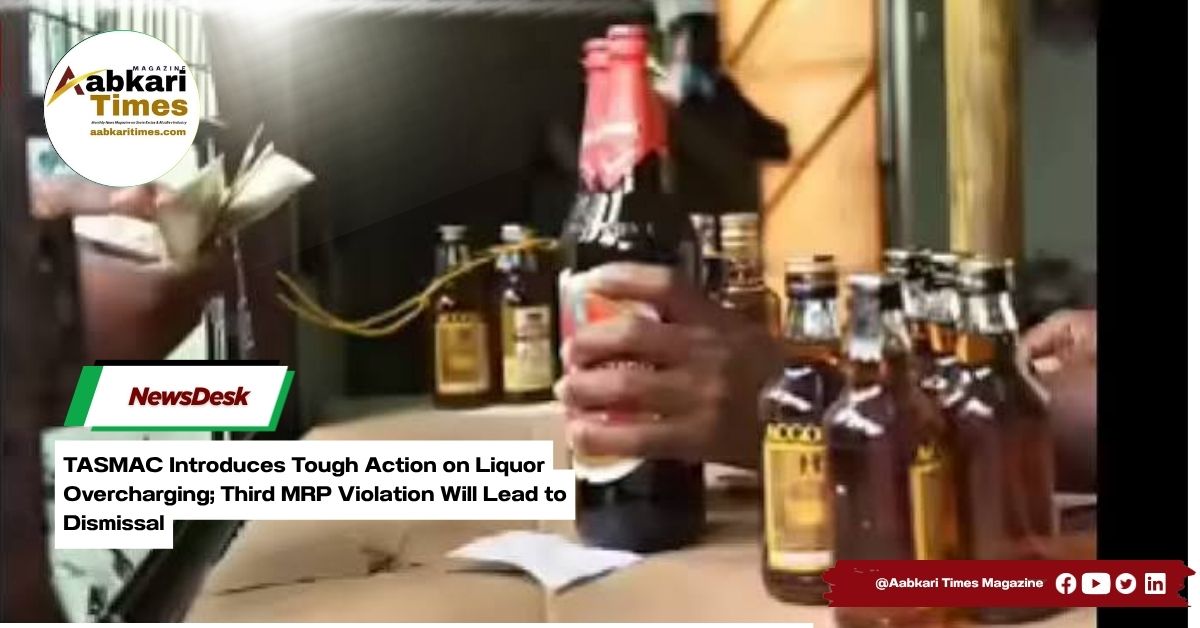
Tamil Nadu liquor retailer staff face stricter penalties as TASMAC introduces tougher disciplinary norms against MRP violations
Chennai: In a major move to curb liquor overcharging at retail outlets, the Tamil Nadu State Marketing Corporation (TASMAC) has introduced stricter disciplinary action against employees found selling liquor above the Maximum Retail Price (MRP). Under the revised policy, any employee caught violating MRP rules for a third time will be dismissed from service.

The new disciplinary guidelines were issued through a circular on Friday following a Madras High Court order dated June 12. The revised rules replace TASMAC’s 2019 circular, which primarily imposed monetary penalties on employees found charging customers more than the printed MRP.
First MRP Violation: One-Month Suspension
According to the revised norms, a supervisor, salesman or assistant salesman found overcharging customers for the first time will face:
→ ABD Launches 'The Indian Edit' Premium Whisky in UP at ₹1,040; Invests ₹600 Crore to Expand Manufacturing in State→ Vanaha Gin Launches Buransh Bagh, India’s First Buransh Gin Inspired by the Himalayan Forests
- Suspension for one month without pay
- A monetary penalty
- Mandatory written undertaking not to repeat the offence
- Transfer to another low-sales TASMAC retail outlet within the same district after approval from headquarters
Second Offence: Three-Month Suspension and Depot Transfer
Employees caught violating MRP regulations for a second time will face even stricter action, including:
- Suspension for three months without pay
- Financial penalty
- Transfer to a TASMAC liquor depot within the same district
- Mandatory service at the depot for at least three months after reinstatement
Third Violation to Lead to Dismissal
The revised disciplinary policy makes it clear that any employee found selling liquor above the MRP for a third time will be removed from service, reflecting TASMAC’s zero-tolerance approach towards overcharging consumers.
The corporation believes the tougher penalties will improve transparency, ensure compliance with pricing regulations, and strengthen consumer confidence at government-run liquor retail outlets across Tamil Nadu
About the Author