

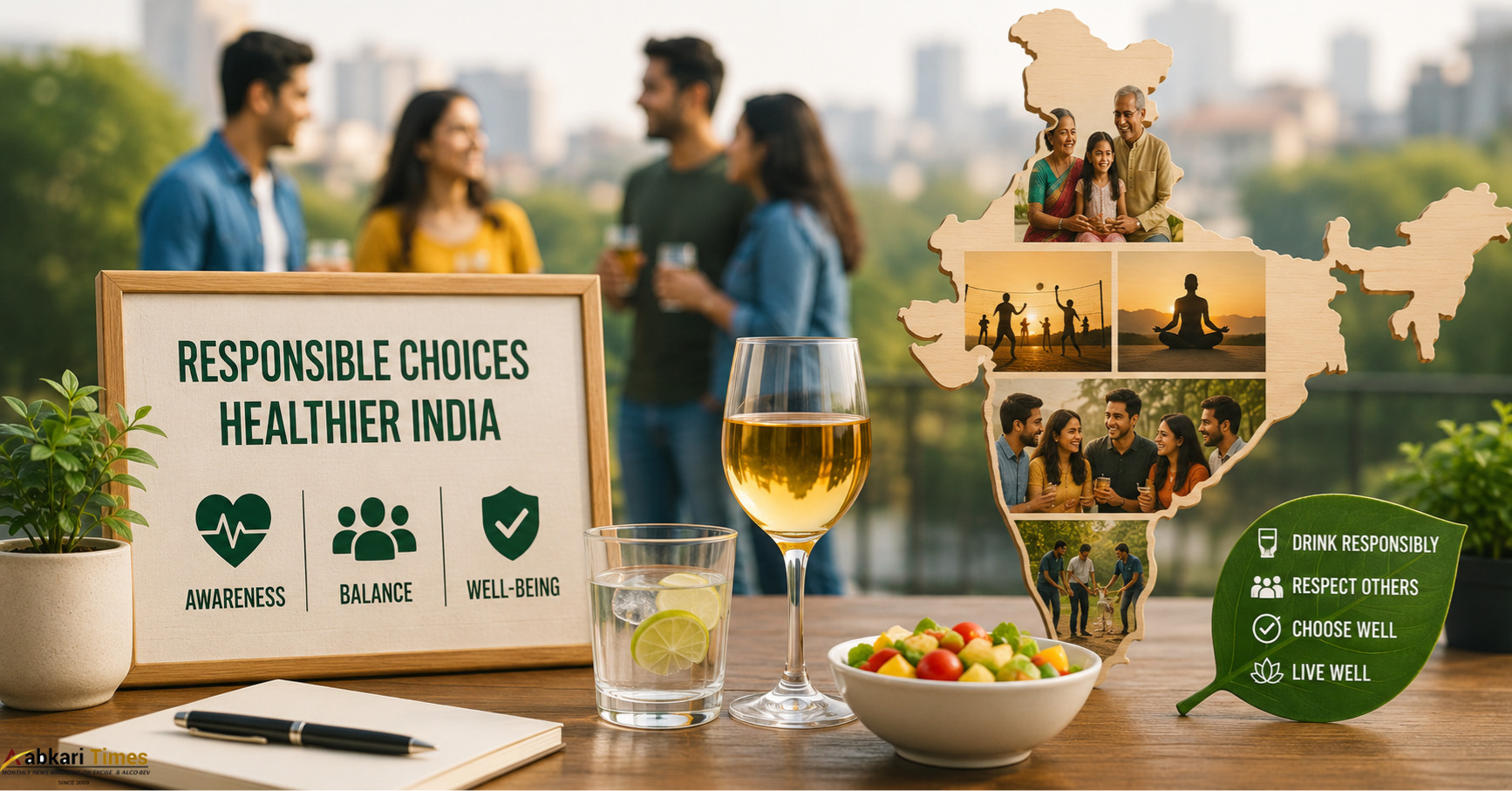
The global conversation around alcohol is becoming increasingly complex. Public health authorities in several countries now say that no amount of alcohol can be considered completely safe, citing growing scientific evidence linking alcohol consumption to cancer, heart disease, liver disorders and neurological problems.
While governments are encouraging people to drink less—or avoid alcohol altogether—the debate is far from settled. In India, where alcohol carries cultural, religious, social and economic significance, finding the right balance between public health and personal choice remains a challenging task.
Scientific Evidence Continues to Strengthen
Over the past few years, medical research has increasingly shown that even low levels of alcohol consumption may increase the risk of certain cancers, cardiovascular diseases and other chronic illnesses.
→ Bikram Basu appointed Vice Chairman of ABD Maestro→ India-UK FTA to Intensify Competition in Alcobev Market, Says IndoBevs Founder Sameer Mahandru
Unlike earlier studies that suggested moderate drinking might offer some health benefits, many recent public health experts now believe the safest level of alcohol consumption is none at all.
Health organisations around the world are therefore encouraging greater awareness, stronger warning labels and responsible drinking habits.
India’s Diverse Relationship with Alcohol
India presents one of the world’s most diverse alcohol landscapes.
Different states follow different excise policies. Some states such as Gujarat and Bihar enforce complete prohibition, while others regulate alcohol through licensing systems and government-controlled retail networks.
Cultural attitudes also vary significantly:
- Alcohol plays an important role in several tribal communities and traditional festivals.
- Certain religious communities prohibit alcohol entirely.
- Urban consumers increasingly view premium alcoholic beverages as part of social gatherings and celebrations.
- Younger consumers are showing changing drinking patterns, with many choosing low-alcohol beverages or abstaining completely.
This diversity makes it difficult to adopt a single nationwide approach.
Alcohol’s Economic Contribution Cannot Be Ignored
Alcohol is not only a public health issue but also an important contributor to India’s economy.
State governments earn substantial revenue through excise duties on alcoholic beverages. These funds support infrastructure development, healthcare, education and welfare programmes.
The Indian alcoholic beverage industry also generates employment across farming, distillation, brewing, hospitality, logistics, retail and tourism.
As a result, policymakers must balance public health objectives with economic considerations.
Younger Indians Are Drinking Differently
Consumer behaviour is gradually changing.
Several market studies indicate that many young adults are:
- Drinking less frequently
- Choosing premium beverages over higher volumes
- Exploring alcohol-free and low-alcohol alternatives
- Becoming more health-conscious
This trend mirrors similar changes seen in many developed countries, where wellness and fitness have become lifestyle priorities.
Public Health Goes Beyond Alcohol
Doctors agree that reducing alcohol consumption can lower certain health risks. However, alcohol is only one factor affecting modern lifestyles.
Health experts also point to several growing concerns in India:
- Sedentary lifestyles
- Obesity
- Ultra-processed foods
- Diabetes
- Chronic stress
- Poor sleep
- Mental health disorders
- Tobacco use
Addressing these challenges together is likely to have a greater impact on public health than focusing on any single habit alone.
Responsible Drinking vs Complete Abstinence
One of the biggest policy questions is whether governments should promote complete abstinence or encourage responsible drinking.
Public health experts emphasize that individuals who do not drink should not start for perceived health benefits. Those who choose to consume alcohol should understand the risks and follow moderation guidelines wherever applicable.
Experts also stress the importance of:
- Never drinking and driving
- Preventing underage drinking
- Avoiding alcohol during pregnancy
- Seeking treatment for alcohol dependence
- Promoting awareness about alcohol-related diseases
Social Connections Matter Too
Alcohol has traditionally been associated with celebrations, weddings, festivals and social gatherings in many societies.
However, researchers note that meaningful social connections themselves—not alcohol—are what improve emotional well-being.
As younger generations increasingly reduce alcohol consumption, communities and workplaces can encourage healthier ways of socialising through sports, cultural events, music, volunteering and family activities.
The Road Ahead for India
India’s alcohol debate is unlikely to have a one-size-fits-all answer.
Medical evidence increasingly supports reducing alcohol consumption, yet cultural traditions, individual freedoms and economic realities remain important considerations.
Rather than treating the issue as a simple choice between prohibition and unrestricted consumption, experts suggest focusing on informed decision-making, responsible consumption, stronger public awareness and better addiction treatment services.
Ultimately, the goal should be to help people make healthier choices while respecting India’s diverse social and cultural landscape.
The global debate over alcohol reflects a broader challenge faced by modern societies: balancing scientific evidence with personal freedom, cultural traditions and economic interests.
For India, the path forward lies in encouraging responsible behaviour, protecting vulnerable populations and improving public health education—while recognising that lasting change comes through awareness, not just regulation.
About the Author