
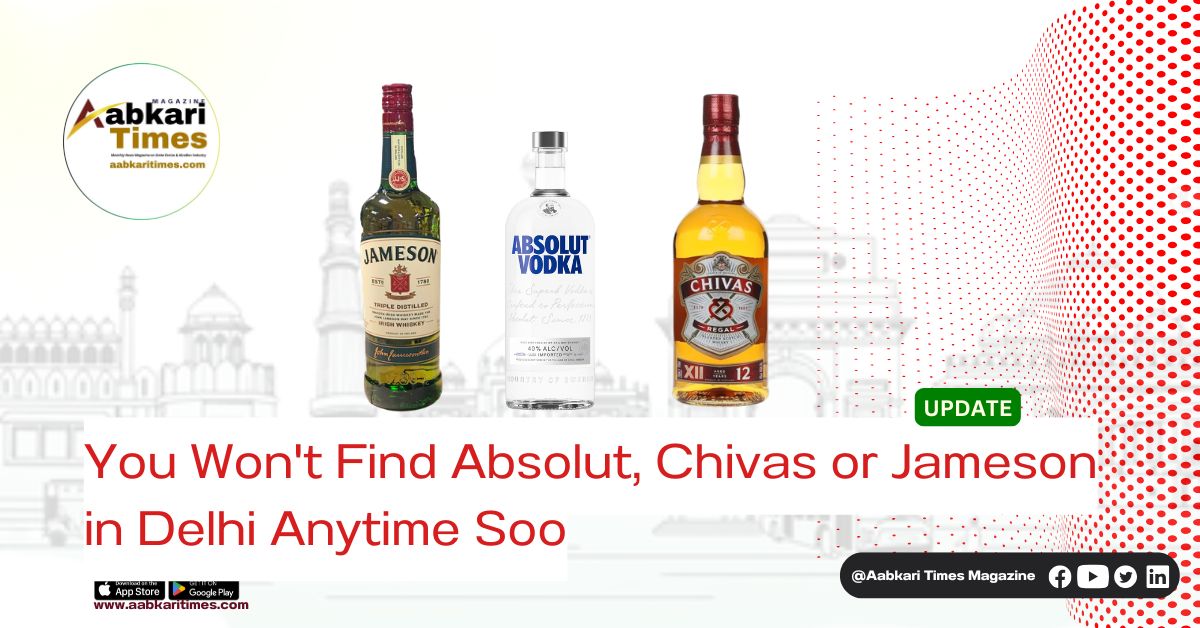
If you’ve walked into a liquor store in New Delhi recently and wondered why the shelves are missing some of the world’s most recognisable spirit brands — Absolut Vodka, Chivas Regal, Jameson Irish Whiskey, The Glenlivet — the answer lies in a legal battle that has now been going on for nearly three years.
The Delhi High Court on Friday dismissed a plea by French liquor giant Pernod Ricard challenging the Delhi government’s refusal to grant it an L-1 wholesale liquor licence, holding the company ineligible under applicable excise rules due to pending criminal proceedings. Justice Purushaindra Kumar Kaurav passed the order, and a detailed judgment is still awaited.
How did it come to this?
Pernod Ricard was banned from operating in Delhi from 2023 due to its alleged involvement in the 2021 Delhi Liquor Policy controversy. The now-scrapped policy — which the Delhi government had introduced in November 2021 and withdrew by September 2022 amid corruption allegations — became the centre of a major political and legal storm, with multiple companies and individuals being investigated by the Enforcement Directorate (ED).
 Adie Broswon Expands MOOOZ Sparkle Jamun Vodka Distribution Across North India
 Scotch Whisky Association Appeals Against England’s New Single Malt Whisky Rules
Delhi authorities repeatedly rejected Pernod Ricard’s licence applications, citing ED allegations that the company worked with retailers to improperly expand its footprint in Delhi’s alcohol market. Pernod denied any wrongdoing and argued that investigators failed to share crucial pricing data relied upon during the inquiry.
What’s at stake for Pernod?
Quite a lot. India is Pernod Ricard’s largest market globally by volume, with Delhi previously contributing nearly five per cent of the company’s overall sales in the country. As an urban tourist hub, New Delhi serves as a showcase market for premium brands — making it critical for any liquor company. Losing access to Delhi for three years is not just a revenue problem; it is a brand visibility problem in one of India’s most influential consumer markets.
The trouble doesn’t end with the liquor ban either. Pernod Ricard is also battling a massive tax dispute that could cost the company over ₹5,700 crore. Indian investigators concluded that the company deliberately concealed the true age and composition of its Scotch whisky imports in order to understate the actual value of imported goods and pay lower customs duties. The company has been asked to pay approximately ₹3,000 crore in back taxes, and with penalties factored in, the total liability could cross ₹5,700 crore.
What does this mean for Delhi consumers?
For now, popular Pernod brands — including Absolut, Chivas Regal and The Glenlivet — as well as Jameson and Blenders Pride, remain off the shelves at Delhi liquor stores with no clear timeline for return. The Delhi High Court stated that the company cannot be granted a fresh liquor licence while investigations connected to the case are ongoing.
For consumers in the capital who prefer these labels, the options are limited — either pick up stocks while travelling outside Delhi, order through permitted channels from other states, or switch to competing brands for now. Given that the court case and tax dispute are both still unresolved, a return to Delhi shelves in the near term looks unlikely.
About the Author