
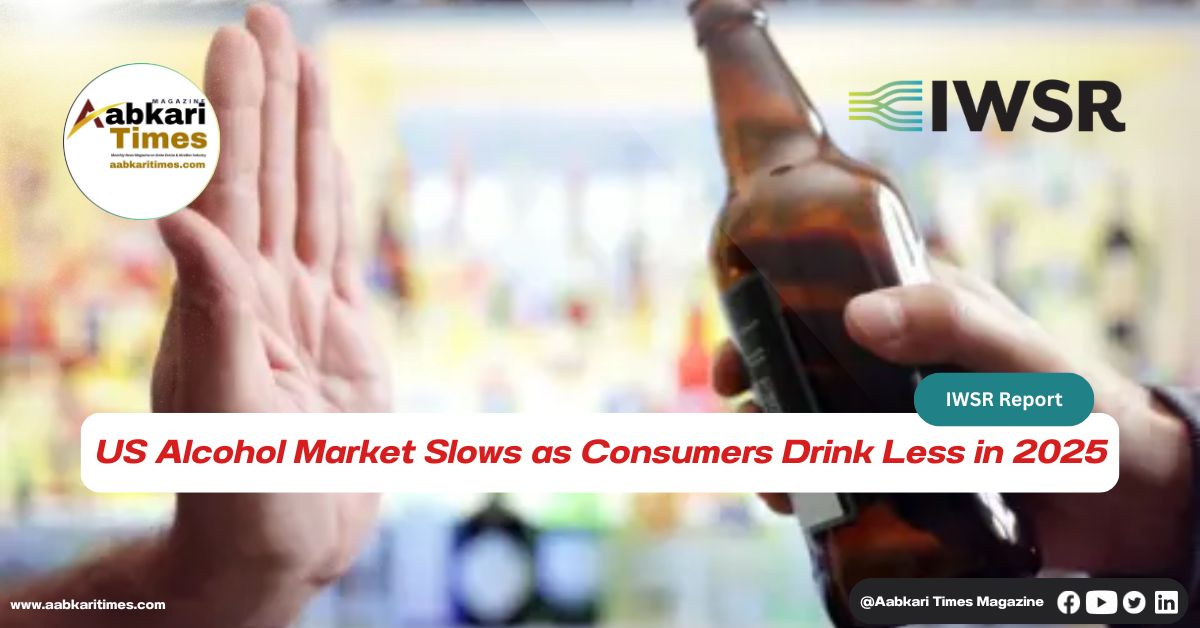
Alcohol consumption in the United States continued to decline in 2025, with total beverage alcohol volumes falling 5% compared to the previous year, according to new data released by IWSR.
The report, based on IWSR’s US Navigator tracking system, shows that almost every major alcohol category recorded lower sales volumes during the year as consumers reduced discretionary spending and drank less frequently.
Beer remained one of the hardest-hit categories. Alcoholic beer volumes dropped 6% in 2025, while wine volumes also declined by 6%. Spirits performed slightly better but still recorded a 4% fall in volumes.
 India’s Alcobev Market Sees Growing Interest in Low-Alcohol and Fruit-Flavoured Drinks
 Scotch Whisky Association Appeals Against England’s New Single Malt Whisky Rules
Ready-to-drink beverages (RTDs), which had been one of the fastest-growing segments in recent years, also slowed down. Overall RTD volumes fell by 1% during the year. The decline was mainly caused by weaker demand for malt-based RTDs, which dropped 5%.
However, spirits-based RTDs continued to grow strongly, posting a 14% increase in 2025. Industry analysts say consumers are still showing interest in premium and convenience-driven alcoholic drinks despite overall moderation trends.
Some categories managed to buck the broader slowdown. No-alcohol beer volumes rose sharply by 15%, highlighting growing consumer interest in moderation and low-alcohol alternatives. Prosecco also recorded steady growth of 3%.
Another standout category was National Spirits, which grew by 18% during the year. According to IWSR, nearly 80% of this category consists of Korean spirit soju, which continues gaining popularity among younger consumers in the US market.
At the state level, alcohol volumes declined in 49 US states. Nevada was the only state to post overall growth, with beverage alcohol consumption rising 3% in 2025.
Beer volumes increased only in Illinois and Nevada, while spirits consumption grew in a few states including Minnesota, Idaho, and Oregon. Wine volumes fell almost everywhere except West Virginia, which recorded a modest 1% increase.
RTD performance varied significantly across states. California saw an 8% decline in RTD volumes, Texas remained flat, while Florida recorded strong growth of 7%.
Commenting on the trend, IWSR market analyst Marten Lodewijks said affordability pressures are forcing consumers to reduce spending on alcohol.
He added that people are not necessarily quitting drinking altogether, but are drinking less often and consuming fewer drinks per occasion. According to IWSR, moderation trends and economic uncertainty are both contributing to the slowdown in alcohol consumption across the US market.
About the Author