
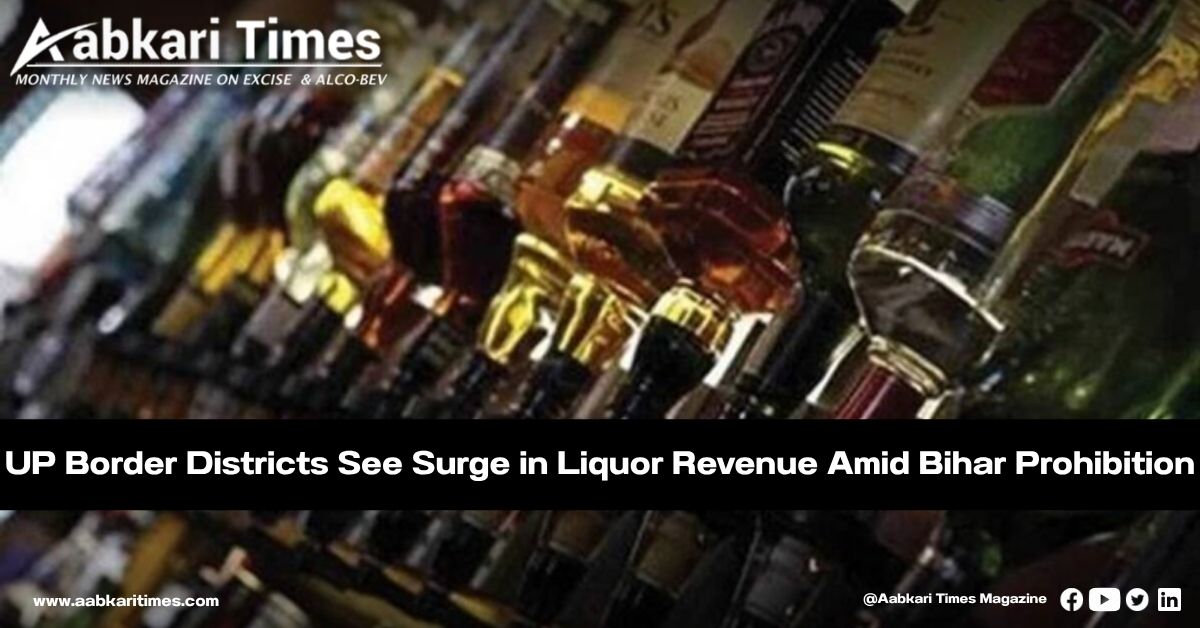
Lucknow: Districts in Uttar Pradesh that share a border with Bihar are witnessing a sharp rise in liquor sales and excise revenue. During 2025–26, six such districts emerged as top revenue earners for the state. Five of them achieved over 90% of their targets, while Ballia and Sonbhadra crossed 100% collection. Overall, UP reached 88% of its total revenue target.
According to a review by the excise department, many consumers from Bihar—where alcohol is banned—are either crossing into UP to purchase liquor or buying in bulk and smuggling it back to their towns and villages. Similar trends have been observed in districts like Ghazipur, Chandauli, Kushinagar, and Deoria.
Since Bihar enforced prohibition in 2017, demand in these border districts has steadily increased. However, this year saw an unexpected trend—eastern UP districts like Kushinagar and Deoria reported higher consumption than wealthier western districts such as Meerut, Aligarh, Bareilly, Mathura, and Moradabad—despite having much lower average incomes.
 Odisha Collects ₹24,455 Crore in Excise Duty Over Five Years, CAG Report Reveals
 Nasha Mukt Yuva for Viksit Bharat UP Prohibition Department Holds Youth Awareness Seminar at AKTU Lucknow
A liquor shop owner in Tamkuhi Raj near the Bihar border said most customers buy in bulk, and shops do not verify whether buyers are from UP or Bihar.

Authorities admit that controlling illegal movement is difficult due to constant travel between the two states by road, rail, and private vehicles. Additionally, rivers like the Ganga, Ghaghra, and Gandak make it easier to transport liquor across borders.
Current retail rules also allow individuals to legally carry limited quantities—up to 1 litre of country liquor, 4.5 litres of foreign liquor, and 6 litres of beer—making enforcement even more challenging.
Experts believe that factors like Bihar’s prohibition and recent elections have further increased demand in border areas, turning the situation into a revenue advantage for Uttar Pradesh.
About the Author