
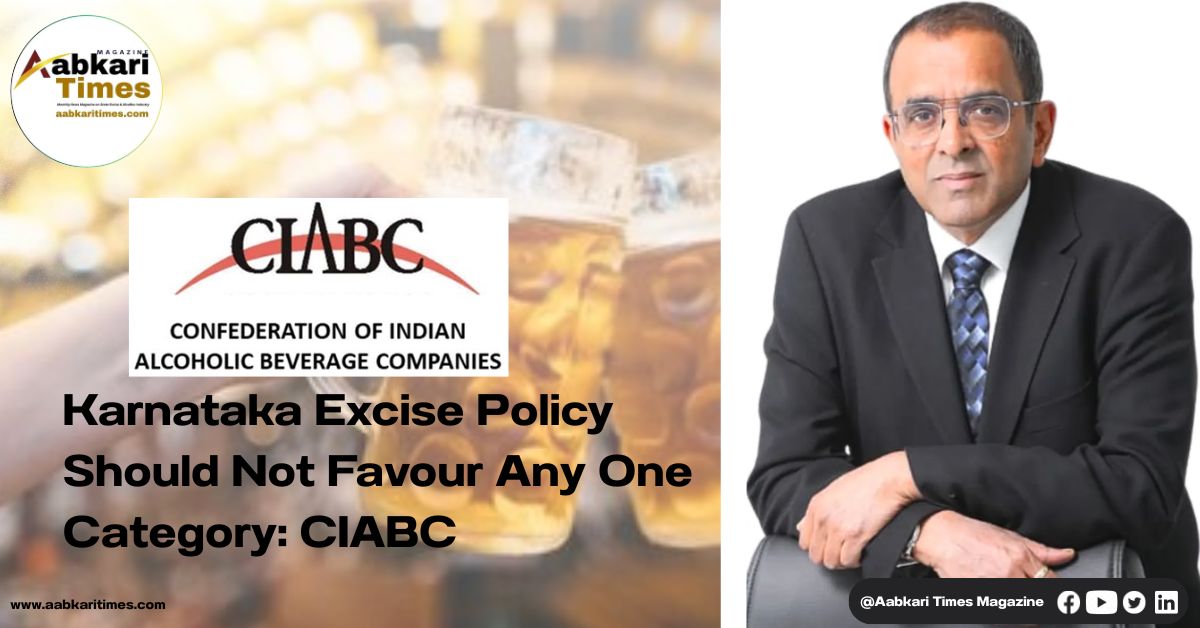
New Delhi: The Confederation of Indian Alcoholic Beverage Companies (CIABC) has urged the Karnataka government to ensure that its proposed excise policy changes are balanced and do not favour any particular category, including beer.
The industry body welcomed the introduction of the Alcohol-in-Beverage (AIB) taxation system, calling it a progressive reform that shows the government’s intent to modernise the sector. However, it stressed that the policy must be carefully designed to balance three key areas — consumer affordability, industry sustainability, and government revenue.
CIABC Director General Anant S. Iyer said it is important that the new policy is not seen as giving undue advantage to any segment of the industry. According to the association, fairness across categories is essential for maintaining a stable and competitive market.
 Odisha Collects ₹24,455 Crore in Excise Duty Over Five Years, CAG Report Reveals
 Nasha Mukt Yuva for Viksit Bharat UP Prohibition Department Holds Youth Awareness Seminar at AKTU Lucknow
The body also highlighted that Karnataka’s shift from country liquor to regulated IMFL has been a successful public policy move. In this context, affordability remains critical, especially in the lower IMFL price segments (Slabs 1–5), which account for more than 85% of total industry volumes.
Following duty increases in May 2025, these segments have already seen a decline of around 6%. CIABC warned that the current policy direction could worsen this trend in the coming financial year.

It added that further tax pressure on lower-priced spirits could impact the entire value chain — from distilleries and bottling units to allied industries — and even affect the agricultural sector that depends on raw materials like grains and molasses.
While the association supported duty rationalisation in higher-priced categories, which encourages premiumisation, it cautioned against any policy shift that indirectly promotes beer over spirits. According to industry data, IMFL generates four to six times more excise revenue per case compared to beer.
CIABC also pointed out that the perception of beer being significantly safer is often misleading, as higher consumption volumes can offset its lower alcohol strength.
Finally, the association stressed the need to keep prices aligned with neighbouring states. Any major price differences, especially in beer despite higher production costs in Karnataka, could create market imbalances.
About the Author