

Japan’s Liquor Tax Reform Equalises Rates for Beer, Happoshu and Third-Category Drinks, Reshaping the Country’s Beer Market
Japan has introduced a major change to its alcoholic beverage taxation system, reducing the tax on regular beer while increasing levies on cheaper beer alternatives from October 1, 2026. The reform lowers the liquor tax on a standard 350-millilitre can of beer from ¥63.35 to ¥54.25, a reduction of ¥9.10 per can. The revised tax structure is expected to influence retail prices, consumer preferences and product strategies across Japan’s beer industry.
Under the new system, beer-like beverages that previously benefited from lower tax rates will face higher taxation. Happoshu, a low-malt beverage, and third-category beer were earlier taxed at ¥46.99 per 350-millilitre can. Their tax rate has now increased by ¥7.26 to ¥54.25, bringing them into line with ordinary beer. As a result, the tax advantage that helped these alternatives compete on price has been eliminated.
 Karnataka Liquor Sales Flat in H1 FY27 as Beer Volumes Surge 41% Under New AIB Policy
 AB InBev Gains Ground in India as Premium Beer Segment Expands
Japan’s three-tier beer market developed largely because of the country’s historical liquor tax rules, which differentiated products according to malt content and ingredients. Brewers responded by developing beverages that offered a beer-like taste while qualifying for lower tax rates. In 1994, Suntory introduced Hops, a happoshu product containing 65% malt, below the then-applicable 67% threshold for classification as beer. The category subsequently expanded as manufacturers explored different formulations to keep products affordable.
Third-category beverages emerged as another alternative, often using little or no malt and, in some cases, spirits or other ingredients. These products attracted price-conscious consumers because their tax burden was substantially lower than that of conventional beer. At one stage, the tax on a 350-millilitre can of regular beer reached ¥77, compared with approximately ¥28 for third-category beverages, creating a significant price difference between products in the same broad market segment.
The Japanese government announced plans in 2016 to gradually narrow and ultimately eliminate these tax differences. The changes were implemented in stages beginning in 2020, with the October 2026 revision completing the equalisation of tax rates for beer, happoshu and third-category beverages. All three categories are now taxed at ¥54.25 per 350 millilitres.
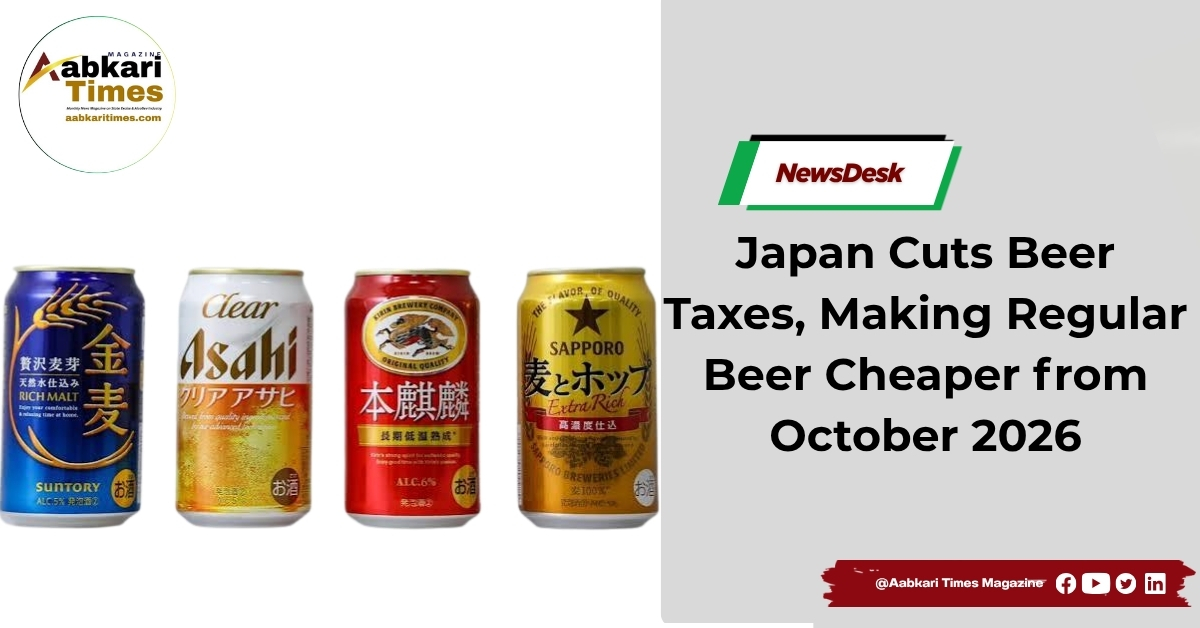
Major brewers have adjusted their portfolios in anticipation of the reform. Asahi has revamped its Super Dry brand, Kirin has updated Ichiban Shibori, and Suntory has increased the malt content of Kinmugi, previously classified as a third-category beverage, to market it as beer. These changes reflect the industry’s efforts to adapt products and pricing strategies to a system in which the previous tax-based cost advantage of lower-taxed alternatives no longer applies.
The October revision also increases taxes on other sparkling alcoholic beverages, including chu-hi. However, the alignment of beer-related tax rates is expected to have a particularly visible impact on supermarket and convenience-store shelves, where conventional beer and lower-cost alternatives have traditionally competed side by side.
Although the tax reduction creates scope for lower prices on regular beer, the final retail impact will depend on how manufacturers and retailers pass on the savings. By removing the tax distinction between conventional beer and its lower-cost substitutes, Japan’s reform marks a significant shift in the economics of its beer market and could encourage consumers to reconsider their choices across the category.
About the Author