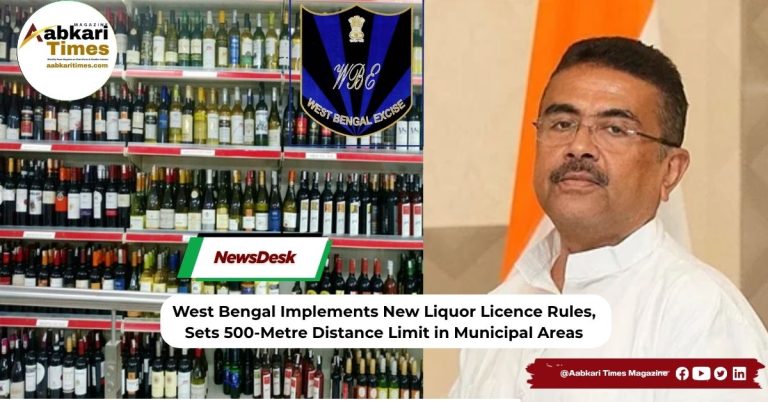

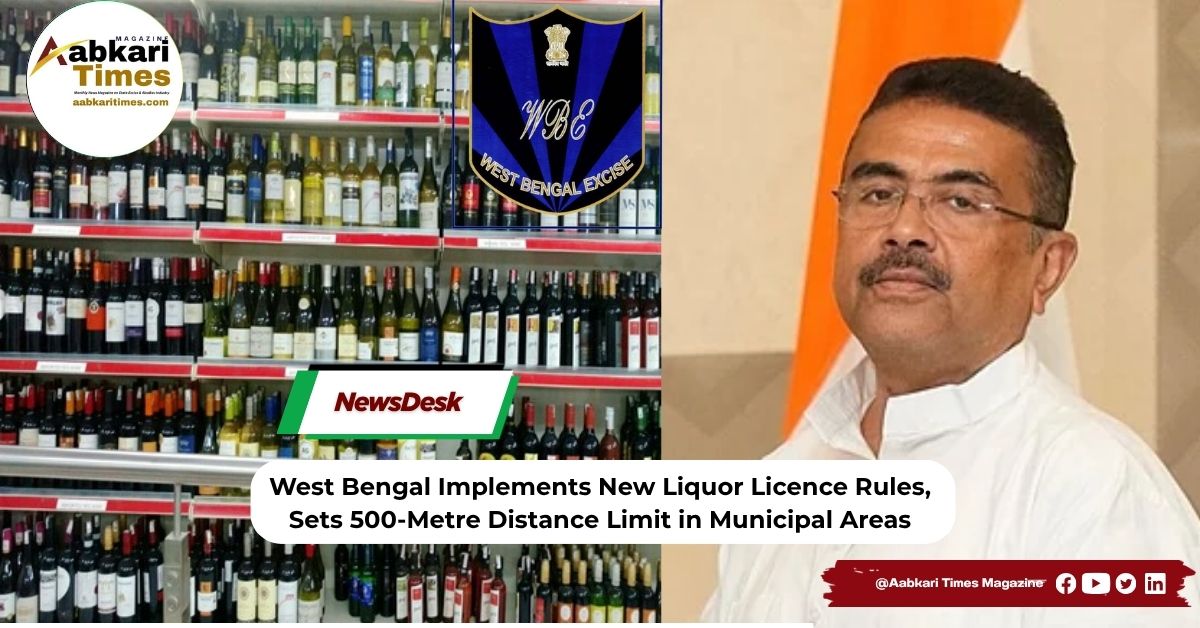
The West Bengal government has implemented new rules for issuing liquor licences, bringing into effect a revised distance requirement for new liquor shops from September 16, 2026. The state government issued a circular stating that new liquor licences will generally not be permitted within a 1-kilometre radius of religious institutions, schools and colleges. However, in areas under the Kolkata Municipal Corporation (KMC) and other municipal bodies, the restricted distance will be limited to 500 metres.
The revised liquor licensing rules follow the state government’s earlier announcement that alcohol sales would not be permitted within 1 km of schools, colleges and temples. The implementation of the new rule could have a significant impact on the state’s liquor retail network, with industry sources estimating that more than 4,000 liquor shops, off-shops and bars are currently located within 1 km of the specified institutions.

The circular also provides provisions for the reopening of liquor shops that are currently closed because of litigation, licence surrender or other reasons, subject to prescribed conditions. According to industry estimates, around 300 liquor shops in West Bengal are currently shut, while the state has approximately 6,500 liquor outlets, including regular liquor shops and off-shops.
Alongside the new distance requirements, the circular addresses the conversion of bars into off-shops. Such establishments would be governed by Section 4P of the West Bengal Excise Rules. Under this provision, retailers would be required to share 3% of their profit margin with the West Bengal State Beverages Corporation (BevCo).
→ Molson Coors to Expand Non-Alcoholic Beverage Portfolio with Nationwide Coors 0.0 Rollout→ Johnnie Walker Red Label vs Black Label Key Differences in Taste, Ageing, Price and Drinking Style
The provision has raised concerns among sections of the liquor industry. Industry representatives point out that the current overall profit margin in liquor retail is around 6.5%, meaning that a 3% sharing requirement could represent a substantial portion of the retailer’s earnings. However, the industry expects the provision to apply to new or eligible establishments rather than existing licence holders under the current framework.
Industry veterans have also raised concerns about the possible impact if existing liquor retailers are brought under Section 4P. They argue that extending the profit-sharing requirement to the existing licence base could significantly affect the economics of liquor retail operations in the state.
At present, only four liquor outlets in West Bengal are reportedly operating under Section 4P, including one outlet at Andal airport. The latest circular therefore represents a significant change in the state’s liquor licensing framework, combining stricter distance restrictions around sensitive institutions with provisions aimed at reopening closed outlets and regulating new off-shop operations
About the Author