
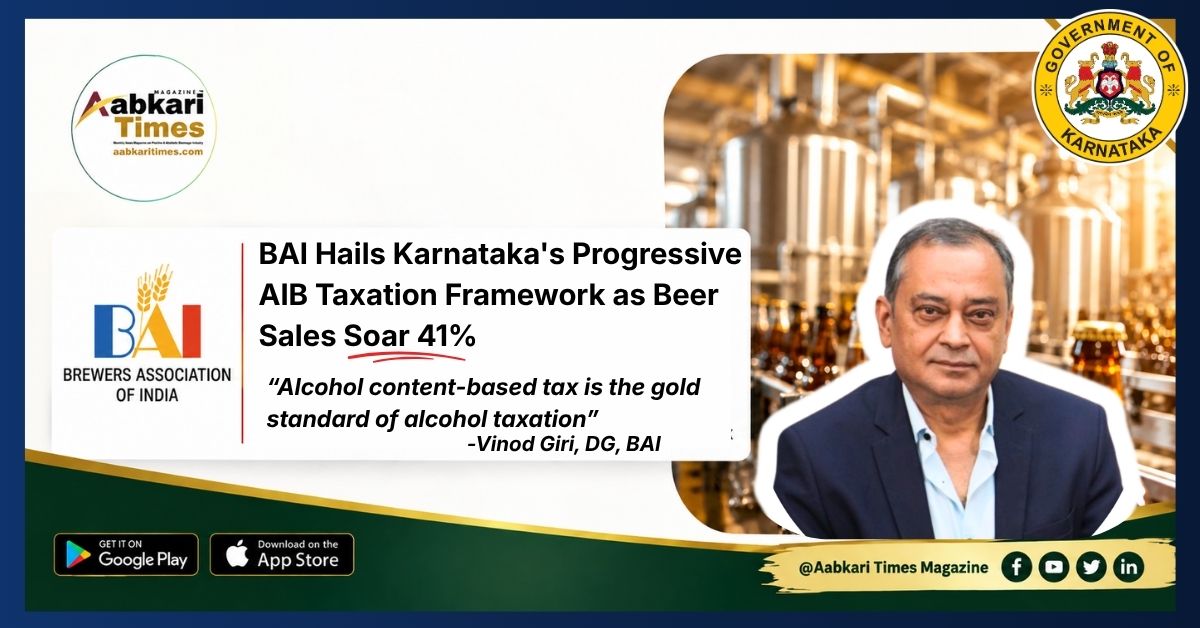
Bengaluru, October 6, 2026: Karnataka’s Alcohol-in-Beverage (AIB) taxation framework, implemented from May 11, 2026, has delivered strong early results with total state excise tax collections jumping 13.4 per cent to ₹22,191 crore during April to September 2026, compared to just 2.8 per cent growth during the same period last year. The Brewers Association of India (BAI) has welcomed the data as validation of the AIB model, with Director General Vinod Giri calling it a framework that simultaneously achieves revenue maximisation and public health goals.
The most striking data point from the first five months is beer’s performance. Beer sales in Karnataka grew 41.3 per cent during April to September 2026 a dramatic reversal from the same period last year when beer sales declined 19 per cent. Tax collections from beer rose 19 per cent over the same period. BAI said the surge in beer consumption reflects a consumer shift towards milder forms of alcohol, which is a core public health objective of AIB-based taxation.
 Vinod Giri, Director General, BAI, said: “Alcohol content-based tax is the gold standard of alcohol taxation. It is followed widely all over the world and recommended by the World Health Organization as a tool to reduce harmful use of alcohol. The rate of taxation needs to hit the sweet-spot to optimise the economic goal of maximising revenues and public health goals of encouraging milder alcoholic beverages, and the Karnataka Government seems to have done that very well.”
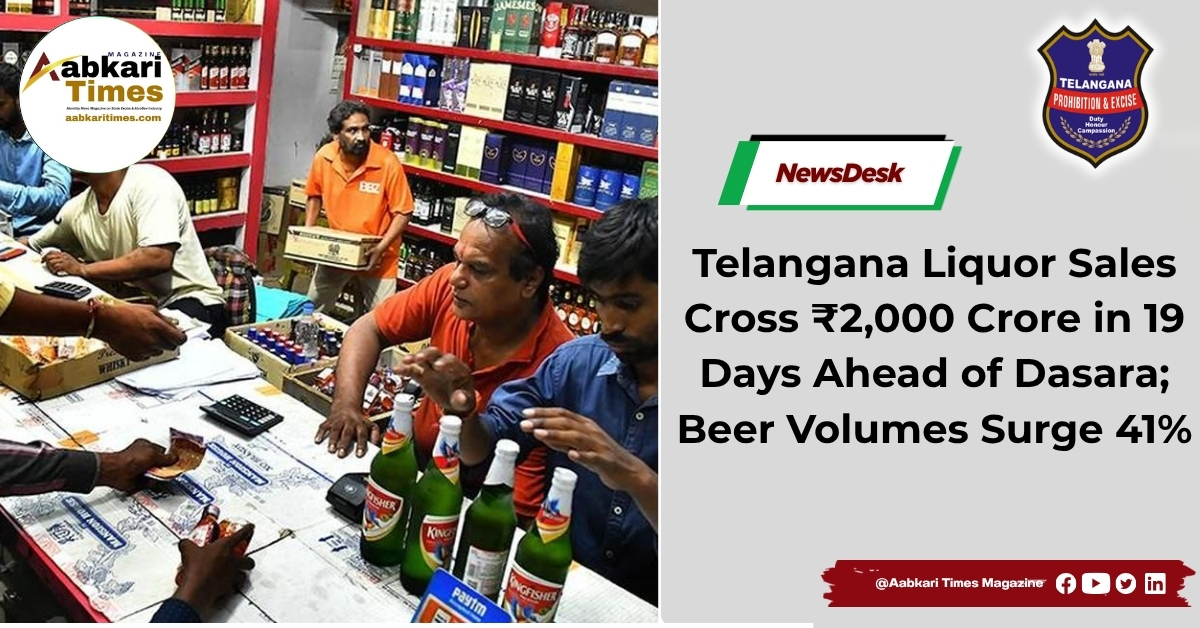
 Telangana Liquor Sales Cross ₹2,000 Crore in 19 Days Ahead of Dasara; Beer Volumes Surge 41%
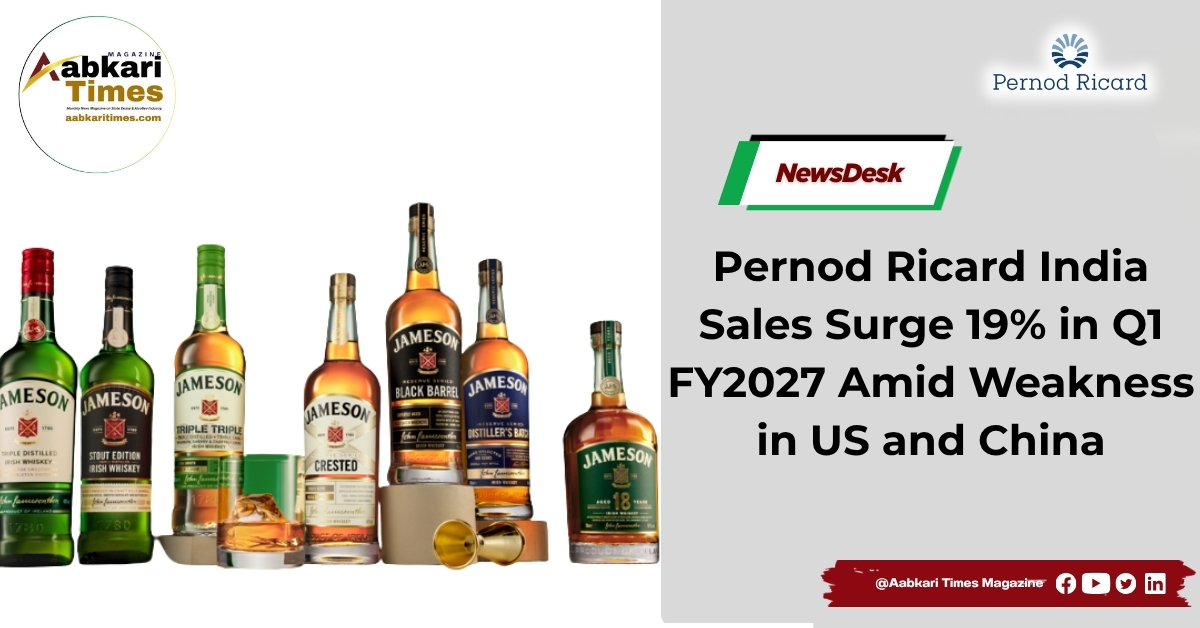
 Pernod Ricard India Sales Surge 19% in Q1 FY2027 Amid Weakness in US and China
Concerns that AIB taxation would severely hurt the IMFL industry have also been allayed by the data. IMFL sales held steady at 1.1 per cent growth during the period, while IMFL tax revenue jumped 13 per cent indicating that economy segment IMFL was previously under-taxed in Karnataka and that consumers may be upgrading to more premium expressions. Giri said: “Increase in beer and wine sales, and up-trading in IMFL to better quality products shows people are drinking milder and better forms of alcohol which is a much-desired public policy outcome.”
Karnataka’s AIB framework taxes excise duty on the basis of the actual alcohol content in a product rather than on the product’s volume or price alone based on the premise that the substance being taxed is alcohol, not the water in the beverage. In addition to excise duty, Karnataka also applies an Additional Excise Duty based on product value, rationalised into fewer price slabs with a progressive rate structure. Beyond the tax architecture, Karnataka’s new excise rules have introduced a package of ease-of-doing-business reforms including full deregulation of government-administered price fixation, auto-renewal of manufacturing licences, online approvals, 24-hour operations for distilleries and breweries, and provisions for brewery tourism.
Giri said several other states are closely watching Karnataka’s results and expressed confidence that the strong early numbers would encourage wider adoption. “By switching to AIB-based taxation, Karnataka has become the first state in the country to explicitly optimise revenue maximisation alongside public health outcomes. It is a proven successful model the world over. We hope these results will encourage more states to follow suit.”
About the Author