
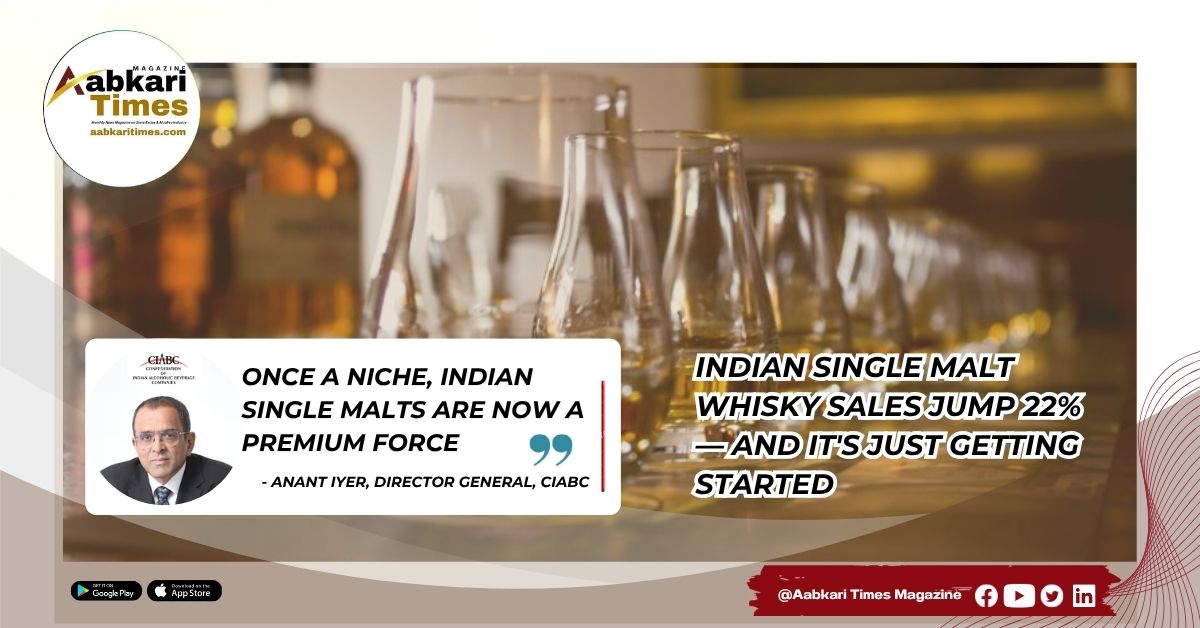
New Delhi, July 2026: Indian single malt whisky sales climbed approximately 22 per cent to nearly 5 lakh cases in 2025, driven by rising demand for premium spirits and the growing popularity of homegrown labels, according to estimates released by the Confederation of Indian Alcoholic Beverage Companies (CIABC). Indian-owned manufacturers accounted for an estimated 92 per cent of Made-in-India single malt sales — approximately 4.65 lakh nine-litre cases — during the year.
The category’s growth over the past three years has been striking. Volumes have risen from an estimated 3.5 lakh cases in 2023 to 4 lakh cases in 2024 and approximately 5 lakh cases in 2025 — cumulative growth of nearly 43 per cent in just two years. Established domestic brands such as Amrut, Rampur, Indri and Paul John led the category, alongside a new wave of entrants including Solan Gold, GianChand, Doaab, Crazy Cock, Aaghaz and Gamber Valley, reflecting the broadening of the segment beyond its original handful of players.
 Anant S. Iyer, Director General, CIABC, said: “Once viewed as a niche category, Indian single malts are increasingly being recognised for their distinctive taste profile, climate-led maturation, award-winning quality, specialised cask finishes and Indian provenance. They are finding stronger acceptance among consumers looking for premium luxury whisky options.”
→ Bira 91 Revival Plan Anicut-Led Board Offers to Buy Out Key Investors→ AB InBev Plans Smaller Packs, Protein Beers and Non-Beer Drinks to Adapt to Changing Consumer Preferences
Entry-level Indian single malts are currently priced from around ₹2,300, while premium and aged flagship expressions commonly sell in the ₹5,500 to ₹8,000 range — a price band that was until recently dominated almost entirely by imported Scotch whiskies. The fact that Indian single malts are now competing and winning at these price points reflects a fundamental shift in consumer perception of domestically produced premium spirits.
Indian single malt brands owned or backed by multinational companies accounted for approximately 7 per cent of category sales in 2025 — around 35,000 cases — with Diageo-backed Godawan and Pernod Ricard’s Longitude 77 being the key players in this segment. Meanwhile, imported single malt whiskies — primarily Scotch — continued to hold significant presence, with volumes estimated at around 3.5 lakh cases in 2025. Locally produced and imported single malts together created an overall Indian single malt market of approximately 8.5 lakh cases during the year, underlining the category’s total scale and growth trajectory.
One structural advantage that Indian single malt producers enjoy is India’s tropical climate, which accelerates maturation significantly compared to Scotland or Ireland. A whisky aged three to five years in India can develop complexity comparable to a much older Scotch, giving Indian producers a natural cost and time advantage that is increasingly being recognised by global whisky connoisseurs and competition judges alike.
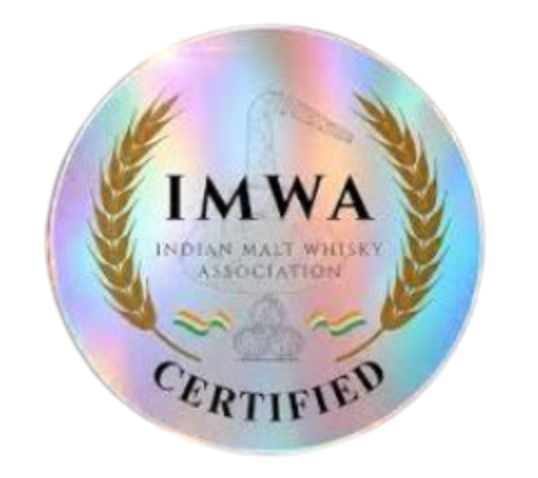 The Indian Malt Whisky Association has recently introduced a certification trademark in the form of a hologram to establish authenticity and quality standards across the category. The certification will be granted exclusively to manufacturers complying with the association’s defined production standards, which have been aligned with globally recognised benchmarks while accounting for India’s distinct climatic conditions — a significant step towards giving Indian single malts a credible, verifiable identity in both domestic and international markets.
Iyer noted that a fair and enabling policy environment would be essential for Indian premium spirits brands to expand further in both domestic and export markets — a reference to the ongoing debate around state excise policies and import duty structures that continue to shape the competitive landscape for premium spirits in India.
About the Author