
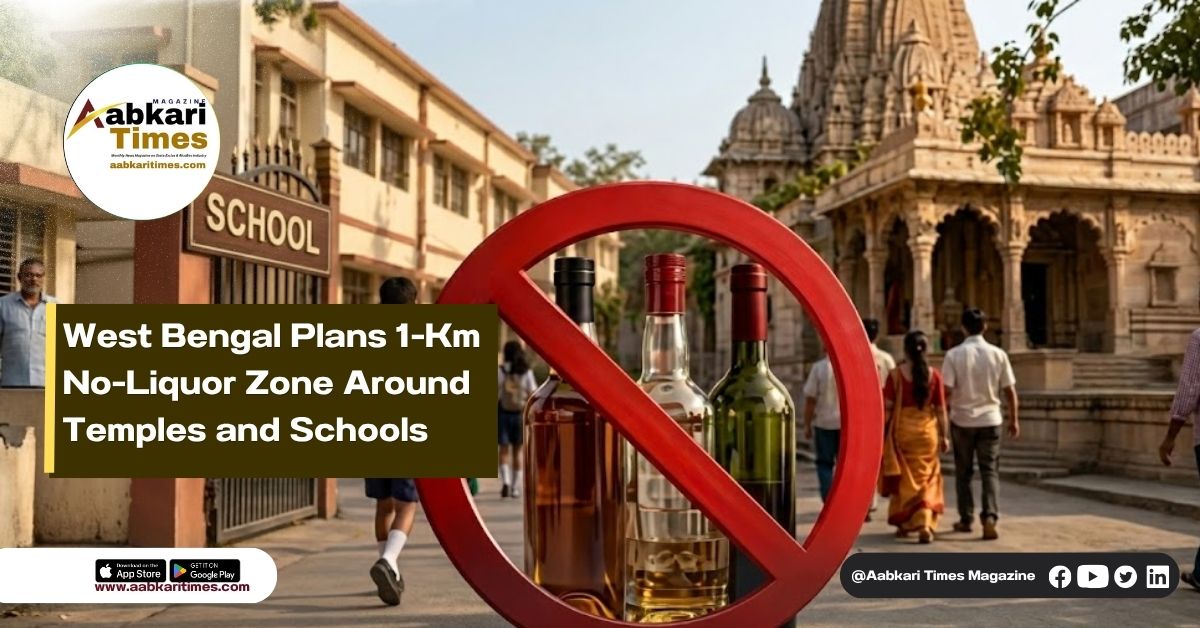
Kolkata, May 27, 2026: The newly formed government in West Bengal has proposed a major policy shift for the state’s liquor retail sector by announcing that no liquor shops will be allowed to operate within a 1-kilometre radius of temples, schools, colleges and other educational institutions.
The announcement was made by Chief Minister Suvendu Adhikari during a high-level administrative meeting held at Nabanna shortly after the new government assumed office. The move is being positioned as part of a broader effort to protect educational and religious environments while reshaping the state’s excise and retail liquor policies.
According to officials, the proposal could significantly impact liquor retail operations in densely populated urban areas such as Kolkata, Howrah, Siliguri, Durgapur and Asansol, where educational institutions and religious places are often located within short distances of commercial zones. Industry observers believe the rule may lead to relocation challenges for several existing liquor outlets if implemented strictly.
→ Guala Closures Upgrades Alusnap Caps with Tamper-Evident Technology to Fight Spirits Counterfeiting→ Andhra Pradesh Government Extends Liquor Shop Renewal Deadline to September 23

Excise policy experts say the proposal is among the strictest location-based restrictions discussed in recent years in any major Indian state. Several states already impose distance norms for liquor vends near schools and places of worship, but the proposed 1-km restriction in West Bengal could substantially reduce the availability of eligible retail spaces in urban markets.
Liquor traders and retail operators are closely monitoring the developments, as the proposed rule may affect licensing renewals, rental costs and business viability for many existing outlets. Some industry stakeholders believe the policy could trigger increased demand for commercial properties located outside restricted zones, potentially pushing up operational costs for retailers.
Policy analysts also point out that the move reflects a growing trend among state governments to balance excise revenue generation with public sentiment, urban planning concerns and social policy objectives. West Bengal remains one of the major liquor-consuming markets in eastern India, making any change in retail policy significant for both industry players and state revenue collections.
Officials have not yet clarified whether the proposed restriction will apply only to new liquor licences or also impact existing retail shops currently operating near educational or religious institutions. Further guidelines from the Excise Department are expected in the coming weeks.
The announcement has already sparked discussion within the alco-bev industry, with many stakeholders awaiting clarity on implementation timelines, exemption provisions and the future licensing framework under the new administration.
About the Author