
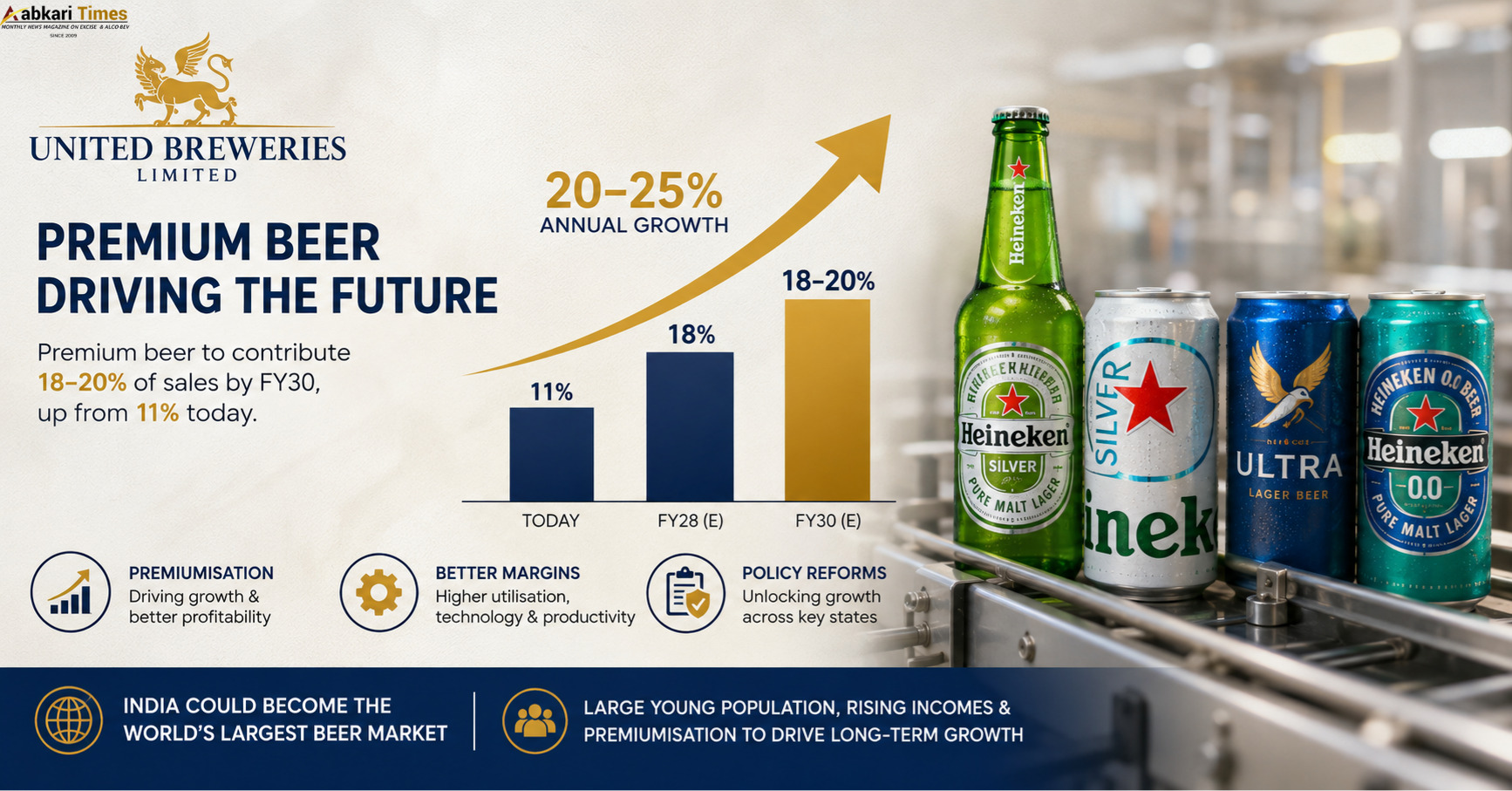
United Breweries Ltd (UBL) is expecting premium beer to become a significantly larger contributor to its business over the next four years, with the segment projected to account for nearly 18–20% of sales by FY30.
India’s beer market is witnessing a clear shift towards premium and differentiated products, and United Breweries is positioning its portfolio to benefit from this changing consumer preference.
According to UBL Managing Director and CEO Vivek Gupta, premium beer currently contributes around 11% of the company’s sales, but the segment is expanding at an annual rate of approximately 20–25%. The company expects this momentum to continue as consumers increasingly move towards premium brands and new beer formats.
 Amrut Distilleries’ Sales Growth to Remain Under Pressure Until 2030 Amid Limited Whisky Supply and Cheaper Scotch Imports
 Japan Cuts Beer Taxes, Making Regular Beer Cheaper from October 2026
Premiumisation Driving Growth
UBL has identified premiumisation as one of the key drivers of its future growth and profitability. Brands including Heineken Silver and Ultra are playing an important role in the company’s strategy, with Heineken Silver being expanded into additional states.
Premium beer volumes have recorded strong growth in recent years. According to the company, premium volumes increased by 34% in 2024 and 24% in the following year, while the current year’s performance is tracking ahead of internal expectations.
For UBL, the objective is not simply to increase volumes but to improve the quality and profitability of growth through a better product mix.
Focus on Margins and Brewery Utilisation
The company is targeting double-digit revenue growth, while simultaneously working to improve margins.
Higher premiumisation, improved pricing and product mix, stronger volumes and greater utilisation of existing manufacturing facilities are expected to support profitability.
UBL is also investing in technology and productivity initiatives aimed at increasing output from its existing breweries. The strategy is to produce more cases from current facilities without relying heavily on additional capital expenditure.
Policy Changes Boost Beer Demand
State-level excise and retail policy reforms are emerging as another important factor for the beer industry.
Gupta said beer volumes in Karnataka and Jharkhand have increased by more than 50% over the past three months following changes in retail policies. UBL expects similar policy developments in other states to create additional opportunities for category growth.
India’s highly fragmented state-wise alcohol market means that regulatory changes can have a substantial impact on beer sales and profitability.
Heineken 0.0 and Changing Consumer Preferences
Alongside premium alcoholic beer, UBL is also expanding its presence in the non-alcoholic beer segment.
The company is widening the availability of Heineken 0.0, targeting consumers looking for occasions where they prefer beer without alcohol. UBL is also working on products that are more sessionable and designed around evolving consumer preferences.
This reflects a broader transformation in the beer industry, where premiumisation is increasingly being accompanied by experimentation with low- and no-alcohol products.
India Could Become the World’s Largest Beer Market
UBL remains bullish about the long-term prospects of India’s beer industry.
Gupta believes India’s large and relatively young consumer base could eventually help the country become the world’s largest beer market. Rising incomes, urbanisation, premiumisation and expanding consumption beyond traditional metropolitan markets could support the industry’s long-term growth.
For UBL, the strategy going forward will be to balance investment, volume expansion and premiumisation with sustainable margins.
With premium beer potentially increasing its contribution from around 11% today to 18–20% of sales by FY30, the company is betting that India’s next phase of beer growth will be driven increasingly by value rather than volume alone.
About the Author