
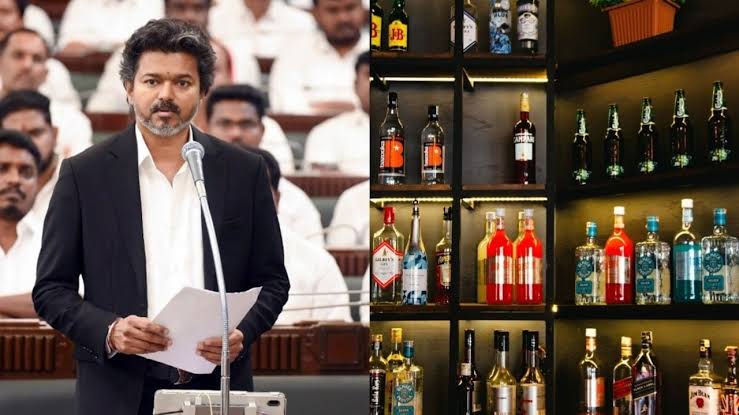
The Tamil Nadu government has suspended more than 60 employees of the Tamil Nadu State Marketing Corporation (TASMAC) following allegations that customers were being charged extra money for liquor bottles at government-run retail outlets. The action comes amid growing complaints that consumers were being asked to pay an additional Rs 10 or Rs 20 over the printed or officially prescribed price of liquor. The suspensions, reportedly carried out across major cities including Chennai, Madurai, Salem, Tiruchirappalli and Coimbatore, signal a wider crackdown by the state government on alleged irregularities at TASMAC outlets. The issue has also become a matter of political confrontation, with the ruling government and the Opposition trading accusations over corruption and the functioning of the state’s liquor retail system.
The controversy came up during a heated debate in the Tamil Nadu Assembly, where Prohibition and Excise Minister K Vignesh reportedly clarified that the additional Rs 10 being collected from customers was not a government-authorised charge. The minister also linked the practice to the previous DMK regime, turning what began as a consumer complaint into a broader political dispute. The Opposition, however, has continued to raise questions about the prevalence of overcharging and alleged corruption at TASMAC shops.
TASMAC occupies a unique position in Tamil Nadu’s economy because the state government controls the wholesale and retail distribution of alcoholic beverages through the corporation. This makes the organisation an important source of government revenue, while also placing a significant responsibility on it to ensure transparent pricing and fair treatment of consumers. When customers are allegedly forced to pay amounts above the official price, even relatively small sums can become a larger governance issue because of the enormous volume of liquor sold through the state-controlled network.
 Scotch Whisky Association Appeals Against England’s New Single Malt Whisky Rules
 Top 10 Premium Whisky Brands in India Above ₹5,000 for the Festive Season
The latest disciplinary action is therefore significant beyond the suspension of individual employees. It raises questions about monitoring mechanisms at retail outlets, accountability of frontline staff and the effectiveness of complaint-resolution systems. If overcharging is occurring across multiple locations, the government may need stronger inspection procedures, clearer display of prices, digital payment records and accessible mechanisms through which consumers can report violations. Regular audits and surprise inspections could also help identify outlets where customers are repeatedly being charged more than the authorised price.
The controversy also highlights the complicated nature of Tamil Nadu’s relationship with alcohol. On one hand, liquor sales through TASMAC generate substantial revenue for the state. On the other hand, excessive consumption, affordability, illegal practices and public concerns surrounding alcohol create social and administrative challenges. The government therefore faces the difficult task of balancing revenue interests with regulation, consumer protection and public welfare.
For ordinary customers, the immediate concern is straightforward: they should not have to pay unofficial charges simply to purchase a legally sold product from a government-authorised outlet. The suspension of more than 60 employees indicates that the government is taking the complaints seriously, but sustained enforcement will determine whether the action produces a meaningful change. The administration will need to ensure that disciplinary measures are accompanied by transparent systems that prevent such practices from recurring.
The TASMAC controversy ultimately reflects a larger governance challenge in state-controlled liquor retailing. Strong action against overcharging can improve consumer confidence, but lasting reform will require better supervision, accountability and transparency across the retail network. As the political debate continues, the effectiveness of the government’s crackdown will be judged not only by the number of employees suspended but by whether consumers can consistently purchase liquor at the officially prescribed price without being subjected to additional unofficial charges.
About the Author