
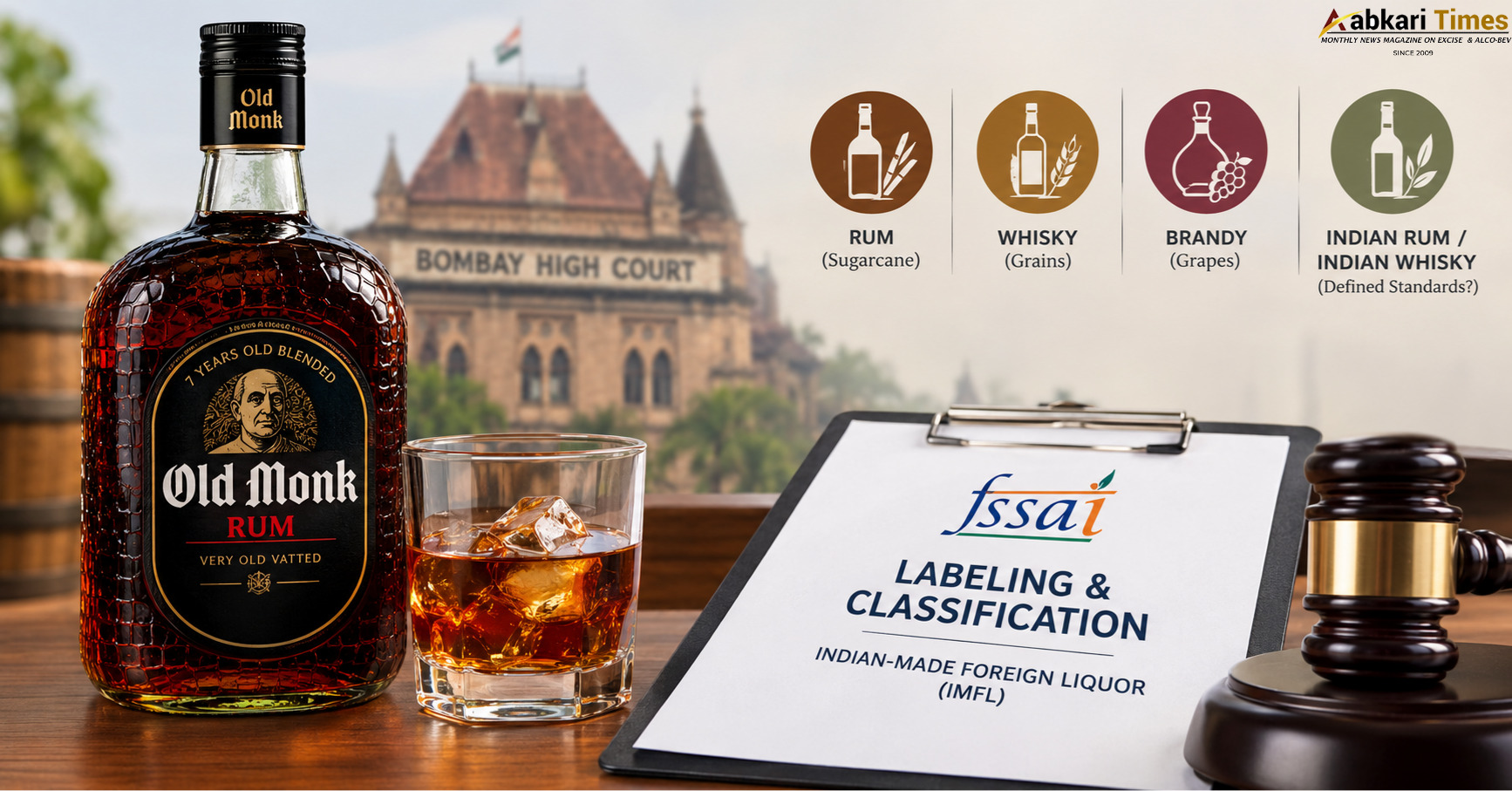
New Delhi, September 7, 2026: A regulatory dispute involving Old Monk has opened a much larger conversation about how Indian-made alcoholic beverages are classified, manufactured and labelled. The Food Safety and Standards Authority of India (FSSAI) has told the Bombay High Court that Old Monk cannot be marketed as “rum” in its existing form, suggesting that it could instead be described as a “rum-flavoured spirit.” The matter has attracted considerable attention because Old Monk is one of India’s most recognised mass-market spirits. The controversy, however, extends far beyond a single brand and could have implications for India’s wider Indian-Made Foreign Liquor (IMFL) industry.
FSSAI’s Objection Goes Beyond Labelling
The dispute intensified after FSSAI raised objections to certain liquor products containing artificial flavours. In August, the regulator reportedly restricted the sale of selected variants of Old Monk and other popular whisky brands over flavouring-related concerns.
During proceedings before the Bombay High Court on September 3, FSSAI’s position reportedly went further. Its counsel said the concern was not merely about descriptions such as “7 years old blended” or “very old vatted”, but about whether the product could legally be sold as rum at all.
 Scotch Whisky Association Appeals Against England’s New Single Malt Whisky Rules
 Top 10 Premium Whisky Brands in India Above ₹5,000 for the Festive Season
The Bombay High Court is scheduled to hear the matter again on September 11. For the industry, the case has raised an important question: Should Indian spirits made using neutral alcohol and flavouring be classified in the same way as traditionally produced rum or whisky?
Why Indian IMFL Is Different
Traditionally, rum is produced from sugarcane-derived material, while whisky is made from fermented grains and subsequently distilled and matured. Brandy is generally associated with grape-derived spirit. A large part of India’s mass-market IMFL industry developed differently. Neutral spirit—often produced from molasses or grain—is used as the base for several products. Water, colour and flavouring may then be added to create the desired characteristics.
This manufacturing model has historical and economic roots. India has long had a large sugar industry, making molasses an important source of alcohol. At the same time, using grain for alcoholic beverages was historically less attractive in a country where grain was also a critical food resource. The result is a distinctive Indian spirits market in which premium and craft categories increasingly follow traditional production methods, while mass-market products often operate at a different price and production model.
The Big Business Behind the Debate
The issue matters because IMFL represents a massive consumer and government-revenue ecosystem. Mass-market whisky and rum occupy the price gap between country liquor and expensive imported or premium spirits. Their affordability has helped create one of the world’s largest spirits markets. At the premium end, however, India is witnessing rapid growth in Indian single malts and crafted spirits, with brands such as Amrut, Indri, Paul John and Rampur gaining international recognition. This creates an interesting divide within the industry: India is simultaneously becoming a global producer of premium whisky while regulators are questioning the terminology used for some high-volume mass-market spirits.
Consumer Right to Know
At the heart of the controversy is not simply the question of what a product is made from. It is also about transparency for consumers. If a beverage is substantially different from the internationally understood definition of rum or whisky, consumers may reasonably expect the label to communicate that distinction.
Industry experts have also pointed out that abrupt regulatory changes can create significant costs for manufacturers, retailers and consumers. Changes in formulations, labels, packaging, inventories and distribution can have a direct commercial impact.
Could “Indian Rum” or “Indian Whisky” Be the Solution?
One possible way forward is the creation of clearly defined Indian categories. India has previously dealt with similar classification questions involving brandy. A specifically defined Indian category could potentially allow manufacturers to continue producing affordable spirits while making the nature of the product clearer to consumers.
Terms such as “Indian Rum” or “Indian Whisky” could be considered if supported by precise manufacturing, ingredient and labelling standards. Such a framework could give the industry greater regulatory certainty while preserving affordable products that serve a large consumer base.
What It Means for Old Monk
For Old Monk, the controversy is particularly significant because the brand has developed a powerful identity independent of its technical classification. Generations of consumers associate it with its distinctive dark appearance, flavour profile, packaging and long-standing presence in the Indian market. Whether the current dispute changes consumer loyalty remains to be seen. However, the episode has already forced the industry to confront a much bigger question:
Should Indian spirits be judged strictly by international category definitions, or should India create modern standards that recognise its own manufacturing traditions while ensuring complete consumer transparency?
The Bombay High Court proceedings and FSSAI’s future regulatory position could provide important signals for manufacturers across the Indian AlcoBev sector. For the industry, the immediate challenge is to strike a balance between consumer protection, scientific definitions, affordable pricing, manufacturing realities and regulatory clarity. The Old Monk controversy may therefore become more than a dispute over one famous rum. It could mark the beginning of a broader rethink of India’s IMFL classification and labelling framework.
About the Author