
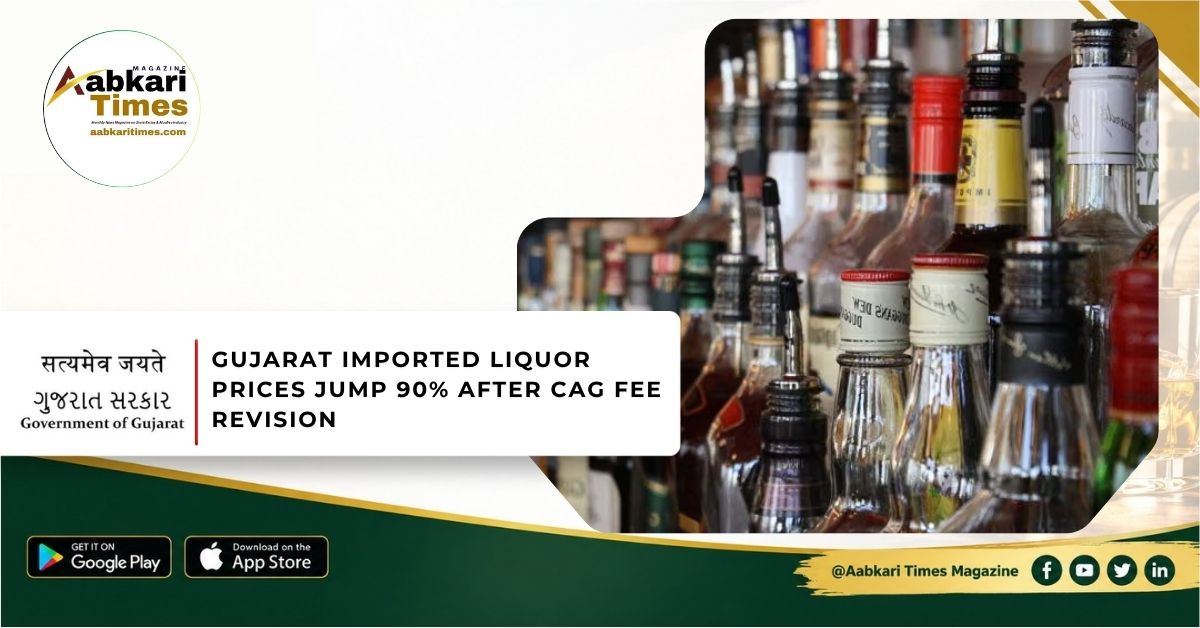
Surat, September 9, 2026: Imported liquor prices at permit shops across Gujarat have surged between 60 and 90 per cent following a revision in special fee calculations under the state’s newly implemented Liquor and Excise Management System (LEMS), triggering a sharp crash in sales and widespread uncertainty among permit holders, retailers and consumers across the state.
The price spike is directly linked to a Comptroller and Auditor General audit query over the formula used to calculate special fees on imported liquor. Acting on the CAG’s suggestion, the Gujarat prohibition department revised the fee structure from September 1 the same date the new LEMS software went live at permit shops. As a result, the special fee on 750ml bottles with a basic value of up to ₹1,500 has been raised from ₹375 to ₹1,500 a fourfold increase on that slab alone.
Mitul Patel, Deputy Director of the Prohibition Department, confirmed the development to the Times of India: “We received a CAG query over the calculation of special fee based on the government notification. To address the query, we implemented the special fee as suggested by the CAG, which may have led to an increase in prices of imported liquor. The government will soon form a committee to decide on the formula. Until then, the CAG’s suggestions will be implemented.”
 Amrut Distilleries’ Sales Growth to Remain Under Pressure Until 2030 Amid Limited Whisky Supply and Cheaper Scotch Imports
 Japan Cuts Beer Taxes, Making Regular Beer Cheaper from October 2026
The impact on individual brand prices has been severe. Brands such as Red Label, Absolut, Ballantine’s, J&B, John Barr and Scottish Leader have become 60 to 70 per cent costlier overnight. A bottle previously available for approximately ₹3,100 is now selling for ₹4,950. Premium brands have been hit even harder — Glenfiddich has risen from around ₹10,000 to nearly ₹18,000.
Several brands with a basic value of up to ₹6,000, which earlier attracted a special fee of ₹1,500, have moved to the next fee slab carrying a charge of ₹6,000 effectively doubling or tripling the fee component embedded in the retail price.
An FL-1 wholesale distributor told the Times of India that sales at Gujarat’s more than 90 permit shops have fallen to 20 to 30 per cent of normal levels in the first week of September, coinciding with the festival season when demand is typically at its highest. “When the situation normalises, we expect sales will be halved with such prices. We have made oral representations to the government and have been assured that a committee will be formed,” the distributor said.
A permit holder summed up the consumer impact: “A bottle I used to get for ₹3,100 is now priced at ₹4,950. A bottle available for ₹1,200 to ₹1,500 in other states is now selling for ₹4,950 in Gujarat. The government must change this policy.”
The dispute at its core concerns the interpretation of a government notification issued on April 1, 2018, which classified spirit, wine and beer brands as Indian or imported and prescribed the applicable special fee structure. With the new LEMS software now enforcing the CAG’s interpretation of that 2018 notification, the entire imported liquor trade in Gujarat is in effective limbo until the government-appointed committee arrives at a revised formula.
About the Author