
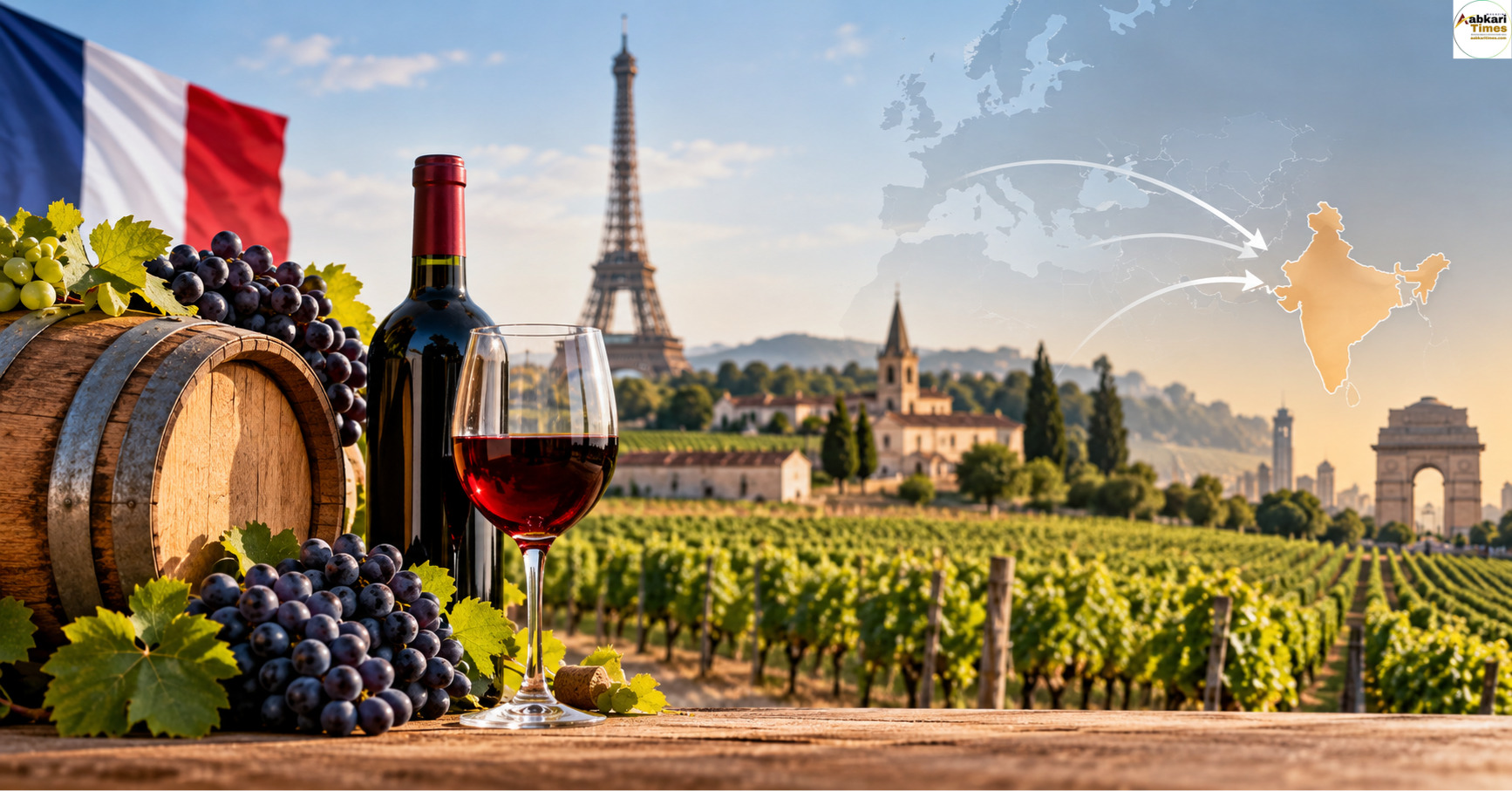
Paris/New Delhi: France’s wine industry is facing mounting pressure from extreme heat, drought, changing consumer behaviour and rising production costs, with the country’s wine output in 2026 potentially falling to its lowest level in around seven decades.
According to France’s agriculture ministry, 2026 could mark the third consecutive year of declining wine production, highlighting the growing impact of climate change on one of the country’s most important agricultural and beverage industries. The crisis is also prompting producers to reconsider traditional vineyard practices, production rules and international market strategies. Countries such as India, Brazil and other emerging markets are increasingly being viewed as potential destinations for French wine.
Climate Change Is Reshaping French Vineyards
The effects of rising temperatures are becoming increasingly visible across France’s major wine-producing regions. Earlier grape harvesting is one of the clearest indicators of the changing climate. In Burgundy, producers have reported harvesting grapes much earlier than in previous decades. Earlier ripening is creating operational challenges because wineries have to arrange labour, equipment and logistics within increasingly compressed timeframes.
 Bottle Sales Generate 60% of France’s Wine Tourism Revenue, Winalist Study Finds
 Sula Vineyards Founder Rajeev Samant Reflects on 26 Years of Growth and the Future of India’s Wine Industry
The impact, however, varies across regions. Some areas, including parts of the Loire Valley and Champagne, have faced significant pressure from heat, while some vineyards in Bordeaux and Languedoc-Roussillon have reported relatively better production compared with the previous year. Industry experts say France’s traditional wine-growing system was not designed for the pace of climatic changes now affecting vineyards.
Traditional Wine Rules Face New Pressure
Climate change is also intensifying debate around France’s long-established wine regulations. The country’s appellation system places detailed requirements on factors such as permitted grape varieties, vineyard density and irrigation. These rules have historically helped preserve the identity and reputation of regional wines, but producers are increasingly questioning whether the existing framework provides enough flexibility to respond to rapidly changing weather conditions.
The decision by Château Lafleur in 2025 to withdraw six wines from the Pomerol and wider Bordeaux classification structure highlighted the broader debate over how traditional wine regulations can adapt to changing production realities.
Vineyard Area Being Reduced
France’s wine sector is simultaneously dealing with weaker consumption and excess production. In Bordeaux, around 20,000 hectares of vineyards have reportedly been removed since 2023, reducing the region’s vineyard area to approximately 83,000 hectares.
Under a government-supported programme, vineyards equivalent to around 4% of France’s total vineyard area are being permanently removed in 2026. Producers can receive financial support of up to €4,000 per hectare for removing vines. The move reflects an attempt to bring production capacity closer to changing market demand while providing financial assistance to affected growers.
Falling Wine Consumption Adds to Industry Pressure
Climate-related challenges are occurring alongside a long-term change in French drinking habits. Wine consumption in France has declined substantially over several decades. Regular wine consumption, which was once common among a large proportion of the population, has fallen sharply, putting additional pressure on domestic producers.
Inflation, changing consumer preferences and trade-related challenges have further complicated the market. Producers are dealing with higher costs at a time when demand in some segments remains weak, contributing to inventory pressure and financial stress across parts of the sector.
France Looking Beyond Traditional Markets
With domestic consumption under pressure, French wine producers are increasingly looking at international markets and new consumer segments. The United States remains an important market for experimentation with new products and packaging, while Brazil, South America and India are being considered among potential growth markets.
India is particularly relevant because of its expanding premium beverage market, changing consumer preferences and growing interest in wine. However, the opportunity for French producers will depend on factors including pricing, taxation, distribution, consumer education and market access. For French wine houses, attracting younger consumers is another strategic priority. Producers are increasingly focusing on communicating the history, origin and identity of wines in simpler and more accessible ways while making premium products available to a broader consumer base.
What the Crisis Could Mean for India
The developments in France could create both opportunities and challenges for India’s wine industry. A sustained reduction in French production could influence global supply, pricing and sourcing patterns, while French producers seeking new markets could increase their focus on India.
For Indian wineries, the changing global landscape could also create an opportunity to strengthen domestic production, develop region-specific wine identities and invest in climate-resilient viticulture. India’s wine sector, particularly in established producing regions such as Maharashtra and Karnataka, may increasingly need to focus on grape varieties, water management, vineyard technology and production practices that can withstand changing weather conditions.
A Changing Global Wine Industry
France’s current situation illustrates a broader transformation taking place across the global wine industry. Climate change is affecting grape-growing conditions, harvest calendars, production volumes and vineyard economics, while changing consumer habits are simultaneously reshaping demand. For France, the challenge is no longer limited to protecting vineyards from heat and drought. Producers must also balance traditional wine-making rules with climate adaptation, manage excess capacity and find new consumers.
For emerging markets such as India, the changing global wine landscape could create opportunities for imports, investment, technology partnerships and domestic wine production. The coming years could therefore see climate change influence not only where wine is produced, but also where global wine companies look for their next generation of consumers.
About the Author