
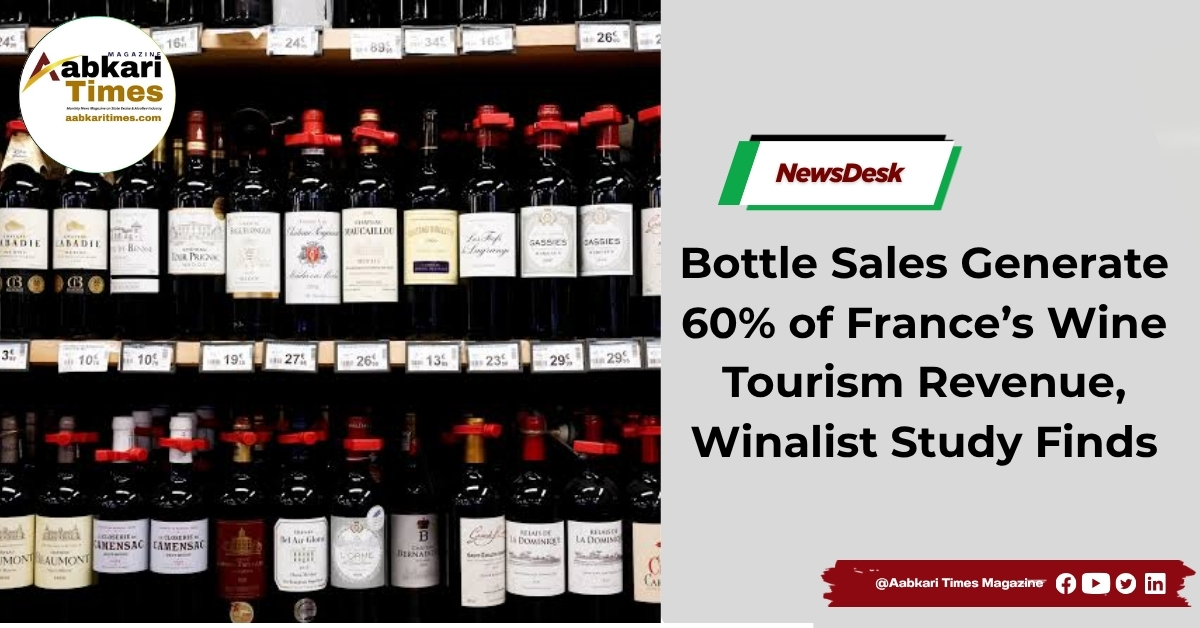
Wine tourism in France is increasingly driving direct-to-consumer sales, with bottle purchases accounting for 60% of revenue generated by winery and distillery visits, according to Winalist’s 2026 Wine Tourism Observatory. Based on 15,000 bookings made in France during 2025 across 654 wineries and distilleries listed on the platform, the study found that 75% of visitors purchased bottles, highlighting the commercial potential of wine tastings and vineyard experiences.
According to Winalist, producers earned an average of €207 per booking through admission fees and on-site purchases. Among visitors who bought wine, average spending on bottles reached €164. The findings suggest that wine tourism is becoming more than a hospitality activity, serving as an important sales channel for producers seeking to increase revenue and strengthen direct customer relationships.

The study also revealed that younger consumers are playing a significant role in France’s wine tourism market. Visitors under 35 accounted for 50% of the total, while those aged 25 to 34 represented the largest segment, at 33%. Dutch tourists formed the largest international visitor group, followed by Americans and Italians. International visitors spent an average of €33 per adult on admissions, compared with €25 among French visitors.
Visitor spending also varied by group type. Families were the most likely to purchase bottles, with 79% buying wine during or after their visits. Corporate groups recorded the highest average booking value at €461, reflecting larger group sizes and company events. Solo travellers, meanwhile, were less likely to purchase wine, with 53% making a purchase.
 Sula Vineyards Founder Rajeev Samant Reflects on 26 Years of Growth and the Future of India’s Wine Industry
 European Sparkling Wine Market Set for Strong Growth as Premium and Sustainable Wines Gain Popularity
Travel patterns further highlighted opportunities for wine tourism operators. Around 55% of visitors extended their trips to two days or longer, while 33% preferred short breaks lasting two to three days. Fridays and Saturdays accounted for 45% of visits, and May to September represented 65% of bookings.
Bordeaux emerged as France’s largest wine tourism destination by platform listings, with 367 experiences. Foreign visitors accounted for 67% of its wine tourists, particularly travellers from the United States, Britain, Italy, Spain and Germany. Experience prices across France ranged from €24 in the Southwest to €83 in Cognac.
The findings underline how vineyard experiences, international tourism and on-site bottle sales can strengthen producers’ revenue. For wineries and distilleries, converting visitors into customers offers a valuable opportunity to expand direct sales while attracting younger and international audiences.
About the Author