

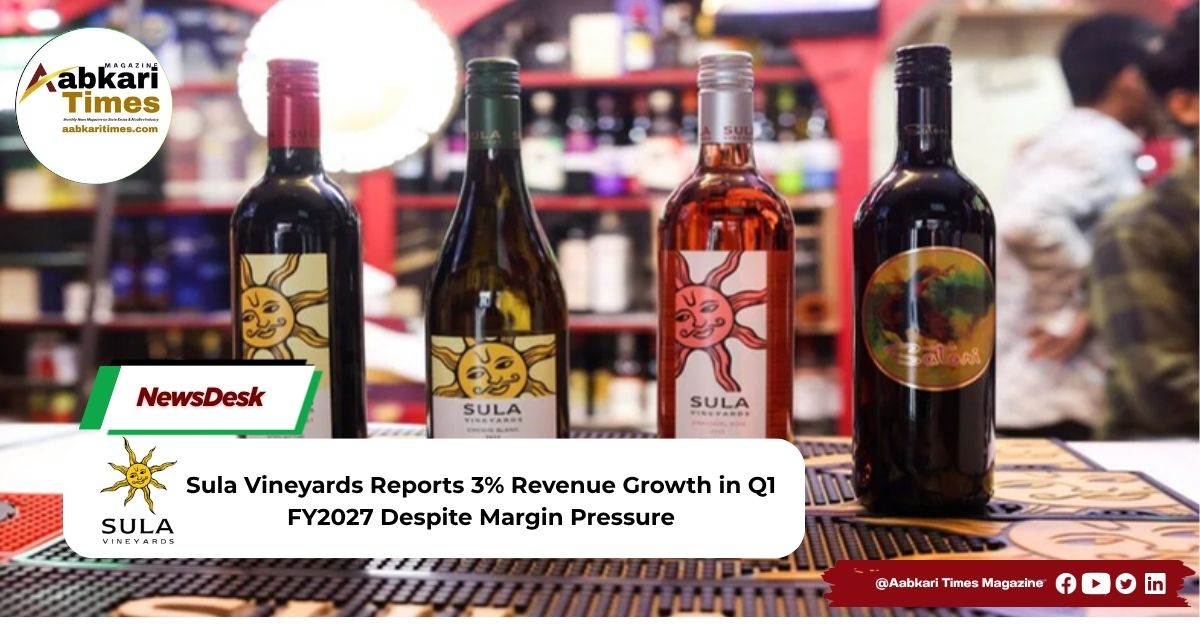
Sula Vineyards reported a 3% year-on-year increase in net revenue from operations to ₹121 crore for the quarter ended June 2026, beating the market forecast of ₹116 crore. The company said Q1 FY2027 marked a return to more stable growth following a challenging FY2026 and its sixth consecutive month of positive sales growth.
The revenue growth was supported by stronger demand for premium wines and continued momentum in wine tourism. However, gross profit declined 5% during the quarter as higher grape procurement costs and an unfavourable sales mix put pressure on margins. The performance indicates that while demand has improved, cost inflation and portfolio mix remain key challenges for the wine major.

Premiumisation continued to be a major growth driver for Sula Vineyards. The company’s elite and premium portfolio grew 6% during the quarter, with its contribution to own-brand sales increasing by 310 basis points to a record 78%. Management highlighted The Source and Rasa as key growth contributors, while Sula Cabernet Shiraz, the company’s largest brand, delivered high single-digit growth despite a strong base.
Wine tourism also remained a strong performer, with revenue increasing 12% year on year. The growth was supported by higher occupancy and new projects, strengthening Sula’s presence beyond its core wine business.
 Bottle Sales Generate 60% of France’s Wine Tourism Revenue, Winalist Study Finds
 Sula Vineyards Founder Rajeev Samant Reflects on 26 Years of Growth and the Future of India’s Wine Industry
Despite the revenue beat and continued premiumisation, investor sentiment remained cautious due to the decline in gross profit. Sula Vineyards’ shares fell 5.52% in after-hours trading, from the previous close of ₹167.54 to ₹158.30, indicating that the market focused more on margin pressure than on the company’s modest revenue outperformance.
Overall, Sula Vineyards’ Q1 FY2027 performance reflects improving sales momentum, strong premium wine growth and continued expansion in wine tourism, while rising grape costs and an unfavourable sales mix remain important factors to watch in the coming quarters.
About the Author