
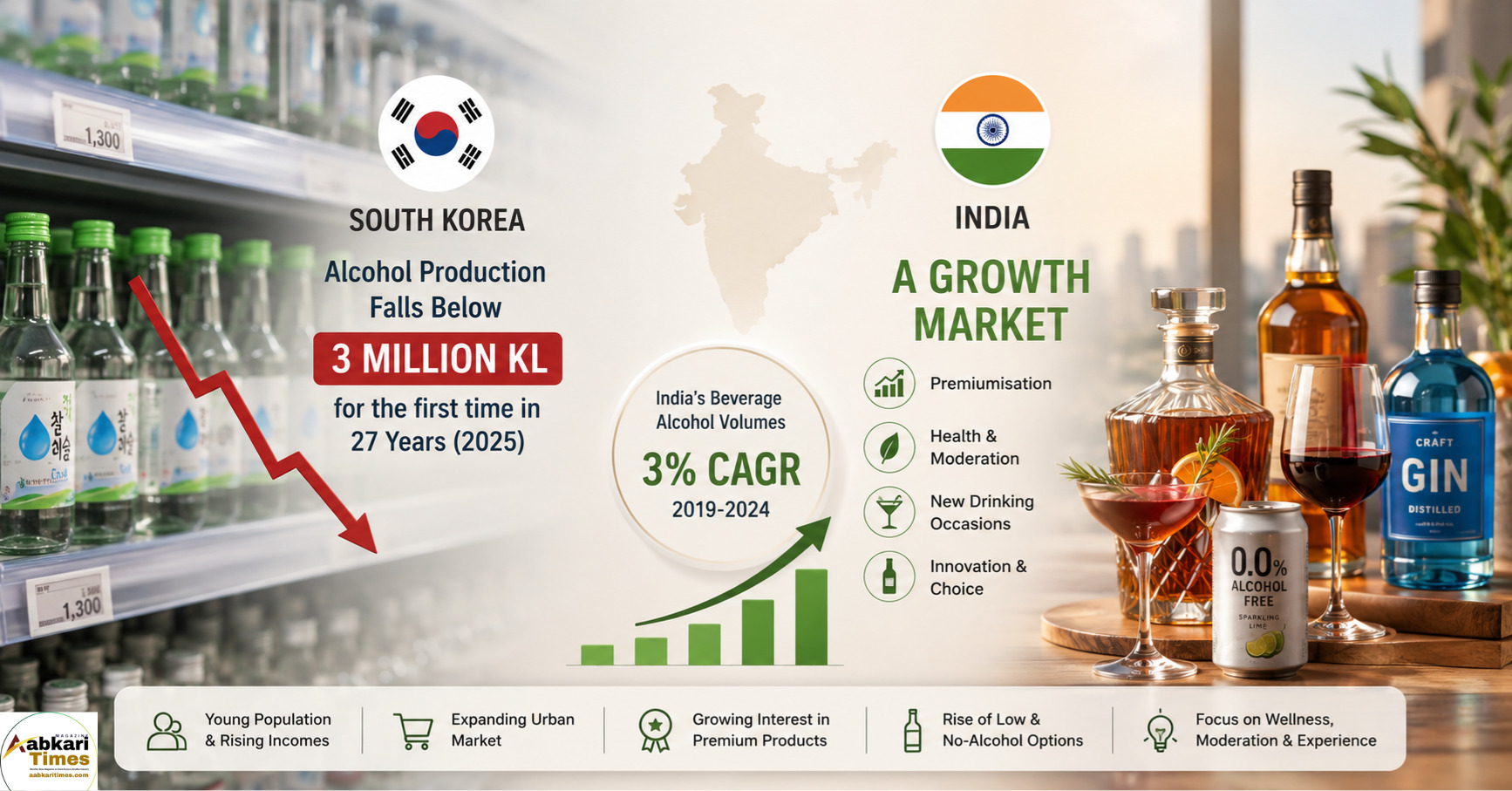
South Korea’s alcohol market is undergoing a major transformation as consumers increasingly embrace healthier lifestyles, moderation and new beverage formats. In 2025, the country’s alcoholic beverage production fell below 3 million kilolitres for the first time in 27 years, highlighting how changing consumer preferences can reshape a mature alcohol market.
For India, however, the picture is markedly different. India remains one of the world’s important growth markets for beverage alcohol. IWSR data indicates that India’s total beverage alcohol volumes grew at a 3% CAGR between 2019 and 2024, while the country continued to show growth even as the global market faced pressure.
India Is Still a Growth Market
Unlike South Korea, where beer, soju and traditional rice liquor shipments have been declining for several years, India’s beverage alcohol market continues to expand.
 Monkey Shoulder Kicks Off 9th Ultimate Bartender Championship in India with New Delhi Round
 Tasmac to Invite Fresh Tenders for Bar Licences as Existing Permits Expire October 31
The difference is partly structural. India has a large and relatively young consumer base, rising disposable incomes, expanding urban markets and increasing consumer interest in premium alcoholic beverages. IWSR has identified India as one of the key growth markets for beverage alcohol, with imported spirits also gaining momentum.
This does not mean India is immune to the behavioural changes visible in South Korea. Instead, the Indian market is increasingly developing along two parallel tracks: premiumisation on one side and moderation on the other.
Health and Moderation Could Become Bigger Themes
South Korea’s experience demonstrates what can happen when health consciousness, demographic changes and changing social habits combine to reduce alcohol consumption.
India is also seeing growing interest in healthier lifestyles, particularly among younger urban consumers. Industry trends indicate rising interest in low-alcohol and non-alcoholic beverages, although these categories remain much smaller than conventional alcoholic drinks.
Globally, the no-alcohol segment is expanding rapidly. IWSR expects no-alcohol analogue volumes to have increased by 9% in 2025 and forecasts the category to grow substantially through 2029.
For Indian beverage companies, this creates an opportunity to develop products that appeal to consumers who want the social experience of drinking without consuming traditional levels of alcohol.
Premiumisation Remains a Strong Indian Trend
India’s situation differs from South Korea because consumers are not simply moving away from alcohol. A significant part of the market is moving towards drinking better rather than necessarily drinking more.
Premium whisky, premium rum, craft beer, premium gin, tequila and other higher-value categories are attracting increasing consumer attention. This is helping the industry generate value even as global alcohol consumption faces pressure.
India’s growing premium spirits market also reflects changing consumer expectations around quality, provenance, packaging and drinking occasions.
The Rise of New Drinking Occasions
Another important lesson from South Korea is the changing role of social drinking.
In India, traditional drinking occasions remain important, but consumers are increasingly exploring cocktails, ready-to-drink beverages, flavoured spirits, wine and other differentiated products. This is encouraging companies to innovate around flavour, convenience, moderation and experience.
The growth of fruit-based and flavoured beverages also indicates that consumers are becoming more willing to experiment beyond conventional whisky, rum and vodka.
What India’s Alcohol Industry Can Learn
South Korea’s declining alcohol production should not be interpreted as a forecast for India. The two markets have different demographics, regulations, consumption patterns and stages of development.
However, South Korea offers an important warning for Indian alcohol companies: consumer preferences can change structurally, not just cyclically.
India’s industry therefore has an opportunity to prepare early by expanding premium products while also developing credible low- and no-alcohol alternatives. Companies that understand moderation, wellness, younger consumers and changing drinking occasions could be better positioned for the next phase of India’s beverage alcohol market.
For now, India remains a growth market, while South Korea illustrates what a mature alcohol market can look like when health consciousness and changing lifestyles begin to outweigh traditional drinking habits.
About the Author