

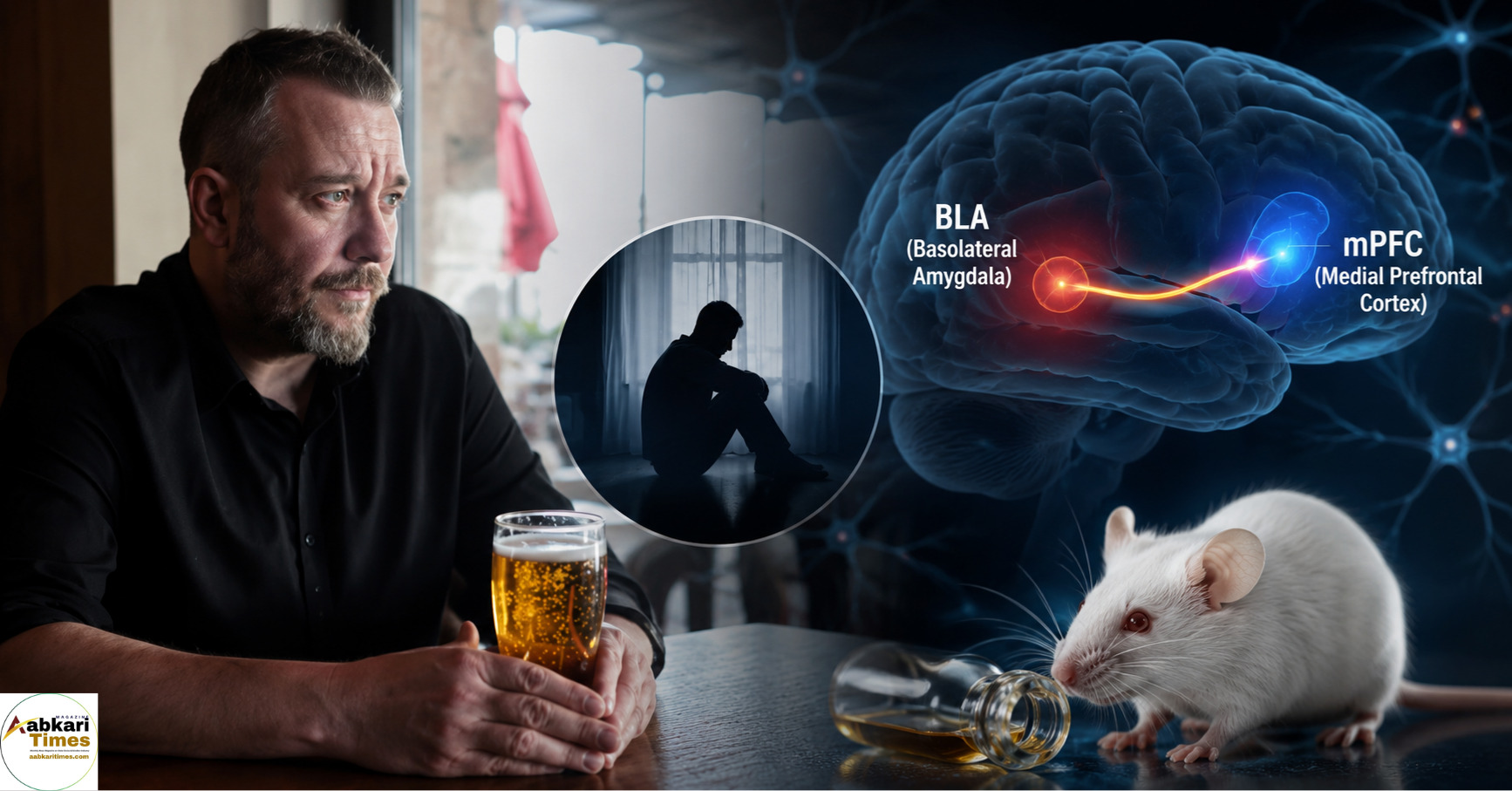
A new study in mice has identified a brain circuit that may explain why social isolation can increase alcohol consumption in males, offering new clues about the biological link between loneliness and alcohol misuse.
Researchers have identified a specific brain pathway that appears to drive increased alcohol consumption in male mice experiencing social isolation. The findings, published in Nature Neuroscience, provide new insight into how negative social experiences can alter brain activity and potentially increase vulnerability to alcohol misuse.
The study focused on a neural connection between the basolateral amygdala (BLA), a brain region involved in processing emotions and stress, and the medial prefrontal cortex (mPFC), which plays an important role in decision-making, motivation and reward processing.
 Japan Cuts Beer Taxes, Making Regular Beer Cheaper from October 2026
 Karnataka Liquor Sales Flat in H1 FY27 as Beer Volumes Surge 41% Under New AIB Policy
Social Isolation Produced Different Effects in Male and Female Mice
Researchers initially housed adult male and female mice in groups before placing some of them in individual housing to model social isolation. The animals were then given daily access to water and a 15% alcohol solution.
Over approximately 11 days of isolation, male mice progressively increased their alcohol intake. In contrast, female mice reduced their alcohol consumption. The researchers therefore observed a clear sex-specific response to the same social condition.
The study found that isolation increased the activity or excitability of BLA neurons projecting to the mPFC in males, while the activity of the same pathway decreased in females.
Brain Circuit Appears to Drive Alcohol Drinking
The researchers used advanced techniques, including calcium imaging and optogenetics, to determine whether the brain pathway was simply associated with increased drinking or actually contributed to it.
When researchers artificially activated the BLA–mPFC pathway in non-isolated male mice, the animals increased their alcohol consumption. The stimulation particularly increased the length of drinking episodes and the number of alcohol-related licks.
Conversely, suppressing the pathway in socially isolated male mice reduced alcohol drinking. These findings suggest that the circuit plays a causal role in the increase in alcohol consumption associated with isolation.
Isolation Changes How the Brain Responds to Alcohol
The researchers also observed changes in the medial prefrontal cortex. Following social isolation, male mice showed stronger neural responses to alcohol, while responses to sucrose, representing a natural reward, decreased.
This suggests that isolation may shift the brain’s reward processing system—making alcohol-related signals more prominent while reducing responses to other rewarding experiences.
According to the researchers, these changes could help explain how negative social experiences may contribute to maladaptive alcohol consumption.
Potential Implications for Alcohol Misuse Research
The findings offer a possible biological pathway connecting social isolation with increased alcohol use. Identifying such circuits could eventually help researchers understand why some individuals are more vulnerable to alcohol misuse during periods of loneliness, stress or reduced social contact.
However, the study was conducted in mice, not humans. The researchers noted that the reasons for the different responses between males and females remain unclear, and further research will be needed to determine how directly these findings apply to people.
The study nevertheless provides a new direction for investigating the relationship between loneliness, brain function and alcohol consumption, while highlighting the importance of considering sex differences in addiction research.
About the Author