
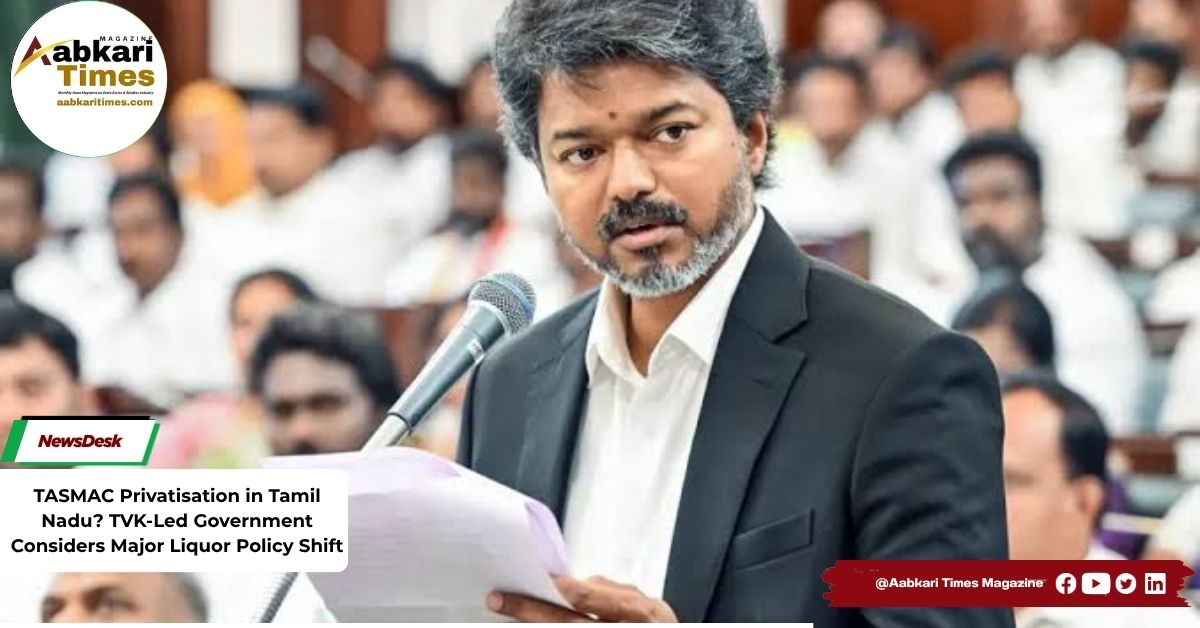
Tamil Nadu may allow private operation of TASMAC liquor outlets in corporations and municipalities; proposal comes amid stricter anti-overcharging rules and protests against new liquor bars
The TVK-led Tamil Nadu government is reportedly examining a proposal to privatise Tamil Nadu State Marketing Corporation (TASMAC) liquor outlets operating in corporations and municipalities, according to official sources.
If approved, the move would represent the first significant shift towards private participation in liquor retail since 2003, when the then AIADMK government brought retail liquor sales under the control of state-run TASMAC.
 Odisha Collects ₹24,455 Crore in Excise Duty Over Five Years, CAG Report Reveals
 Nasha Mukt Yuva for Viksit Bharat UP Prohibition Department Holds Youth Awareness Seminar at AKTU Lucknow
Proposed TASMAC privatisation under consideration
Sources said the proposal is currently under active consideration, and no final decision has yet been announced by the Tamil Nadu government.
The development comes at a time when TASMAC outlets are facing increased public and judicial scrutiny, with the government simultaneously introducing stricter measures to improve accountability in liquor sales operations across the state.
Tamil Nadu introduces strict anti-overcharging rules

The reported privatisation move follows the recent introduction of revised disciplinary norms for TASMAC employees, implemented after directions from the Madras High Court.
Under the updated rules:
- Employees found charging above the Maximum Retail Price (MRP) can face suspension and monetary penalties.
- Repeat violations may lead to permanent dismissal from service.
- The new guidelines are aimed at improving transparency and curbing widespread complaints of overpricing at TASMAC shops.
The stricter enforcement framework has been viewed as part of the Tamil Nadu government’s broader effort to strengthen oversight of the state’s liquor retail network.
Public protests against liquor outlets intensify
The government is also facing growing public opposition to new liquor establishments, particularly in religious and tourist-sensitive areas.
On 22 July, residents from six villages in Ramanathapuram district staged a protest against the proposed establishment of a private liquor bar under the “Manamagizh Mandram” initiative in the Pamban tourist area.
The protesters submitted a petition to the Ramanathapuram District Collector, arguing that the proposed bar would:
- Affect public safety,
- Create concerns for women, children and students,
- Lead to law and order problems, and
- Damage the religious sanctity of the Rameswaram region, one of India’s major pilgrimage destinations.
Residents said the area attracts devotees from across the country, and the opening of a liquor bar could adversely affect its spiritual and cultural character.
District administration promises review
Following the protest, Ramanathapuram District Collector Sivaguru Prabhakaran assured the villagers that the matter would be examined carefully and that appropriate action would be taken after due consideration of their objections.
What TASMAC privatisation could mean
Tamil Nadu’s liquor retail system is currently dominated by TASMAC, which operates thousands of retail liquor outlets across the state and contributes substantial revenue to the state exchequer.
Allowing private participation in urban TASMAC outlets could potentially:
- Change the structure of Tamil Nadu’s liquor retail market,
- Increase operational competition in cities,
- Reduce the administrative burden on the state-run corporation,
- Improve retail infrastructure and customer service standards, and
- Trigger a wider debate on the future of state-controlled liquor retailing in Tamil Nadu.
However, any move towards privatisation is likely to attract significant political and public attention, given TASMAC’s long-standing role in Tamil Nadu’s excise revenue system and the sensitivity surrounding liquor policy in the state.
For now, the proposal remains under consideration, but it signals that the TVK-led Tamil Nadu government may be exploring one of the most significant liquor policy changes in the state in more than two decades.
About the Author