
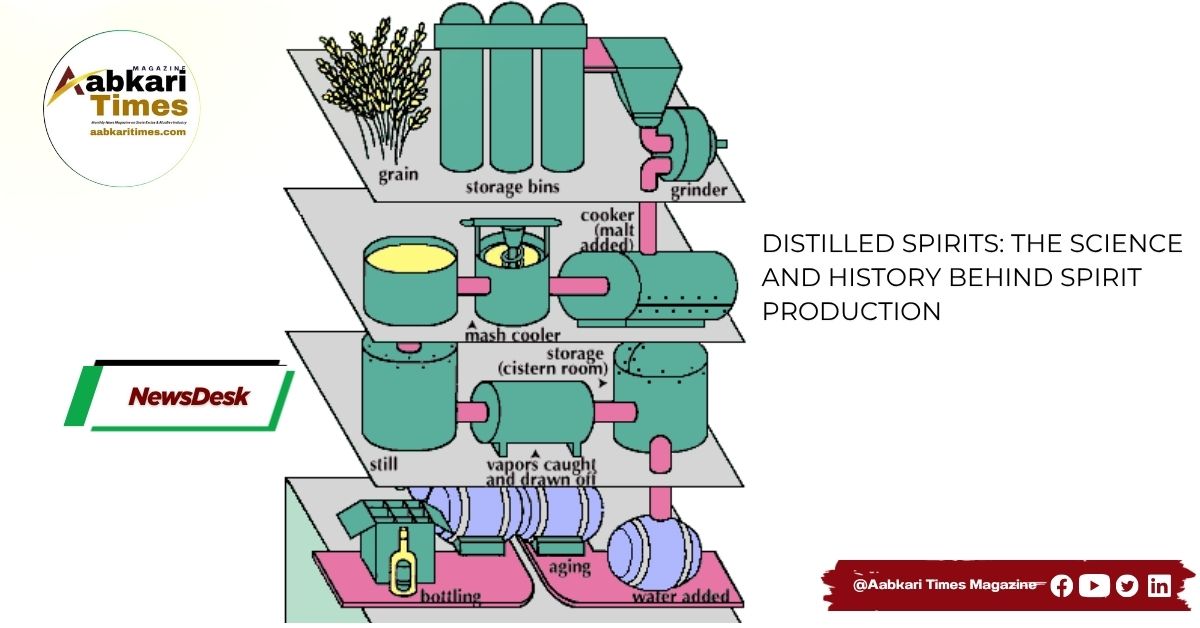
Distilled spirits are alcoholic beverages produced through a process known as distillation, which takes place after fermentation. This process increases the concentration of alcohol, resulting in beverages that are significantly stronger than beer or wine. Some of the world’s most popular spirits, including Whisky, Rum, Brandy, and Arrack, belong to this category.
Mashing and Fermentation
The production of spirits begins with the preparation of raw materials such as grains, fruits, sugarcane, or other fermentable ingredients. These materials are crushed or pressed to release starches and sugars.
The next stage is known as mashing, during which enzymes convert starch into fermentable sugars. Once the sugar-rich mixture is prepared, yeast is added. Through the process of fermentation, the yeast converts sugars into alcohol and carbon dioxide, producing a liquid that typically contains around 7–9 percent alcohol by volume (ABV).
 Monkey Shoulder Kicks Off 9th Ultimate Bartender Championship in India with New Delhi Round
 Tasmac to Invite Fresh Tenders for Bar Licences as Existing Permits Expire October 31
The Distillation Process
After fermentation, the liquid undergoes distillation. During this stage, alcohol is separated and concentrated by heating the fermented liquid and collecting the alcohol vapors. Since alcohol evaporates at a lower temperature than water, distillation allows producers to increase the alcohol content significantly.
This process creates a stronger and more refined spirit, distinguishing distilled beverages from beer and wine.
Maturation and Aging
Many distilled spirits are aged for extended periods to enhance their flavor, aroma, and character. The spirit is often stored in wooden barrels for months or even years.
For example, whisky and several styles of rum are commonly matured in oak barrels. During aging, oxidation and interaction with the wood gradually influence the beverage’s taste, color, and aroma. The barrel contributes compounds such as tannins, vanillin, and other flavor elements that help create the complex profiles associated with premium spirits.
A Tradition Rooted in Science
The production of distilled spirits combines centuries-old craftsmanship with scientific precision. From mashing and fermentation to distillation and aging, each stage plays a crucial role in determining the final quality, strength, and flavor of the beverage.
Today, distilled spirits remain an important segment of the global beverage industry, valued not only for their diversity of styles but also for the technical expertise required to produce them.
Role of Fermentation (Kinvana) in Distillation
Before distillation, the fermentation process takes place. In this process, yeast converts sugar into alcohol and carbon dioxide. Yeast is a microscopic organism that breaks down carbohydrates when sugar and yeast are present together. This is a natural process, which is why alcoholic beverages could historically form spontaneously in various conditions.
Raw Materials Used for Distilled Spirits
Two main types of raw materials are used in the production of distilled spirits:
- Sugar-based raw materials:
These include sugarcane, jaggery, grapes, or fruit juices. They naturally contain sugars, which makes alcohol production easier. Spirits such as brandy and rum are made using these materials. - Starch-based raw materials:
These include corn, barley, wheat, rice, and potatoes. These materials contain starch, which is first converted into sugar and then fermented to produce alcohol. Whisky and similar spirits are made from these raw materials.
Thus, fermentation is a crucial step in the production of distilled spirits, forming the foundation of the entire process.
Mashing and Distillation Process
Before making liquor, raw materials are first crushed or heated so that the starch or sugar present in them becomes available. This process is called mashing. In this stage, enzymes convert starch into sugars.
After this, fermentation takes place where yeast converts sugar into alcohol. The fermented liquid typically contains around 7% to 9% alcohol by volume.
Maturation (Aging) of Spirits
Distilled spirits are then stored in wooden barrels for several years so that their taste and aroma can develop. This process is known as maturation or aging. For example, whisky and some other spirits are aged in oak barrels.
During aging, oxidation occurs and interaction with wood components takes place, which changes the colour, flavour, and smoothness of the drink.
About the Author