
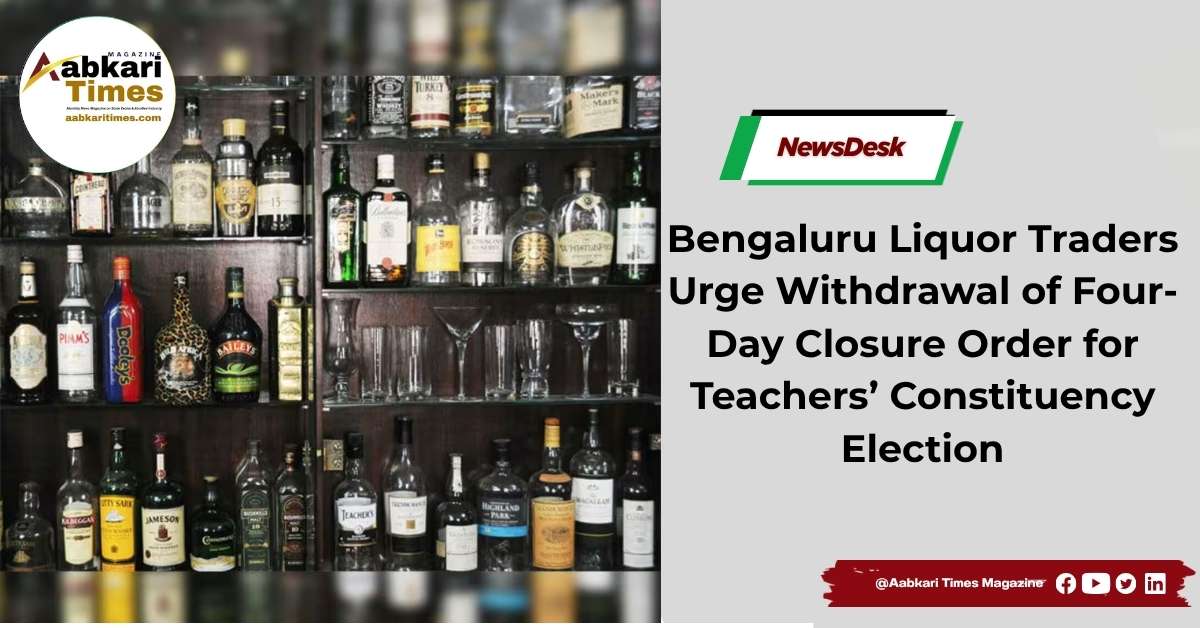
Bengaluru: Liquor traders in Bengaluru have urged the Karnataka government to withdraw the order mandating a four-day closure of liquor outlets during the upcoming Teachers’ Constituency election, arguing that the extended shutdown would impose a significant financial burden on retailers. The Bangalore Hotels Association and Bangalore Wine Merchants’ Association have appealed to the authorities to reconsider the decision, citing business losses and continuing operational expenses despite the suspension of sales.
In a letter dated October 13, P.C. Rao, honorary president of the Bangalore Hotels Association, questioned the need for an extended closure during an election in which teachers constitute the electorate. He pointed out that approximately 20,000 voters are expected to participate, including around 15,000 women, and appealed to the Chief Minister to reconsider the order.

Veerendra N. Kamath, honorary secretary of the association, also questioned the requirement to close liquor outlets on the vote-counting day, October 27. He argued that the counting process should not require an extended shutdown, given the relatively limited number of votes involved, particularly if voters exercise their franchise efficiently.
The Bangalore Wine Merchants’ Association highlighted the financial implications of mandatory closures for licensed liquor retailers. Rajesh Bheemaiah, vice-president of the association, said retailers pay substantial annual licence fees for a full 12-month period but lose several days of business because of closure orders issued by the authorities.
 Premium Products to Reach 35–36% of India’s IMFL Market in 3–4 Years, Says ISWAI
 Telangana Hikes Foreign Liquor Prices by Up to 6%; Consumers to Pay ₹30–₹100 More Per Bottle
Citing the example of a CL-2 liquor outlet, Bheemaiah said the annual licence fee amounts to ₹10.35 lakh. Based on this figure, the licence cost attributable to four days is approximately ₹11,500, even when the outlet is prohibited from operating. He added that retailers also face overheads of around ₹1 lakh per outlet, alongside high rentals and other recurring expenses.
Employee costs represent another major concern for liquor businesses. Bheemaiah said retailers must continue paying wages and salaries during mandatory closures, regardless of whether sales are permitted. He cited a cashier’s salary of approximately ₹40,000 and noted that an average outlet employs around five people, including the cashier. Retaining trained employees is important because retailers cannot be certain that workers who leave temporarily will return promptly when operations resume.
The associations have urged the authorities to reconsider the four-day shutdown, arguing that the combination of lost sales, fixed licence fees, rental expenses and employee salaries places additional pressure on liquor retailers. Their appeal highlights the continuing tension between election-related dry-day restrictions and the financial obligations of licensed businesses in Karnataka.
About the Author