
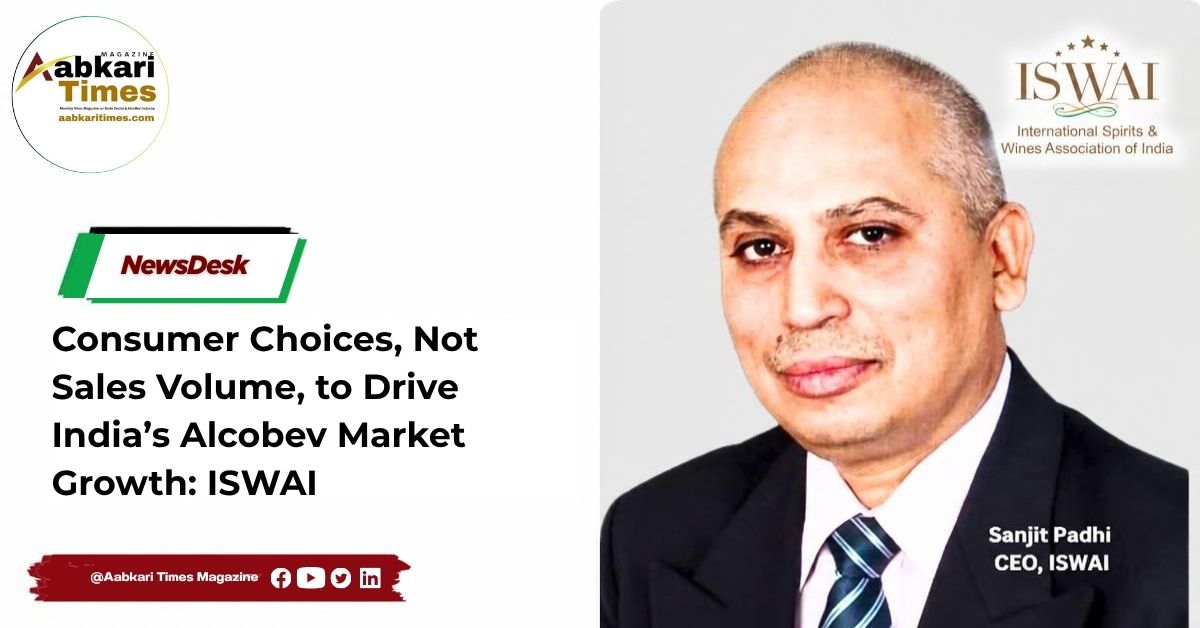
India’s alcoholic beverage market is expected to continue growing over the coming years, but consumer choices and product mix could become as important as sales volumes, according to Sanjit Padhi, Chief Executive of the International Spirits and Wines Association of India (ISWAI). Rising incomes, premiumisation and changing drinking preferences are expected to support market value growth, although a shift towards lower-value categories such as beer could moderate overall value expansion.
Padhi said India’s alcobev market is likely to broadly track nominal GDP growth in 2026, while volumes are expected to grow at around 4% annually through 2030. As a result, future revenue growth will increasingly depend on whether consumers choose premium spirits, beer, ready-to-drink products or other emerging categories. Premiumisation is expected to remain an important growth driver as consumers increasingly trade up to higher-value products.
According to ISWAI, the Indian alcoholic beverage market reached around ₹6.18 trillion in calendar year 2025, compared with ₹3.9 trillion in 2021. Spirits and ready-to-drink beverages accounted for nearly ₹4.2 trillion of the 2025 market. In its report, Economic Value of the Indian Alcoholic Beverage Industry, prepared with EY, ISWAI estimated that the sector represented around 1.8% of India’s nominal GDP and generated approximately ₹4 trillion in alcohol-related tax collections during FY25.
→ BAI Hails Karnataka's AIB Tax Reform; DG Vinod Giri Says Revenue Up 13.4%, Beer Sales Surge 41% in Five Months→ 190-Year-Old Hoster Brewing Company to Close Columbus Brewery, Citing Rising Costs and Changing Drinking Habits
The report estimated the FY25 market at around ₹4.16 trillion for spirits and ₹1.935 trillion for beer, while country liquor accounted for approximately ₹1.05 trillion in CY25. Alcohol-related demand also contributes significantly to organised food-service businesses, with an estimated 14% to 19% of organised food-service revenue linked to alcohol consumption.
Taxation remains a major economic contribution of the sector. ISWAI estimates that alcohol-related taxes accounted for 6.6% of India’s total tax collections, 11.3% of indirect tax revenues and 19.1% of states’ own-tax revenues in FY25. Telangana recorded the highest dependence at 32%, followed by Tamil Nadu at 27% and Uttar Pradesh at 25%.
However, Padhi highlighted challenges including state-level pricing controls, taxation, inflation, tighter labelling scrutiny and lower import duties on foreign liquor. He called for greater pricing flexibility for alcohol companies, arguing that allowing companies to adjust prices according to market conditions would not necessarily lead to automatic price increases.
With moderate volume growth expected, premiumisation, evolving consumer preferences and the changing balance between beer and spirits are likely to determine the next phase of growth for India’s alcobev industry.
About the Author