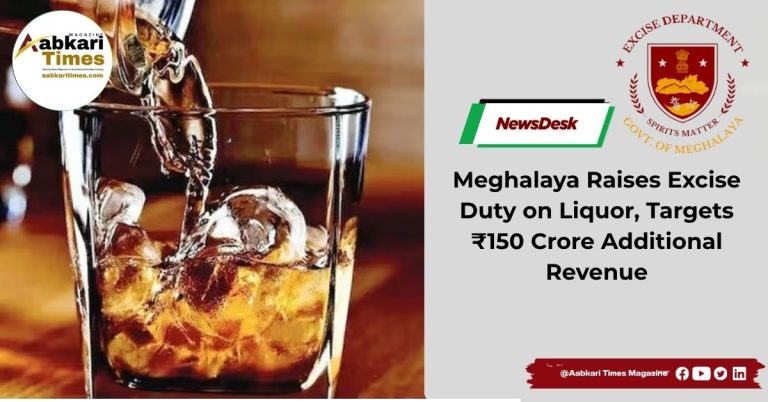

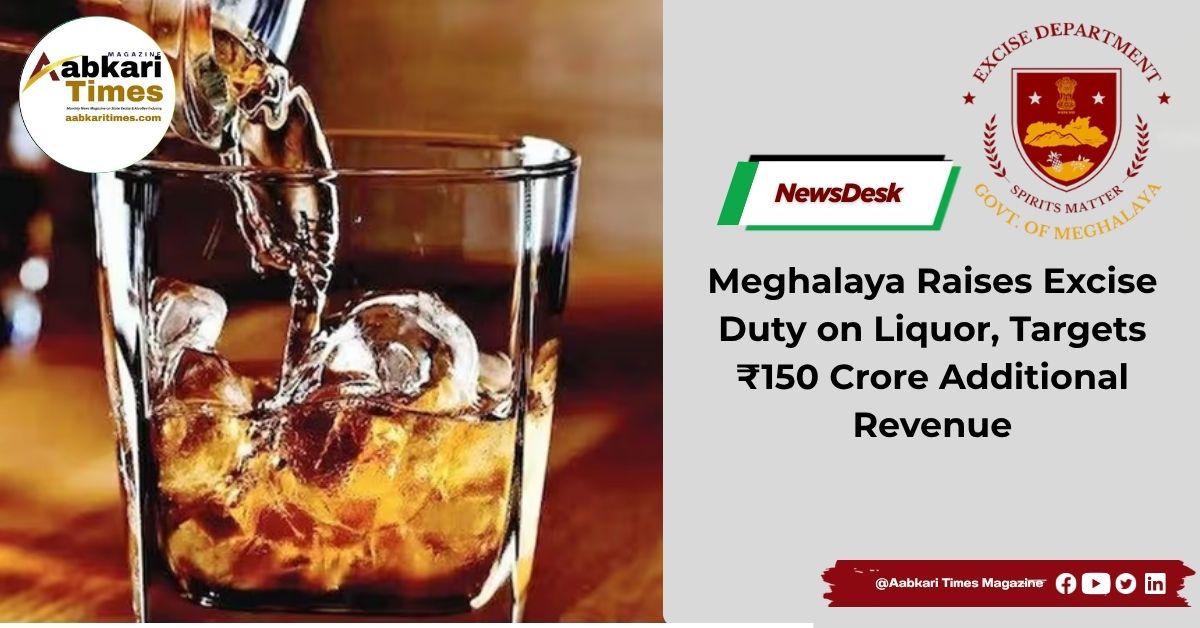
The Meghalaya government has announced a revision in excise duty rates on liquor products, with the move aimed at narrowing the price gap with neighbouring states and increasing revenue collections. Chief Minister Conrad K. Sangma said the revised liquor excise rates are expected to generate around ₹150 crore in additional revenue for the state.
The changes have been introduced through amendments to the Meghalaya Excise Amendment Rules, 2026 and the Meghalaya Bonded Warehouse Rules, 2026. The government has also undertaken a reclassification of different categories of Indian Made Foreign Liquor (IMFL) brands as part of the revised excise framework.
A key component of the new policy is the merger of excise duty and value-added tax (VAT) into a single ad valorem levy. According to Chief Minister Sangma, the move is intended to simplify the collection and administration of liquor-related revenue by bringing the two components under a unified system.
→ Bengaluru Liquor Ban: Alcohol Sales Restricted in Several Areas Till September 20→ MP Excise Revenue Hits ₹17,681 Crore; Country Liquor Dominates at 13.96 Crore Proof Litres in 2025-26

Explaining the change, Sangma said that if the government previously collected ₹100 as excise duty and another ₹100 as VAT, the combined levy would now be structured as a ₹200 ad valorem charge. The taxation and excise components will therefore be consolidated to streamline the overall revenue collection mechanism.
The Chief Minister said the restructuring would allow a single department to manage the overall collection of revenue related to excise. The state government expects the simplified system to improve administrative efficiency and provide greater clarity in the collection process.
The revision in liquor excise rates has also been driven by changes in neighbouring states. Assam and Arunachal Pradesh have recently increased excise duties on various liquor products, creating a price difference between products available in Meghalaya and those sold across the state borders.
Sangma said the price disparity was particularly noticeable between Meghalaya and Assam. With Assam having revised its excise rates and Arunachal Pradesh also making changes, Meghalaya decided to review its own rates to reduce the difference in liquor prices across the neighbouring markets.
The revised excise structure is expected to have implications for the pricing of various liquor categories in Meghalaya, including IMFL products. The reclassification of brands will form part of the framework under which the revised rates are applied.
For the Meghalaya government, the excise duty revision serves two purposes: reducing the price disparity with neighbouring states and strengthening the state’s revenue base. The expected ₹150 crore increase in revenue could provide an additional source of funds for the state while the unified levy is intended to make revenue collection more streamlined.
The latest changes mark another step by Meghalaya to reform its liquor excise administration, simplify tax collection and align its excise structure more closely with developments in neighbouring northeastern states
About the Author