
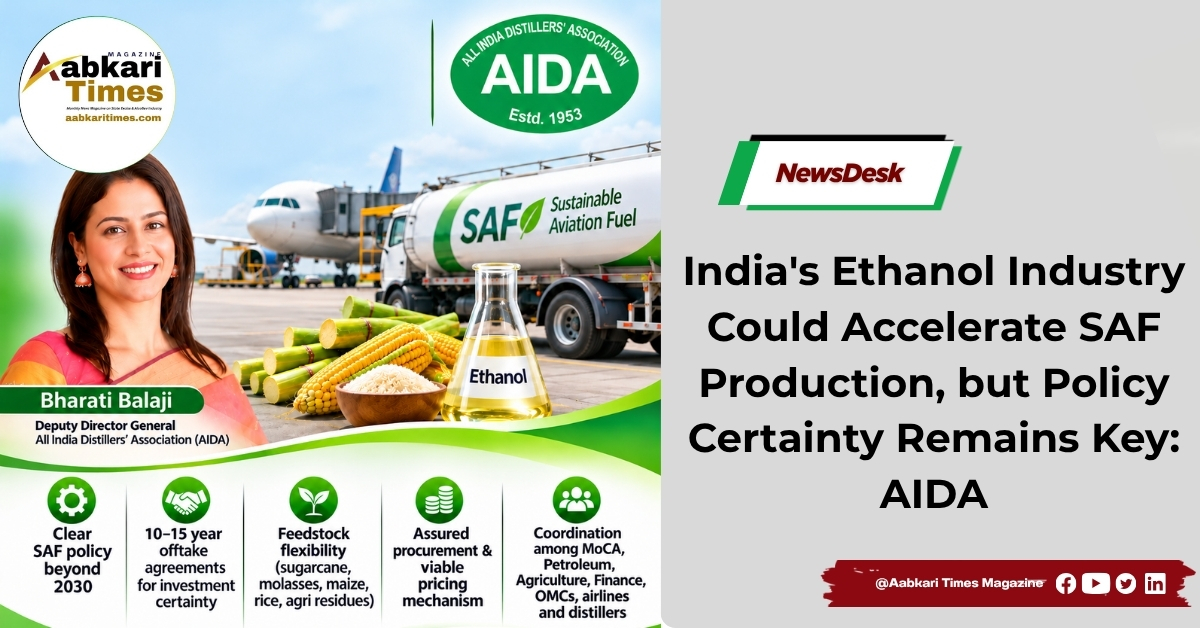
India’s established ethanol manufacturing capacity could give the country a significant advantage in developing domestic Sustainable Aviation Fuel (SAF) production, but long-term policy certainty and assured procurement will be essential to attract investment, according to Bharati Balaji, Deputy Director General of the All India Distillers’ Association (AIDA).
In an interview with Hindustan Times, Balaji said India’s existing distillery infrastructure, farmer-linked supply chains and experience with ethanol procurement could support the transition towards sustainable aviation fuels. However, she cautioned that blending targets alone would not be sufficient to establish commercial-scale SAF manufacturing without predictable feedstock policies, viable pricing mechanisms and long-term purchase commitments.
Balaji highlighted the need for a clear SAF policy framework extending beyond 2030, supported by incentives for early investors and internationally recognised certification standards. She said alcohol-to-jet (ATJ) technology requires substantial capital investment, with facilities designed to operate over 15–20 years. Consequently, producers need 10–15-year offtake agreements to secure financing and establish commercially viable projects.
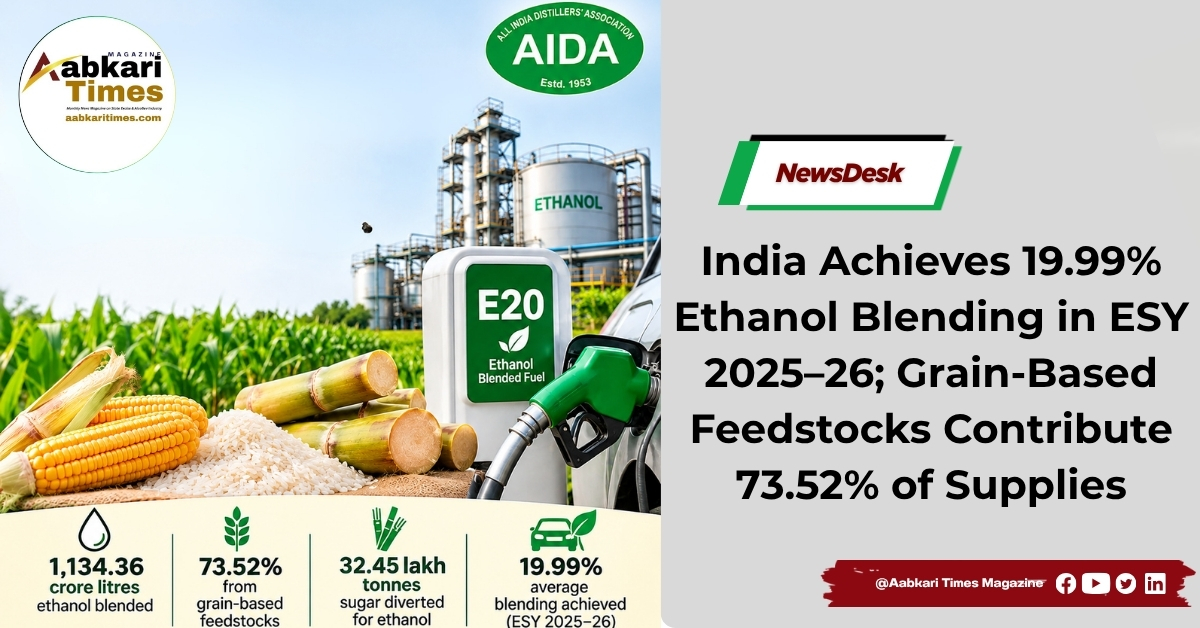
 India Achieves 19.99% Ethanol Blending in ESY 2025–26; Grain-Based Feedstocks Contribute 73.52% of Supplies
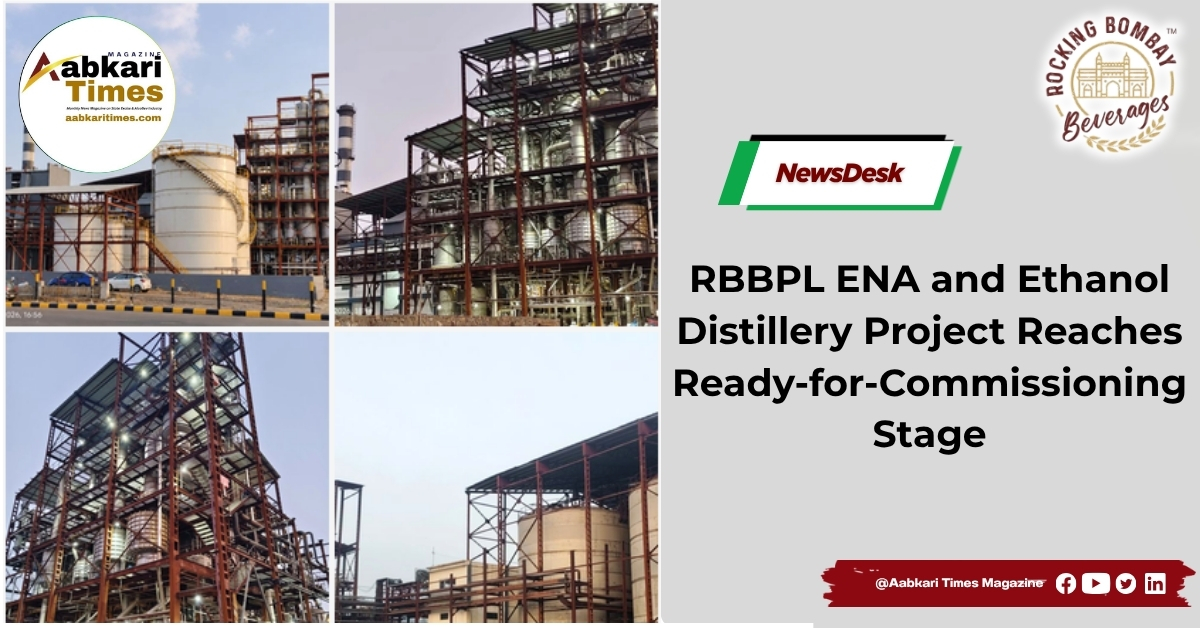
 RBBPL ENA and Ethanol Distillery Project Reaches Ready-for-Commissioning Stage
She also emphasised the importance of feedstock flexibility. Ethanol produced from sugarcane, molasses, maize, surplus rice and agricultural residues should qualify for SAF production based on lifecycle carbon emissions rather than restrictions on individual feedstocks. Frequent changes in feedstock allocation policies, rising maize prices and limitations on rice availability could otherwise create uncertainty for long-term investments.
According to Balaji, India has approximately 2,200 crore litres of installed annual ethanol capacity, providing an established industrial base for the ATJ pathway. Even a 5% SAF blending requirement against projected aviation fuel consumption in 2030 would require an estimated 160–200 crore litres of ethanol, she indicated.
The industry also needs assured procurement through long-term contracts with oil marketing companies, transparent SAF pricing and mechanisms to bridge the cost difference between sustainable and conventional aviation fuel. SAF currently costs significantly more than conventional aviation turbine fuel, making financial support and predictable commercial arrangements important.
Balaji identified coordination among the ministries of Civil Aviation, Petroleum, Agriculture and Finance, along with oil marketing companies, airlines and distillers, as essential to implementation.
AIDA believes India’s ethanol ecosystem can connect its existing biofuel investments with the emerging aviation decarbonisation market, creating opportunities for distilleries, farmers and the wider clean-energy sector.
About the Author