

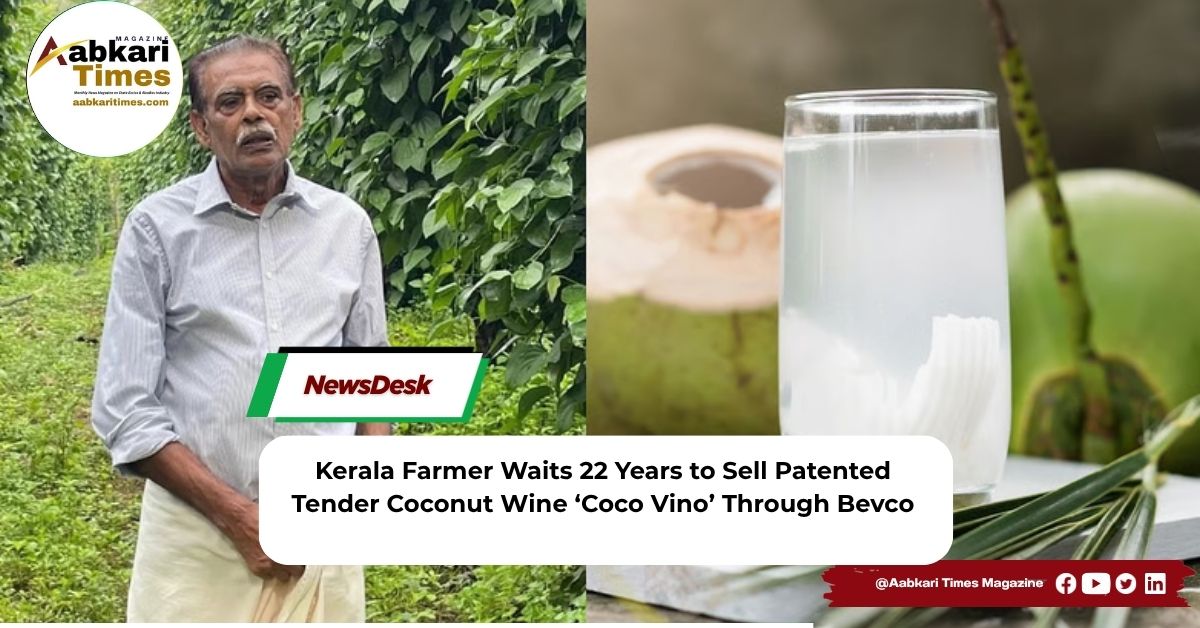
A Kerala farmer’s 22-year wait to commercially sell his patented tender coconut wine continues, despite years of effort to obtain government approvals. Sebastine P Augustine, an 83-year-old farmer from Palamattam in Bheemanady, Kasaragod, remains hopeful that his unique product, Coco Vino, will soon be available through the Kerala State Beverages Corporation (Bevco). Originally from Kottayam, Augustine’s family moved to Kasaragod in 1958.

After completing his studies, he joined the Revenue Department in 1965 and retired as a deputy tahsildar from Hosdurg taluk in 1998. He then returned to farming full-time and became the district president of INFARM (Indian Farmers Movement). Through various agricultural events, he learned the techniques of fruit wine production, which eventually inspired him to experiment with tender coconut wine. Augustine developed Coco Vino using tender coconut water, coconut kernel and selected fruits containing peptides to support fermentation. After several trials and experiments, he succeeded in producing the wine and began pursuing patents. In 2004, he presented his findings at the Indian Horticulture Congress, where the potential of large-scale production to benefit coconut farmers was highlighted. During a visit to the United States the same year, Augustine also met members of the Malayali diaspora who were reportedly willing to invest around Rs 20 crore in the project.
However, he faced major regulatory challenges after returning to Kerala, particularly because there was no clear policy for small, farm-based wineries and breweries. Augustine eventually secured both Indian and international patents in 2007 and worked for years to establish a regulatory framework. He obtained several licences, including excise approval to market the product through Bevco. However, the final hurdle remains the product label, which has been rejected and is currently being worked on. With the support of his wife Mary Kutty and children Sanju and Manju, Augustine invested heavily in setting up River Island Fruit Winery. He says Coco Vino could be sold for around Rs 600-700 a bottle, but excise duty and taxes could push the retail price to Rs 1,600-1,800. Augustine is also urging the government to permit wine tourism in Kerala, allowing visitors to taste the product at the winery, similar to practices in several European countries. Despite the long wait, the veteran farmer remains determined to bring Kerala’s tender coconut wine to the market and create a new opportunity for coconut farmers