

India’s ethanol supply ecosystem is becoming increasingly diversified, with grain-based feedstocks emerging as a major source of ethanol production. According to the latest data compiled by the All India Distillers’ Association (AIDA), India supplied 895 crore litres of ethanol by the end of August 2026 under Ethanol Supply Year (ESY) 2025-26. Of the total supply, 624 crore litres came from grain-based feedstocks, accounting for nearly 70% of cumulative ethanol supplies.
The overall ethanol supply of 895 crore litres stood against a contracted quantity of 1,048 crore litres, indicating that around 85% of the contracted volume had been supplied by August-end. The figures highlight the growing scale of India’s Ethanol Blending Programme and the expanding role of multiple feedstocks in meeting domestic ethanol requirements.
Maize was the largest individual feedstock contributor, supplying 345 crore litres of ethanol during the period. Surplus Food Corporation of India (FCI) rice contributed another 214 crore litres, while damaged food grains accounted for 64 crore litres. Together, these grain-based sources demonstrate the increasing contribution of agricultural feedstocks beyond the traditional sugar-based ethanol production route.
 Scotch Whisky Association Appeals Against England’s New Single Malt Whisky Rules
 Kerala Government Plans Strict Action Against Bars Serving Alcohol to People Below 23
Overall, grain-based ethanol contributed 624 crore litres, while sugar-based feedstocks accounted for 271 crore litres of the total 895 crore litres supplied through August. The increasing share of grain-based ethanol reflects the broader feedstock base available to the Indian ethanol industry and provides greater flexibility in sourcing raw materials based on agricultural availability.

Sugar-based feedstocks, meanwhile, continued to make a significant contribution to India’s ethanol supply. Sugarcane juice accounted for 149 crore litres, followed by B Heavy Molasses at 107 crore litres and C Heavy Molasses at 15 crore litres. The figures underline the continued importance of the sugar sector in supporting India’s renewable fuel programme even as grain-based production expands.
The diversification of feedstocks could also strengthen the resilience of India’s ethanol supply chain. With ethanol being produced from maize, surplus FCI rice, damaged food grains, sugarcane juice and different grades of molasses, producers have multiple sourcing options. This allows the industry to adjust production according to the availability and economics of different feedstocks.
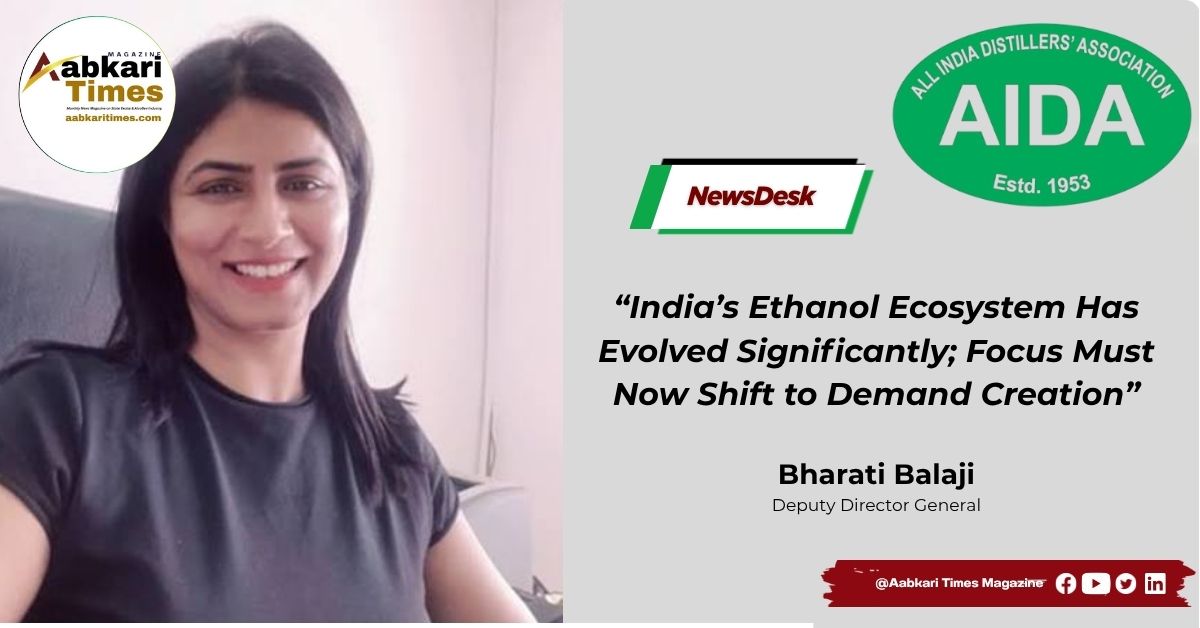
Bharati Balaji, Deputy Director General, All India Distillers’ Association (AIDA), said the August-end figures demonstrate how significantly India’s ethanol supply ecosystem has evolved. She highlighted the contribution of grain-based feedstocks, particularly maize and surplus FCI rice, while noting that sugar-based feedstocks continue to provide a substantial share of supplies.
According to Balaji, the diversity of feedstocks is an important strength of India’s ethanol programme because it enables the industry to utilise multiple domestic agricultural resources rather than relying on a single production pathway. She also emphasised that as India’s ethanol production capacity expands, greater attention will be required towards creating sufficient and predictable demand.
The industry is increasingly looking beyond the existing ethanol blending framework towards additional applications and demand avenues. Flex-Fuel Vehicles (FFVs), Compressed Bio-Gas (CBG), Sustainable Aviation Fuel (SAF) and other emerging applications could provide new opportunities for ethanol utilisation as production capacity continues to grow.
With 895 crore litres already supplied against 1,048 crore litres contracted, the August-end data points to a rapidly expanding domestic ethanol ecosystem. The next phase of India’s ethanol programme will depend not only on feedstock availability and production capacity but also on the development of adequate end-use demand. Continued policy support, infrastructure development and new applications for ethanol could play an important role in sustaining investment and strengthening the sector’s contribution to India’s energy-security goals.
About the Author