

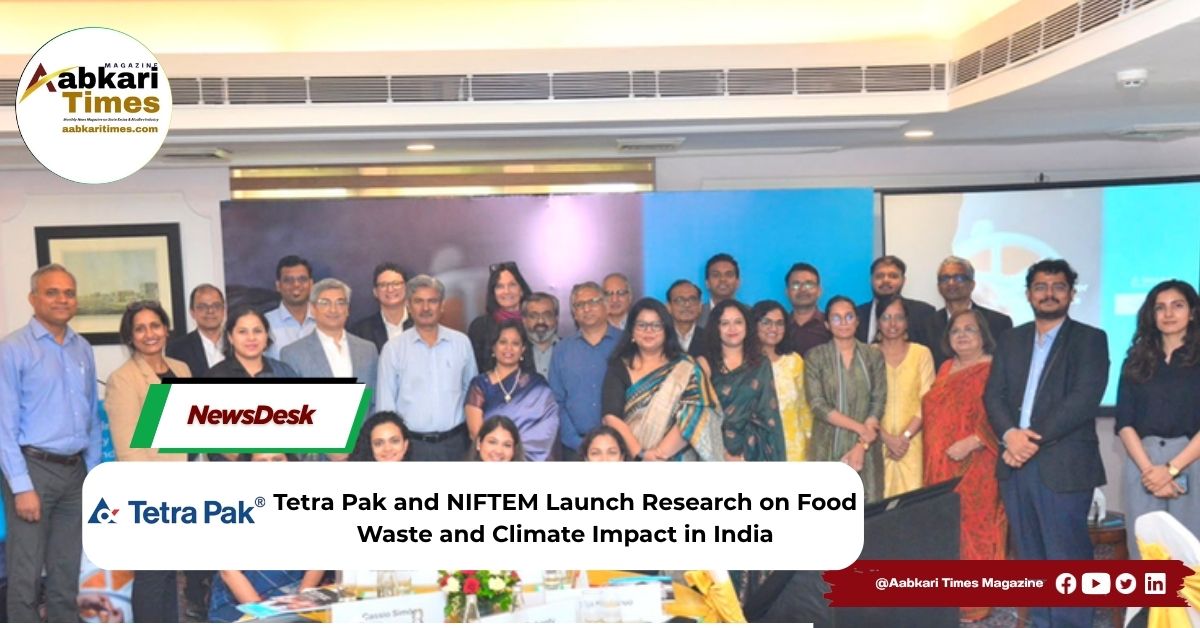
New Delhi: Tetra Pak, a global food processing and packaging solutions company, in collaboration with the International Council for Circular Economy (ICCE) and Primus Partners, convened industry leaders, policymakers, researchers and development organizations in New Delhi to discuss strategies for strengthening India’s food security and building more resilient and sustainable food systems.
The leadership workshop on “Strengthening Food Security for a Growing India” brought together representatives from NIFTEM, ICAR, TERI, UNIDO, Nestlé, PepsiCo, BASF, IFPRI and the Good Food Institute (GFI), among others. The discussions focused on improving food systems through innovation, technology, better supply-chain infrastructure and sustainable solutions.
The event featured a keynote address by Siraj Hussain, former Secretary of the Ministry of Food Processing Industries and Ministry of Agriculture & Farmers Welfare. He highlighted that India’s food security challenge is not limited to increasing agricultural production but also involves reducing food losses through improved preservation, food processing and supply-chain systems. He stressed that technology and innovation will be critical to making India’s food supply chain more efficient, resilient and sustainable.
 BLR Brewing Co. Opens Seventh Brewpub in Yelahanka, Plans Five More Outlets
 AGI Greenpac Launches AGI Cann for AlcoBev at UPITS 2026, UP Plant to Start by July 2027
Dr Rajbir Singh, Deputy Director General (Agricultural Extension), ICAR, said India’s growth in food production reflects the resilience of its agricultural sector, but significant post-harvest losses remain a major challenge. He said the focus should be on reducing post-harvest losses from the current estimated 15–20% to around 5% by 2047, while also improving nutrient-use efficiency, mechanisation and water-use efficiency.
A key theme of the workshop was strengthening the “critical middle” of India’s food value chain—the infrastructure and systems that connect agricultural production with consumers. This includes aggregation, food processing, packaging, storage, logistics and distribution. Participants stressed the need for stronger coordination across stakeholders, greater farmer access to technology and markets, digital supply-chain solutions and wider adoption of circular economy practices.
The discussions also highlighted the importance of investing in modern food processing and packaging infrastructure and technologies that can extend shelf life, improve food availability and reduce food loss and waste. Participants noted that sustainable packaging, digital technologies and efficient logistics can play an important role in reducing losses throughout the food value chain while improving supply-chain efficiency.
Policymakers and industry representatives also called for more detailed, ground-level data on food loss and waste (FLW) to identify loss hotspots, design targeted interventions and measure progress. Participants emphasised the need for clear and measurable FLW reduction targets and discussed the potential inclusion of such targets in India’s Nationally Determined Contributions (NDCs), along with greater recognition of innovative food processing and packaging technologies.
A major highlight of the workshop was the launch of the NIFTEM-Tetra Pak research report on “GHG Emissions from Food Loss and Waste.” The report examines the environmental impact of food loss and waste in India and underlines the role of reducing FLW in strengthening food security and supporting India’s climate goals.
The workshop concluded with a shared commitment among industry, government, academia and development organizations to strengthen collaboration, improve data-driven policymaking, encourage investment in the critical middle of the food value chain and accelerate innovation. The participants agreed that reducing food loss and waste while improving processing, packaging, storage and distribution will be essential to building a more sustainable and resilient food ecosystem for India.
About the Author