
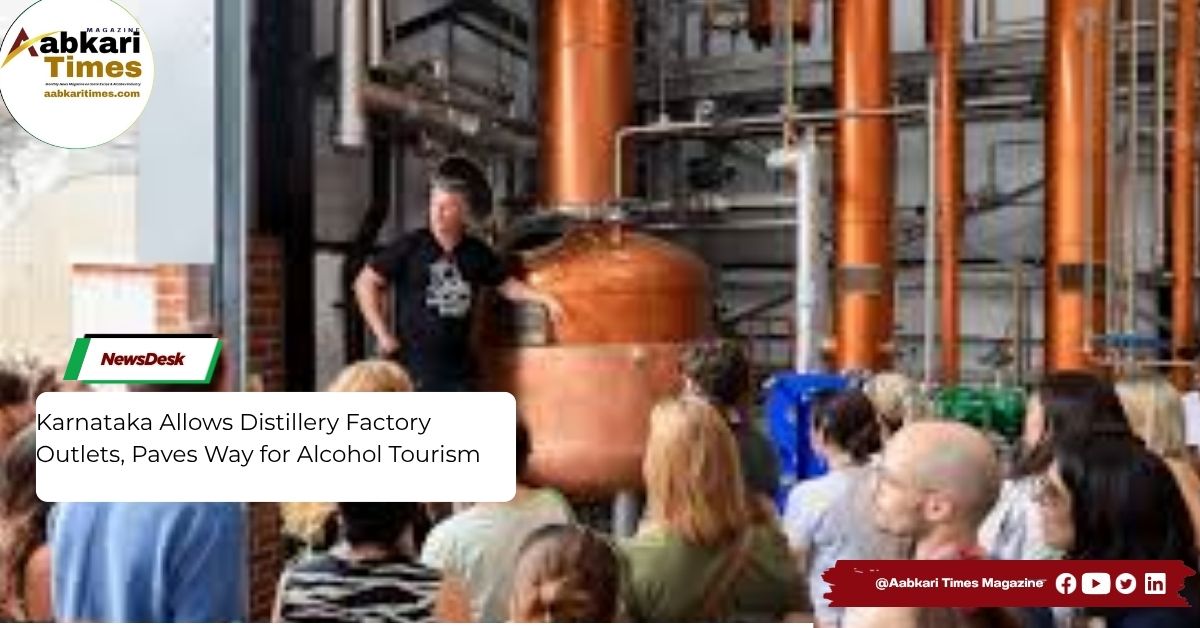
Bengaluru: The Karnataka Government has officially introduced the concept of alcohol tourism by notifying rules that allow licensed distilleries to establish factory outlets where visitors can taste and purchase liquor manufactured at the distillery. The Karnataka Excise (Distillery and Warehouse) (Second Amendment) Rules, 2026 came into effect on 28 July 2026 following their publication in the official gazette.
Under the amended rules, a distillery licence holder can set up a factory outlet within the licensed premises after obtaining approval from the Excise Commissioner. The outlet must be physically separated from the manufacturing area and should preferably be located away from the main entrance or exit of the distillery. The government has also prescribed minimum visitor facilities, including seating arrangements, a refreshment room and separate toilets with running water for men and women.
The new rules permit factory outlets to serve food, offer liquor tasting samples and sell sealed bottles or other sealed containers of liquor manufactured by the same distillery. Each tasting sample has been restricted to 30 ml, while retail sales will be allowed only in sealed containers of 375 ml or above, subject to the maximum possession limits prescribed under the Karnataka Excise Rules.
 Delhi Dry Days on October 9-10 Liquor Shops to Remain Closed Amid Public Order Concerns
 Andhra Pradesh Extends Deadline for Applications for 807 Liquor Shops to October 6
The notification makes it clear that the facility is intended exclusively for visitors touring the distillery as part of alcohol tourism activities. Wholesale sales and sales to persons who are not distillery visitors are strictly prohibited, ensuring that the outlets function as tourism-oriented tasting and retail centres rather than regular liquor shops.
The annual licence fee for a distillery factory outlet has been fixed at ₹4 lakh, along with an additional licence fee of 15% of that amount. The licence will remain valid for five excise years, including the year in which it is granted, subject to payment of the prescribed annual fees. The licence will automatically lapse if the parent distillery licence expires or is not renewed.
The Excise Commissioner has been authorised to renew the licence, provided the application is submitted at least one month before expiry. The rules also state that a factory outlet licence can be transferred only when the underlying distillery licence is transferred, and in such cases a transfer fee equal to 25% of the annual licence fee will be payable.
Liquor intended for tasting or retail sale through the factory outlet must be procured exclusively from the Karnataka State Beverages Corporation Ltd (KSBCL) in accordance with the excise regulations. The products must be sold strictly at Maximum Retail Price (MRP), and the outlet is required to issue bills to all visitors.
To strengthen regulatory oversight, licensees must maintain daily stock accounts, monthly transaction records and detailed visitor registers. The outlets are also required to use measuring equipment approved by the Department of Legal Metrology. Operating hours have been fixed from 10:00 am to 7:00 pm.
The amendment additionally introduces new application and licence formats — Form 2B and Form 2C — as well as Form 15, which will serve as the mandatory daily stock register for recording opening balances, receipts, sales and closing stock positions.
The move is expected to create new opportunities for Karnataka’s distillery sector, tourism industry and premium liquor market, positioning the state among the few Indian states that formally recognise and regulate distillery-based alcohol tourism and visitor tasting experiences.
About the Author