
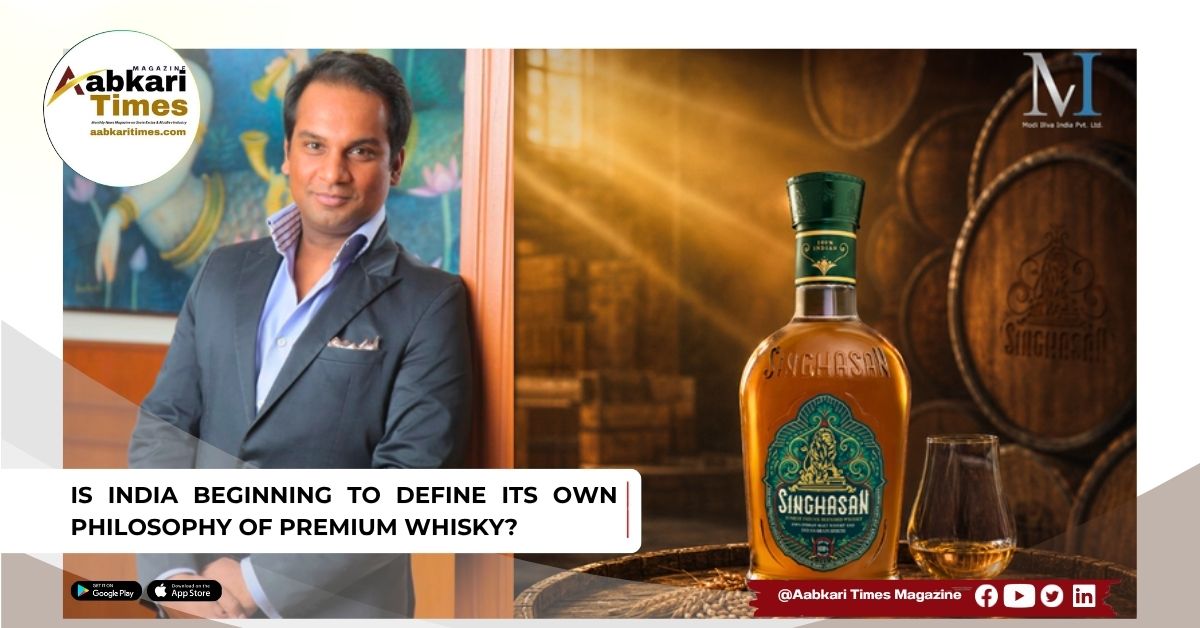
By Abhishek Modi, Managing Director, Modi Illva India Pvt. Ltd. and Board Member, Confederation of Indian Alcoholic Beverage Companies (CIABC)
For a long time, premium whisky in India was largely defined by where it came from, how old it was and how much it cost. Those markers still matter, but the Indian whisky consumer has changed. Today, there is greater curiosity about what is in the bottle, how it is made and what makes one whisky different from another.
That change is important because it gives Indian whisky an opportunity to move from simply participating in the premium category to defining what premium Indian whisky can be.
 Scotch Whisky Association Appeals Against England’s New Single Malt Whisky Rules
 Top 10 Premium Whisky Brands in India Above ₹5,000 for the Festive Season
The numbers show how quickly this is happening. According to CIABC estimates, the Made-in-India single malt category reached around 5 lakh nine-litre cases in 2025, growing 22 per cent over the previous year. Indian-owned companies accounted for around 92 per cent of sales in the category.
For me, the more important story behind these numbers is consumer confidence. People are increasingly willing to pay a premium for a whisky because of its quality and character, rather than simply because of its provenance.

The Indian consumer is asking different questions
Fifteen years ago, premiumisation in Indian spirits was at a very different stage. The choice was often straightforward: if you wanted to move up the price ladder, you moved towards an imported label. That mindset is changing.
Indian consumers today understand whisky much better. They are exploring single malts, paying attention to maturation and cask profiles, and becoming more interested in the ingredients and craftsmanship behind a spirit. The fact that Indian single malts have built such a strong following is evidence of that change. But this is not just a story about single malts. It is a broader shift in how consumers think about Indian spirits.
They are becoming more comfortable with the idea that a product made in India can be premium because of what it is, not where it comes from. That creates a much larger opportunity for the industry.
India has the ingredients to build its own identity
The foundation of any whisky is the spirit itself. Grain selection, malt character, fermentation and distillation all influence what eventually comes out of the bottle. India has a growing ecosystem of malt and grain production, distilleries and technical expertise. This gives Indian producers the ability to work with local ingredients and understand how those ingredients perform through the production process.
The opportunity now is to build on this knowledge. Indian whisky does not need to have a single style. In fact, its strength could lie in the diversity of expressions that Indian producers are able to create across regions, ingredients, distilleries and maturation approaches. That is how a category develops its own identity, not through one formula, but through experimentation and a better understanding of what works.
Our climate is not just a challenge
Climate is another part of this story. Whisky matures differently in different environments. India’s warmer conditions influence the interaction between the spirit and oak, as well as evaporation and extraction during maturation. This means that age cannot be looked at in isolation. A number on a bottle tells you how long the spirit has been in a cask, but it does not tell you everything about what has happened during that period.
For Indian whisky makers, the task is to understand our climate better and work with it. That means carefully selecting casks, monitoring maturation and knowing when the wood is adding complexity and when it is beginning to overpower the spirit. The opportunity is not to make maturation faster. It is to make it smarter.
The cask is part of the craft
The same thinking applies to the cask. The type of oak, the previous contents of the cask, its toast and char, its condition and the length of maturation all influence the final whisky. In a warmer climate, these decisions become even more important. This is where experience matters. Good whisky-making is not about following a fixed formula. It is about understanding the liquid and making the right decisions at every stage.
That is also why investment in production capabilities matters to the future of Indian whisky. At Modi Illva, our decision to develop a dedicated malt distillery is part of this larger thinking. It gives us greater control over the source of our spirit and creates the foundation for developing new premium expressions in the future. Building the manufacturing ecosystem is as important as building the brand. You cannot build a long-term premium whisky business without investing in what goes into the bottle.
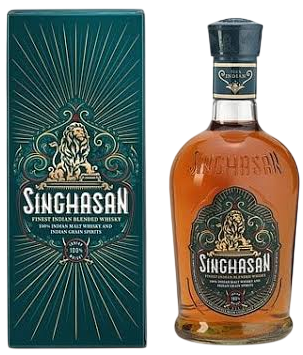
Singhasan — one example of what this approach can create
Crafted from 100 per cent Indian malts and Indian grain spirits, Singhasan is India’s first 100 per cent Indian premium blended whisky, bringing together some of the country’s finest malts and featuring a higher malt content than most whiskies in its category. The idea was simple: use Indian ingredients to create a premium blended whisky that reflects the growing capability of Indian whisky-making. Its depth, richness and smooth finish are a reflection of how Indian malts, grain spirits and blending expertise can come together to create a distinctive expression.
Singhasan was recognised as the Best Indian Blended Whisky and a Gold Award Winner for its Exceptional Blend at the World Whiskies Awards 2026. It also received 91 points at the International Wine and Spirit Competition 2026.
These recognitions reinforce the larger opportunity for Indian producers to build premium expressions around local ingredients, expertise and craftsmanship.
From premiumisation to Indian confidence
The next stage of Indian whisky will not be defined only by how many new brands enter the market. It will be defined by how much knowledge and capability the industry builds. We need greater investment in distillation, maturation, blending and research. We need consumers to understand the role of ingredients and production. We need stronger standards and greater consistency as the category expands.
The formation of the Indian Malt Whisky Association is a positive step in this direction. Any category that wants to grow sustainably needs clear standards and a shared understanding of quality. At the same time, Indian whisky makers should continue experimenting. The category is still young, and there is much yet to discover about how Indian grains, Indian malts, our climate and different maturation approaches can shape the final spirit.
The next chapter is about identity
Indian whisky is entering its next phase. The first phase was about establishing credibility. The next one is about establishing identity. We now have consumers who are more informed, Indian companies investing in premium spirits, a growing single malt category and an increasingly capable production ecosystem. These are strong foundations.
The question now is not simply whether India can produce premium whisky. We already are. The more interesting question is: what should Indian whisky stand for? The answer lies in quality rooted in local ingredients, an understanding of our climate, investment in craftsmanship and the confidence to develop our own approach. If we get that right, Indian whisky will not simply be another growing segment of the global spirits industry. It will become a category with a point of view, shaped by India, made in India and recognised for the character it brings to the world of whisky.
Views expressed are the author’s own.
About the Author