
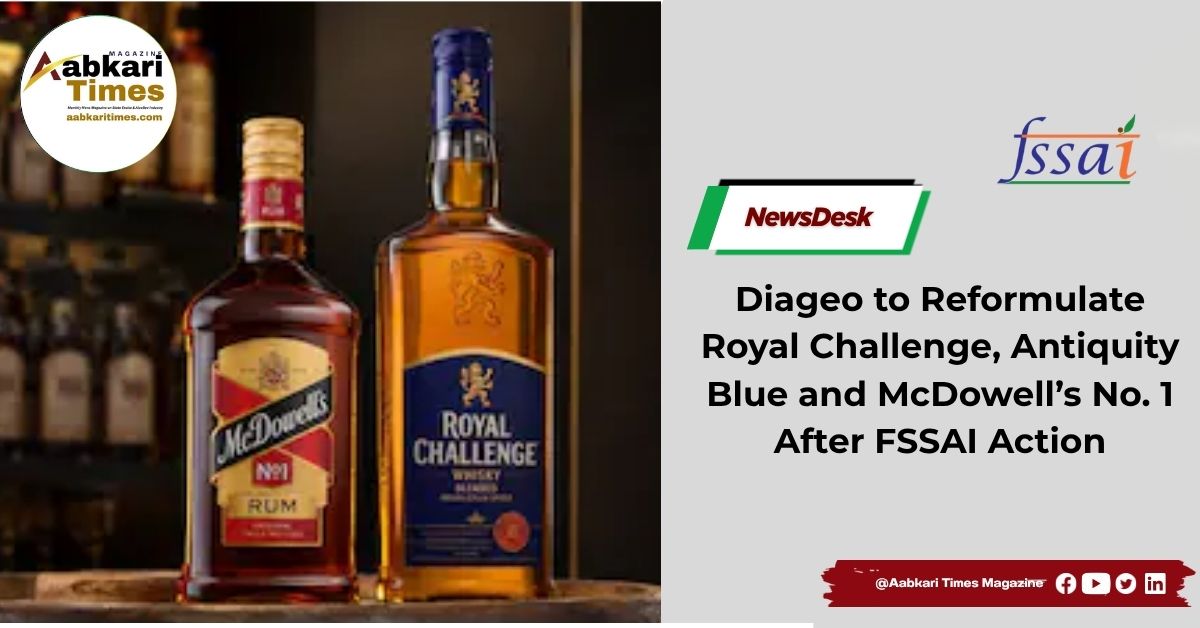
Diageo is set to reformulate some of its popular Indian whisky and rum brands following regulatory action by the Food Safety and Standards Authority of India (FSSAI) over the use of added flavouring substances, according to a Reuters report. The move could pave the way for the regulator to lift restrictions imposed on the affected products in certain states.
According to the report, the reformulation will cover the affected products manufactured across India and will not be limited to markets where sales restrictions were imposed. The products covered include Diageo’s Antiquity Blue Whisky and Royal Challenge Whisky manufactured in Madhya Pradesh, along with McDowell’s No. 1 Celebration Matured XXX Rum manufactured in Maharashtra.
Under the reported agreement, Diageo will reformulate the affected whisky and rum products to remove the addition of whisky flavour to whisky and rum flavour to rum. The company has also agreed to make the presence of flavouring substances more clearly visible on the front of product packaging while the reformulation process is being completed.
 Scotch Whisky Association Appeals Against England’s New Single Malt Whisky Rules
 Top 10 Premium Whisky Brands in India Above ₹5,000 for the Festive Season
The development follows FSSAI’s wider enforcement action against liquor manufacturers over alleged violations relating to flavouring and labelling practices. The regulator had restricted the sale of several whisky and rum products manufactured by Diageo and other liquor companies after laboratory testing and investigations raised concerns over the use of artificial or nature-identical flavours corresponding to the alcoholic beverage itself.
FSSAI has maintained that the characteristic taste and aroma of standard whisky and rum are expected to develop through recognised processes involving ingredients, fermentation, distillation and maturation. The regulator has raised concerns that adding flavours corresponding to the alcoholic beverage could create a misleading impression for consumers if such additions are not appropriately disclosed.
The FSSAI action has also led to legal challenges from liquor manufacturers. United Spirits and Mohan Meakin, the maker of Old Monk, have challenged the regulatory restrictions, with the Bombay High Court examining related proceedings. The regulatory action has consequently triggered wider discussions within the Indian alcoholic beverage industry over flavouring standards, product labelling and compliance requirements.
Separately, authorities have seized around 18,000 boxes of Diageo liquor bottles over alleged non-compliance with markings related to the use of safe recycled plastic. The development adds to the regulatory scrutiny facing the company amid heightened enforcement across the food and beverage sector.
FSSAI Expands Enforcement Across Food and Beverage Industry
The latest action against liquor brands is part of a broader FSSAI enforcement drive covering misleading claims, product labelling, formulations, trademarks and packaging. The regulator has recently taken action against several food companies over claims and product presentations that it considered potentially misleading or non-compliant.
In separate cases, companies have withdrawn or modified claims, changed trademarks, revised packaging or delisted products following regulatory notices. Livyor Ventures removed “vegan” and “healthy” claims from the packaging of its Livyor Roasted Edamame Beans and began revising its labels, while Honest Innovations For You and Heliostone Specialities modified trademarks flagged by the regulator. Rajasthan Agro and General Industries removed disputed claims and promotional material, while Iota Nanotechnology removed certain claims and stopped production of non-standardised water. Panchamurtha Industries also delisted an electrolyte drink from its website.
FSSAI has additionally tightened regulations governing pan masala packaging. Final regulations notified on August 7 prohibit plastic, aluminium foil and metallised layers in specified packaging formats. Paper, paperboard, cellulose, tin and glass remain permitted under the applicable requirements, while plastic sachets are prohibited. The move is significant for the pan masala industry, which was estimated to be worth around ₹48,456 crore in 2025.
The regulator has also issued notices to companies including Emami Healthy & Tasty, Neuherbs, Troovy and Plan B over product names, branding and health-related claims, including the use of terms such as “plant-based” and “vegan”. Dabur India has faced scrutiny over “100 per cent” claims on products such as honey, apple cider vinegar, coconut milk, sesame oil and ghee, with FSSAI maintaining that such claims must be objectively substantiated and should not create misleading impressions.
FSSAI has further increased scrutiny of nutraceuticals and health supplements, including products from Vatave Healthcare and Global Healthfit Retail India, over alleged issues concerning branding and marketing claims. The expanding enforcement activity indicates that regulatory compliance around formulation, labelling, packaging and consumer-facing claims is becoming increasingly important across India’s food, beverage and alcoholic beverage industries.
About the Author