
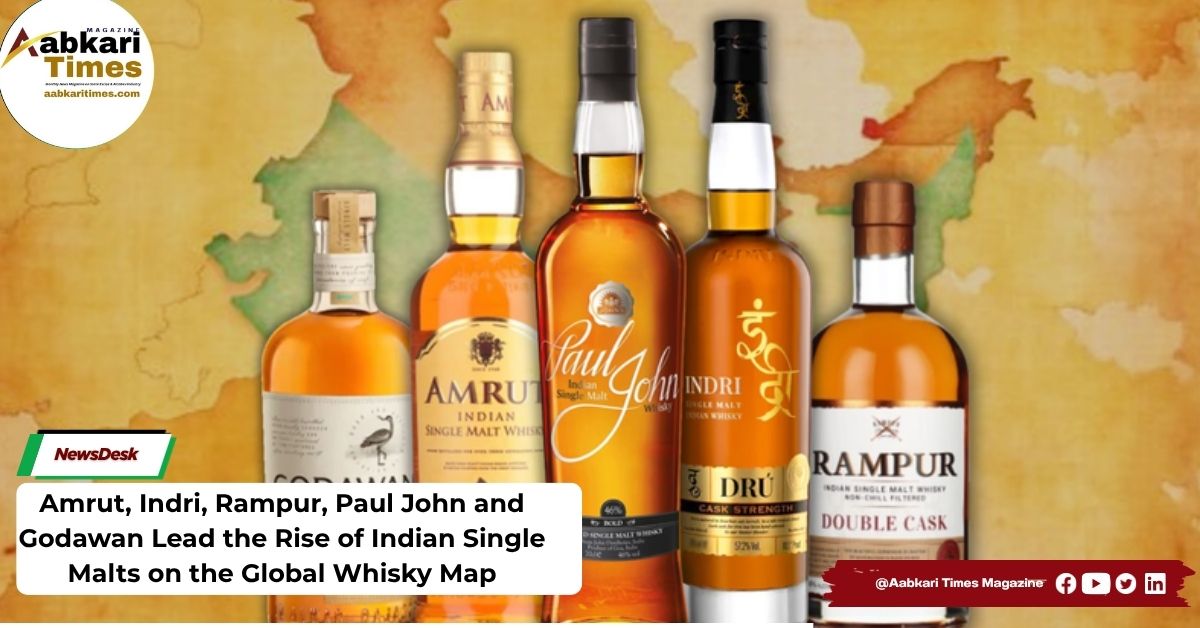
For decades, the term single malt whisky was almost synonymous with Scotland. However, Indian distilleries have transformed that perception by producing award-winning single malts that are now competing with some of the world’s most respected Scotch whiskies. The success of brands such as Amrut, Indri, Rampur, Paul John and Godawan highlights the growing global recognition of Indian single malt whisky and reflects how India’s climate, innovation and whisky-making heritage are reshaping the international whisky industry.
The modern Indian single malt story began in 2004, when Amrut Distilleries made a bold decision to launch its whisky in Glasgow, the heart of Scotch whisky territory, rather than introducing it first in India. The strategy attracted international attention and proved that Indian whisky could stand alongside established Scotch brands. Amrut, made from Indian six-row barley and in some expressions blended with peated Scottish malt, is known for its rich, spicy and full-bodied character. Its reputation grew significantly after whisky critic Jim Murray ranked it among the top whiskies in the world, helping establish India as a serious single malt producer.

One of the key factors behind the success of Indian single malts is the country’s warm climate. Higher temperatures accelerate the interaction between spirit and oak casks, allowing whisky to mature much faster than it does in Scotland’s cool and humid conditions. Although Indian distilleries lose a larger percentage of spirit to evaporation each year, the remaining whisky often develops deeper flavors and greater complexity at a relatively younger age.
Paul John, produced in Goa since 2008, represents a softer and more approachable style of Indian single malt. The coastal climate contributes notes of sweet malt, tropical fruit and gentle smoke, while rapid maturation allows the whisky to develop characteristics that would typically require much longer aging in Scotland. The brand is now available in more than 40 countries and has won hundreds of international awards, including recognition at the 2026 World Whiskies Awards.
 Scotch Whisky Association Appeals Against England’s New Single Malt Whisky Rules
 Top 10 Premium Whisky Brands in India Above ₹5,000 for the Festive Season
Rampur, produced in Uttar Pradesh near the foothills of the Himalayas, benefits from a cooler climate than Goa or Bengaluru. The seasonal temperature variation creates a smoother and more balanced whisky profile while still enabling faster maturation than Scotch whisky. Rampur gained international recognition for its Asava expression, which was matured in Indian wine casks and became the first single malt in the world to use this maturation technique, later winning Best World Whisky at the 2023 John Barleycorn Awards.
The fastest-growing name in the category is Indri, produced in Haryana by Piccadily Agro Industries. Launched only in 2021, Indri achieved remarkable success within a short period. Its Diwali Collector’s Edition defeated more than a hundred whiskies from around the world, including Scotch entries, to win Best in Show at the Whiskies of the World Awards. The brand has continued to receive international recognition and has been widely reported as one of the fastest-growing single malt whisky brands globally.
Another significant entrant is Godawan, created by Diageo India in the desert state of Rajasthan. Extreme temperatures, often exceeding 100°F (38°C), create intense cask interaction and rapid flavor development. The distillery reportedly loses around 10% of its whisky annually to evaporation, yet this challenging environment produces a distinctive and concentrated spirit. Since its launch in 2022, Godawan has earned dozens of international awards, including Single Malt Whisky of the Year at the 2024 London Spirits Competition for the limited Godawan 100 edition.
The rise of Amrut, Paul John, Rampur, Indri and Godawan demonstrates that Indian single malt whisky is no longer a niche category. With accelerated maturation, innovative cask experimentation and increasing global demand for premium whiskies, India has emerged as one of the most exciting whisky-producing nations in the world. These brands are not only winning international awards but also changing the global perception of what a world-class single malt can be, positioning India as a major force in the future of the global whisky industry.
About the Author