
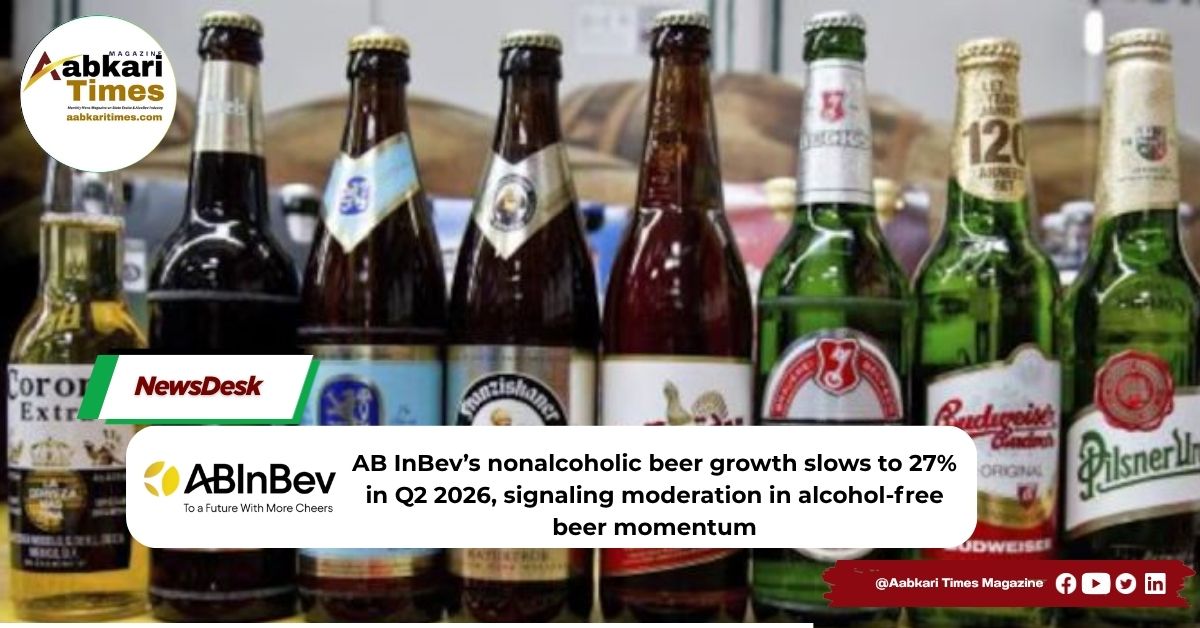
AB InBev, the world’s largest brewer, reported that revenue from its global nonalcoholic beer portfolio increased 27% year-on-year in the second quarter of 2026, indicating that growth in the alcohol-free beer segment remains strong but has slowed compared with 33% growth recorded in the same quarter of 2025. The results, announced as part of the company’s Q2 2026 earnings report on July 30, suggest that the rapid expansion of nonalcoholic beer may be entering a more moderate phase after several years of exceptionally strong growth.
Although the pace of growth eased by six percentage points, AB InBev’s alcohol-free beer business continued to outperform its traditional beer operations. The brewer’s core beer volumes grew 1.1% in the second quarter, meaning the nonalcoholic portfolio expanded at a substantially faster rate. The company did not disclose absolute revenue, volume or profit figures for the alcohol-free segment, so the 27% figure reflects performance within AB InBev’s own portfolio rather than the size of the global nonalcoholic beer market.
The slowdown is significant because nonalcoholic beer has become a key strategic category for global beverage companies seeking to capture demand from consumers who are reducing alcohol consumption, moderating their drinking habits or looking for alcohol-free options in the same social occasions where traditional beer is consumed. For AB InBev, the latest quarter still represents robust growth, but it also provides one of the clearest indications so far that the category’s recent surge is beginning to normalize.
 Amrut Distilleries’ Sales Growth to Remain Under Pressure Until 2030 Amid Limited Whisky Supply and Cheaper Scotch Imports
 Japan Cuts Beer Taxes, Making Regular Beer Cheaper from October 2026
AB InBev’s broader financial performance remained strong. The company reported that first-half 2026 revenue rose 5.7%, EBITDA increased 5.6%, and underlying earnings per share climbed 22.1%. During the second quarter, which included the early stages of the FIFA World Cup, the brewer achieved record beer sales volumes in Mexico, Colombia and Ecuador. AB InBev said Corona, Stella Artois and Michelob Ultra were the top-performing brands during the tournament period, highlighting the continued strength of its premium beer portfolio.
The company also reported 13% revenue growth in its light and gluten-free beer segment and 44% growth in its beyond beer category, driven primarily by demand in the United States for Flying Fish, a lime-and-lemon flavored beverage, and Cutwater canned cocktails. These faster-growing categories helped reinforce investor confidence in AB InBev’s diversified beverage strategy.

Investor sentiment toward the brewer has remained positive throughout 2026. AB InBev shares have risen about 34% this year and recently reached their highest level in seven years, making the stock one of the stronger performers in the Euro Stoxx 50 index. According to Bloomberg consensus data, roughly 78% of analysts currently recommend buying the stock, while the remainder rate it as a hold. The average analyst price target is €82.49, implying additional upside from recent trading levels.
Analysts continue to view Budweiser, Corona and Michelob Ultra as important drivers of profitability, supported by the company’s cost controls, cash generation and pricing power. AB InBev has maintained its guidance for 4% to 8% EBITDA growth, suggesting management remains confident in the business despite mixed regional trends.
One area attracting particular attention is Michelob Ultra’s international expansion. Analysts at Jefferies said that about 40% of the brand’s recent growth came from markets outside the United States, especially Latin America and Canada. They believe the World Cup could create a longer-term brand-building opportunity if Michelob Ultra succeeds in establishing a stronger global presence alongside Budweiser, Stella Artois and Corona.
Despite the positive momentum in premium beer and newer beverage categories, China remains a major weak spot for AB InBev. The company reported that sales volumes in China declined 9.7% in Q2 2026, compared with a 1.5% decline in the first quarter, reflecting continued weakness in consumer spending and restaurant demand that has affected the broader Chinese beer industry.
Analysts have also warned that the boost from major sporting events may fade once the summer calendar ends. Deutsche Bank maintained a neutral rating on the stock, noting that AB InBev trades at an estimated 2026 price-to-earnings ratio of 19.7 times, roughly in line with other European consumer staples companies and at a modest premium to the broader beverages sector.
Technology remains an important part of AB InBev’s long-term growth strategy. UBS has highlighted the company’s BEES digital B2B marketplace, which connects retailers, distributors and brand owners and could contribute 1–2 percentage points of additional organic EBITDA growth between 2027 and 2030.
Not all analysts are equally optimistic. Barclays recently downgraded AB InBev to “equal weight” from “overweight”, citing concerns about Brazil’s new selective tax scheduled to take effect on January 1, 2027, which could create a structural headwind for pricing and profitability in one of the brewer’s most important markets.
Overall, AB InBev’s second-quarter results present a mixed but strategically important picture for the global nonalcoholic beer market. The company is still delivering growth rates far above those of its traditional beer business, supporting the view that alcohol-free beer is becoming an increasingly meaningful part of major brewers’ future sales mix. However, the decline from 33% growth in Q2 2025 to 27% in Q2 2026 indicates that the category is no longer accelerating at the same pace within the world’s largest brewing company, suggesting a shift from explosive expansion toward a more sustainable, but slower, growth trajectory
About the Author