
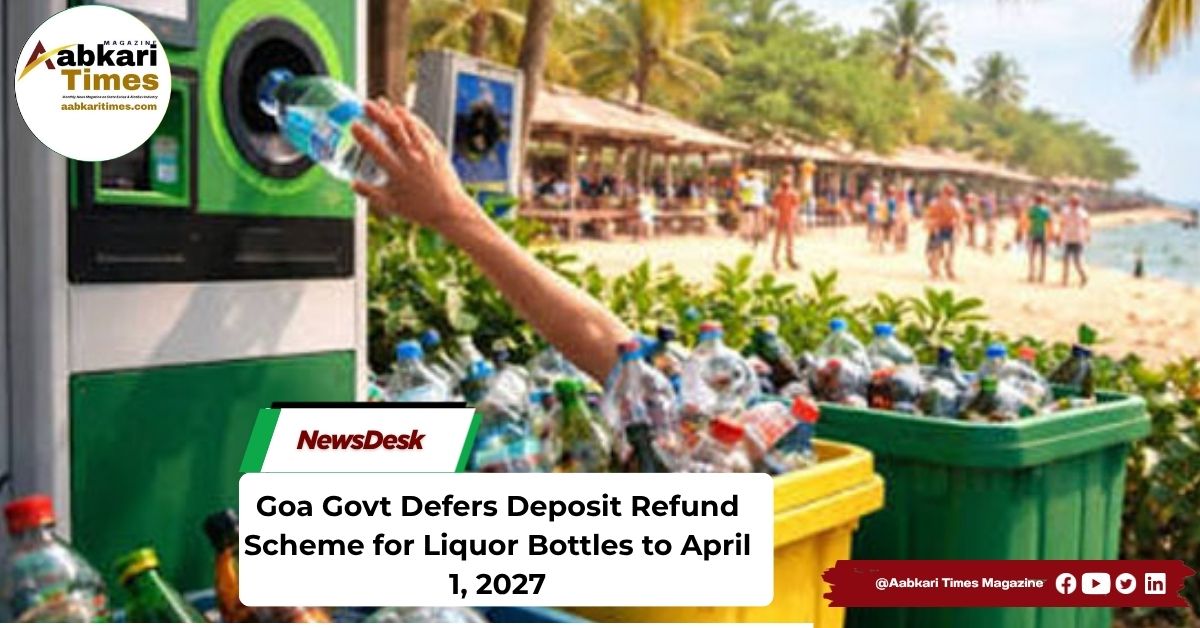
Panaji: The Goa government has deferred the implementation of the Deposit Refund Scheme (DRS) for liquor and liquor-based products to April 1, 2027, giving the industry an additional seven months to prepare for the rollout. The decision was notified by the Goa Deposit Refund Scheme (GDRS) Authority through a revised notification issued by the Environment Department, replacing the earlier timeline that had proposed implementation from September 1, 2026.
Under the revised notification, Phase I of the Goa Deposit Refund Scheme will now come into effect on April 1, 2027, while all Producers, Importers and Brand Owners (PIBOs) dealing in liquor products must complete their mandatory DRS registration by February 28, 2027. The government has clarified that registration will remain compulsory for any liquor product to be placed in the Goa market from the revised implementation date onward.
The latest notification modifies the earlier June 30, 2026 notification, which had required PIBOs to complete registration by July 31, 2026, ahead of the proposed September rollout. While the implementation and registration timelines have been changed, the scope of Phase I remains unchanged, and the scheme will continue to cover liquor products packaged in glass, plastic, metal, multi-layered packaging and liquid packaging boards.
→ Allied Blenders Approves ₹125 Crore for 3 Million BL Malt Distillery in Aurangabad→ West Bengal Declares Maha Ashtami 2026 as Dry Day for Durga Puja

Goa’s plan to introduce QR-coded liquor bottles under the DRS framework encountered complications after the Excise Department initiated a separate QR code system to track liquor smuggling and improve excise monitoring. The parallel initiatives created confusion among liquor retailers, bottling companies and retail outlets, as stakeholders were uncertain about which QR code sticker would be mandatory for compliance. With the Excise Department reportedly not ready to launch its own QR tracking system by the earlier deadline, the government decided to postpone the DRS rollout.
Officials have stated that the deferment is intended to integrate the two QR code systems into a single unified mechanism, thereby avoiding duplication and operational difficulties for the liquor industry. However, industry sources have indicated that the government was also concerned about possible resistance from liquor manufacturers, bottlers and hospitality businesses ahead of the upcoming elections.
The proposed Deposit Refund Scheme has already drawn concerns from hotels, restaurants and cafés (HoReCa operators), which have questioned the additional transportation costs, storage requirements and manpower needed to collect and return used liquor bottles to designated collection centres. Industry stakeholders have argued that the reverse logistics involved in handling empty bottles could significantly increase operational expenses for hospitality establishments.
The Goa Deposit Refund Scheme is part of the state’s broader effort to improve recycling, reduce packaging waste and create a structured return-and-refund system for beverage containers, but its implementation in the liquor sector is now expected to begin only from April 1, 2027, subject to the completion of the integrated QR code framework and industry compliance requirements.
About the Author