
Liquor brands have emerged as the biggest advertisers during the FIFA World Cup 2026 on linear television, while automobile companies are dominating connected TV advertising, according to the latest report by TAM Sports.
The report analysed advertising activity across the first 62 matches of the tournament and found that automobile and liquor brands together contributed nearly 69% of total advertising volumes on linear TV.
Mahindra Leads CTV Advertising During FIFA World Cup 2026
Mahindra & Mahindra emerged as the leading advertiser on connected TV platforms during the FIFA World Cup 2026. The company also secured the second position among advertisers on linear television.
 Over 160 Russian Alcohol Brands Explore India as Soyuzprod Targets 21 States
 CETA Impact Premium UK Liquor Brands to Become Cheaper in UP from October 10
The automaker’s popular models, including Mahindra Thar, Mahindra XEV and Mahindra BE, accounted for around 24% of advertising volume on connected TV and nearly 30% on linear television.
These Mahindra brands were among the top five advertisers across both platforms. They were joined by Black & White non-alcoholic carbonated beverages and Candere, the jewellery retail brand associated with Kalyan Jewellers.
Together, the top five brands represented approximately 42% of advertising volumes across the tournament coverage.
Liquor Category Dominates Linear TV Ad Volumes
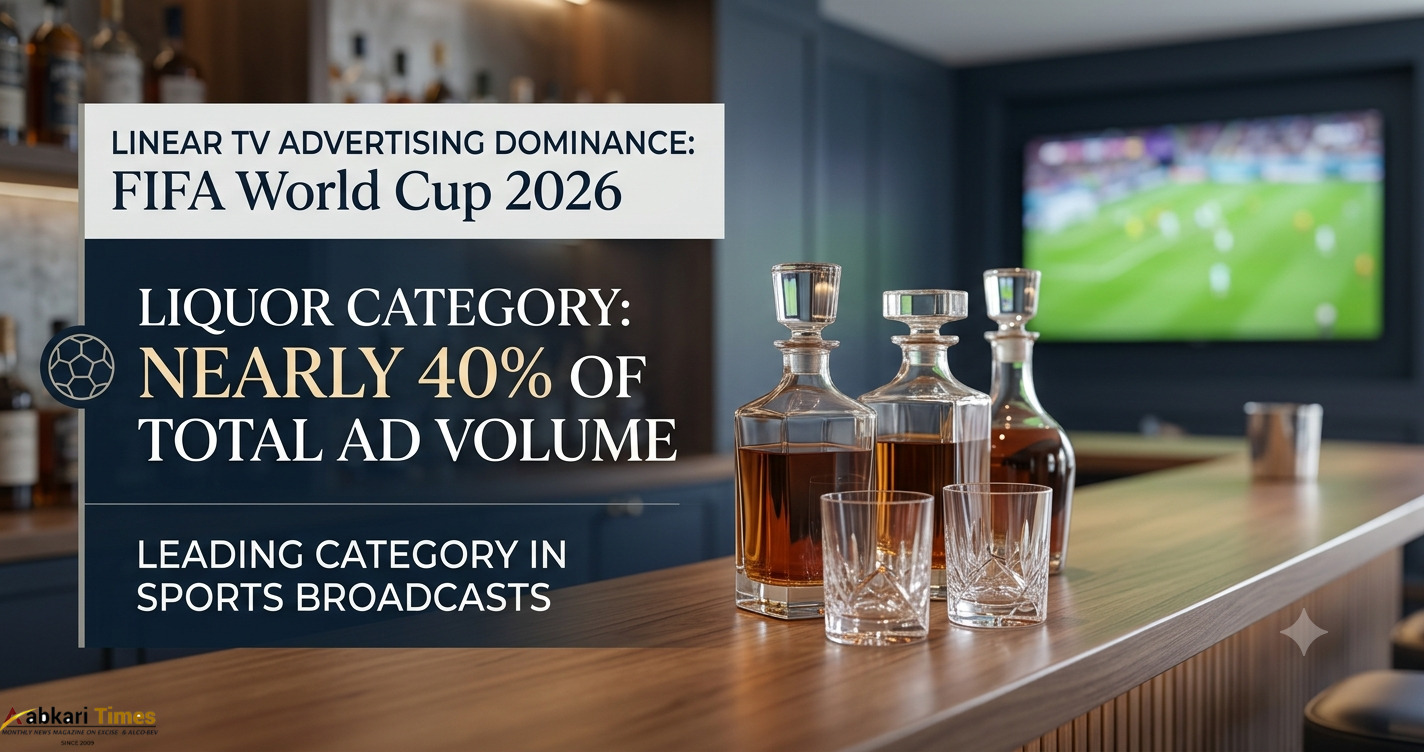
Liquor brands accounted for nearly 40% of total ad volumes during FIFA World Cup 2026 broadcasts on linear TV. The category remained one of the strongest contributors to advertising inventory, particularly during high-profile football matches.
According to TAM Sports, liquor brands topped the advertising category rankings on linear television, while automobiles led advertising activity on connected TV platforms. Jewellery retailers maintained the third position across both media formats.
The report also noted that the five leading advertising categories generated about 93% of total ad volume on linear TV. In comparison, the top five categories on connected TV contributed around 57%, indicating a broader mix of advertisers on digital television platforms.
Connected TV Shows Wider Brand Participation
Connected TV coverage of FIFA World Cup 2026 has attracted advertisers from a wider range of industries compared with traditional linear television.
While linear TV advertising remains heavily concentrated among liquor, automobile and jewellery brands, connected TV has seen participation from more brands and categories. This suggests that advertisers are increasingly using digital television platforms to reach targeted and premium audiences during major sports events.
Linear TV Ad Volume Falls Compared With FIFA World Cup 2022
Despite strong participation from leading brands, linear television advertising during FIFA World Cup 2026 has recorded a decline compared with the previous edition.
TAM Sports data showed that average advertising volume per channel per match on linear TV dropped by 14% compared with the FIFA World Cup 2022.
The 2022 tournament had attracted significant advertiser interest after Viacom18 acquired broadcast rights for an estimated $60 million. Expectations were high this year after Zee Entertainment Enterprises secured FIFA broadcast rights, but advertising momentum has reportedly been slower during the early phase of the tournament.
Brands Expected to Increase Spending During Knockout Matches
Media industry experts believe advertising activity could rise sharply as the FIFA World Cup 2026 enters the quarter-final and semi-final stages.
Lloyd Mathias, independent director, angel investor and business strategist, said the tournament has faced a slower start due to geopolitical uncertainty, weaker seasonal demand in some sectors and limited pre-tournament marketing activity by the broadcaster.
However, he expects advertiser interest to strengthen in the coming weeks as the competition reaches its most watched matches.
Priti Murthy, President of Client Solutions at WPP Media South Asia, said FIFA continues to remain an attractive advertising platform for a wide range of brands.
She noted that automobile companies and male-focused brands have traditionally been major FIFA advertisers, but more female-focused brands are also entering the tournament advertising space. Indian and global companies are increasingly looking to use television advertising during major football events to improve visibility and audience reach.
FIFA World Cup 2026 Advertising Outlook
With the tournament moving into the knockout stage, television viewership and advertiser demand are expected to rise. Liquor brands are likely to maintain their dominance on linear TV, while automobile brands may continue to lead connected TV advertising.
The upcoming quarter-finals and semi-finals could play a key role in determining whether FIFA World Cup 2026 advertising revenues recover from the slower start recorded during the group-stage matches.
About the Author