
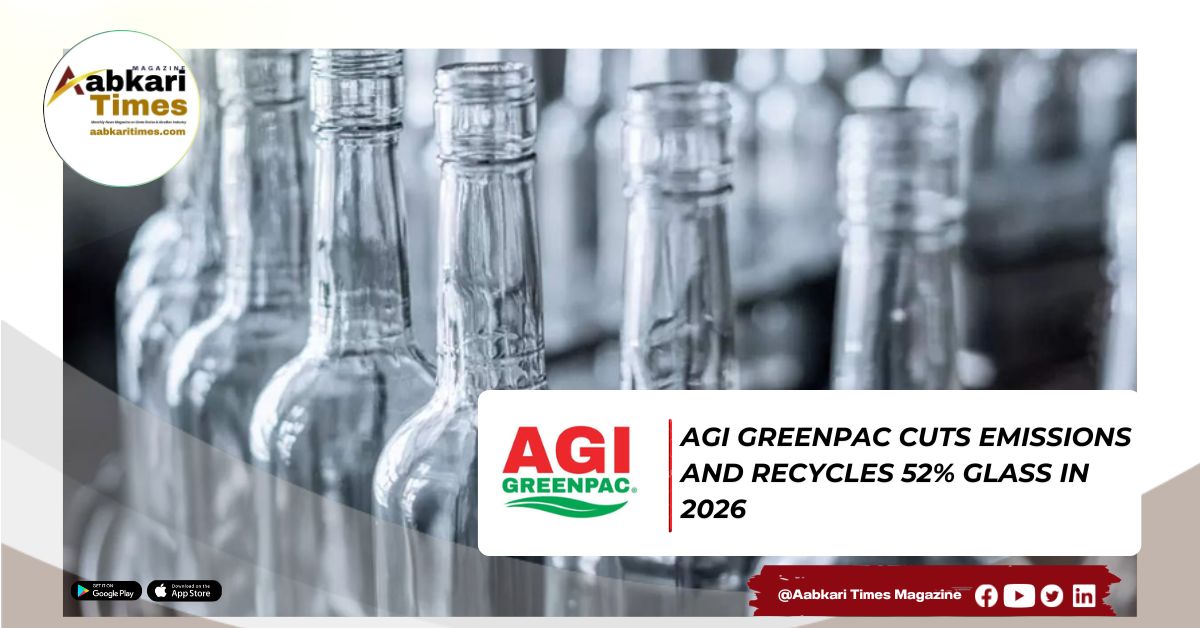
Hyderabad, June 2026: AGI Greenpac, one of India’s leading container glass manufacturers, has released the first edition of its sustainability newsletter Green Impact, detailing significant progress across decarbonisation, water stewardship and circular economy metrics for FY2025-26. The company’s Scope 1 and Scope 2 emission intensity has been reduced by 15 per cent against its FY2022-23 baseline, now standing at 743 kgCO₂e per metric tonne of glass produced.
The company’s use of recycled cullet — crushed glass reintroduced into the furnace to reduce energy consumption — has risen to 52 per cent of commercial production, up from 43 per cent in FY2022-23. Higher cullet usage directly lowers furnace energy requirements, making it one of the most operationally significant contributors to AGI Greenpac’s decarbonisation trajectory alongside its renewable energy investments.
On the energy front, AGI Greenpac has built a cumulative solar capacity of 20.86 MWp across its plants, including a new 1.3 MWp rooftop installation at Isnapur commissioned in January 2026. The transition to renewable energy is avoiding approximately 20,000 tonnes of CO₂ per year, while 14 energy conservation projects across its Hyderabad and Bhongir facilities are saving 5,848 MWh annually, cutting a further 4,152 tonnes of CO₂ per year.
 Scotch Whisky Association Appeals Against England’s New Single Malt Whisky Rules
 Kerala Government Plans Strict Action Against Bars Serving Alcohol to People Below 23
Water performance has also improved significantly. AGI Greenpac has reduced its water intensity by 30 per cent against its FY2022-23 baseline, bringing it down to 0.38 KL per metric tonne of glass. The company has maintained Zero Liquid Discharge operations for over a decade, treating and reusing all process water within its boundary. In FY2025-26, the company harvested 36,450 cubic metres of rainwater across six ponds, with plans to expand capacity to over 85,000 cubic metres — a move towards full Level-1 Water Neutrality aligned with NITI Aayog standards.
A particularly significant milestone in the report is the formal approval of AGI Greenpac’s near-term and net-zero targets by the Science Based Targets initiative (SBTi), making it one of a small number of Indian glass manufacturers to have its decarbonisation trajectory independently validated against global climate science. The company’s roadmap targets deep emission cuts by 2034 and full net-zero status by 2050, with the pathway built on renewable energy, energy efficiency, circular cullet use and lower-carbon fuels.
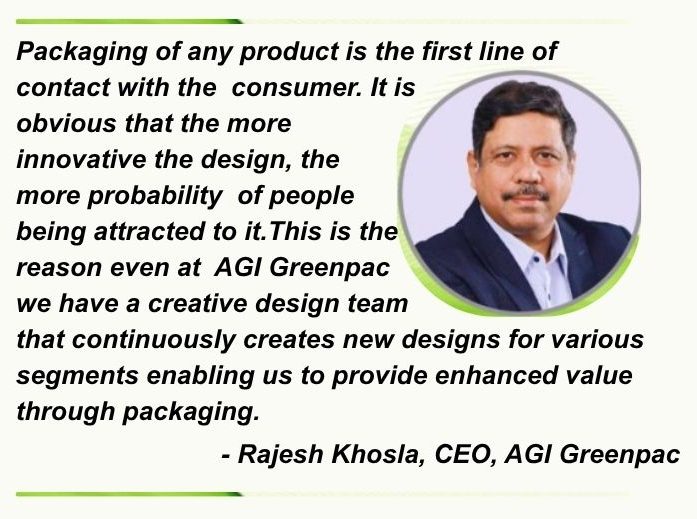
Rajesh Khosla, CEO, AGI Greenpac Limited, said: “Sustainable manufacturing is no longer a compliance measure but a strategic imperative — one that promotes efficiency, resource stewardship, and circular-economy practices.”
On the safety and people front, AGI Greenpac recorded zero high-consequence injuries in both FY2024-25 and FY2025-26, and its Lost Time Injury Frequency Rate fell to 0.0 in FY2025-26 from 0.307 previously. Investment in employee well-being rose 1.5 times year-on-year, reaching 0.45 per cent of profit in FY2025-26.
The company has received multiple recognitions for its sustainability work, including the CII EHS Excellence Award 2025 — Gold for its Bhongir Commercial and Specialty Glass Division, the Green Apple Environment Award 2024 — International Bronze, the CSR Impact Award 2024 for Fastest Decarboniser, and the SEEM National Sustainability Award — Gold 2023 from the Society of Energy Engineers and Managers.
For the alco-bev industry specifically, AGI Greenpac’s progress is directly relevant — glass bottles remain the dominant packaging format for premium spirits, beer and wine in India, and brands increasingly face pressure from retail buyers, export markets and ESG reporting requirements to demonstrate the sustainability credentials of their entire packaging supply chain. As Indian spirits and beer companies expand internationally, the carbon and recyclability profile of their glass packaging is becoming a commercially relevant metric alongside product quality.
About the Author