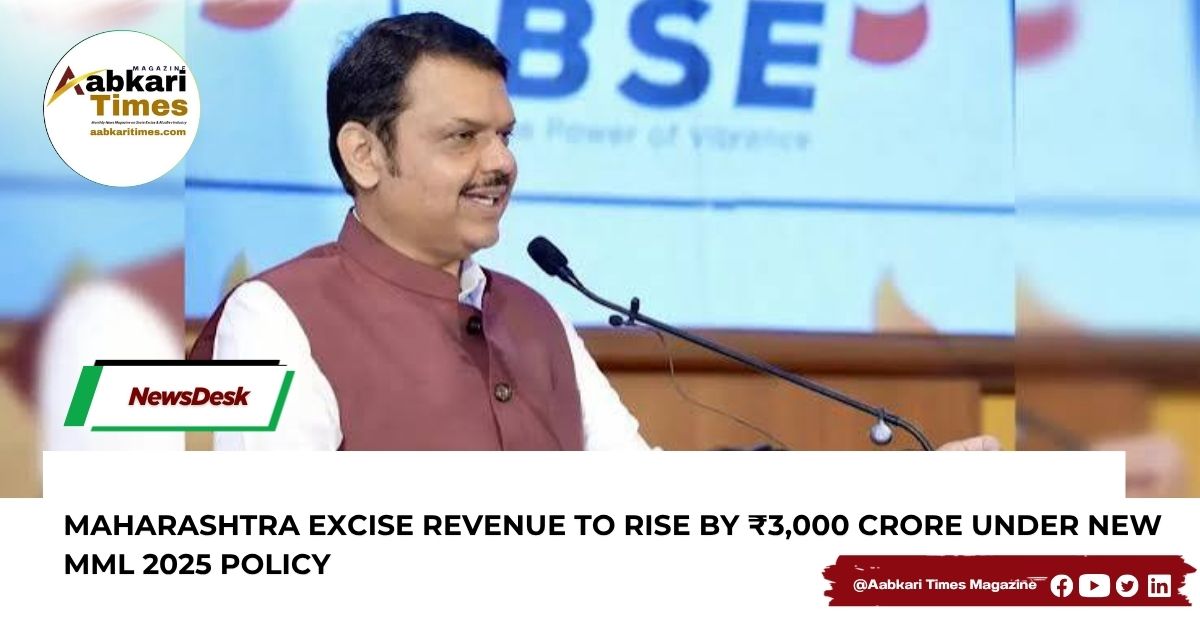
The Maharashtra government’s new excise policy, Maharashtra Made Liquor (MML) 2025, is expected to bring significant positive changes to the state’s liquor industry and revenue structure.
Under the new policy, 15 new licensed units have already started production, whereas earlier many of them were operating at nearly zero capacity. With production now increasing, output has crossed 3 crore litres, providing a strong boost to the industry.
State excise revenue has already shown strong growth, with an increase of around ₹1,600 crore in the first five months of the current fiscal year.
 Odisha Collects ₹24,455 Crore in Excise Duty Over Five Years, CAG Report Reveals
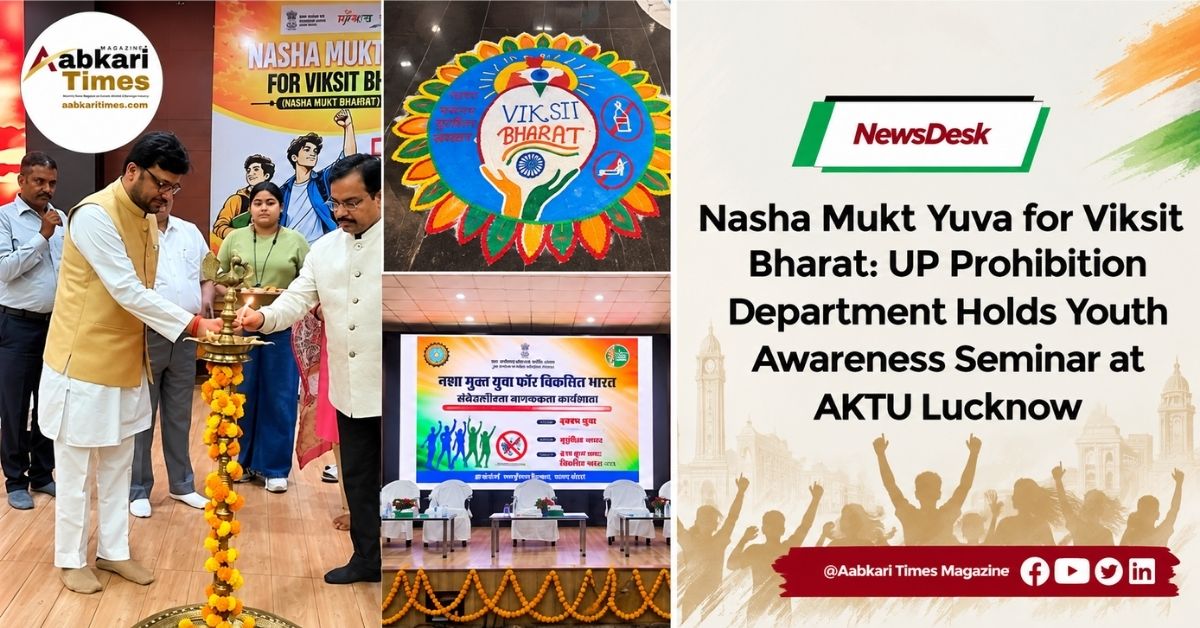
 Nasha Mukt Yuva for Viksit Bharat UP Prohibition Department Holds Youth Awareness Seminar at AKTU Lucknow
Officials estimate that due to this policy, Maharashtra could generate an additional ₹3,000 crore annually in excise revenue, strengthening the state’s financial position while also improving regulated production and supply in the liquor sector.
Relief to Grain-Based Distilleries in Maharashtra as MML Policy Revives 40 Units
Several grain-based liquor manufacturing units in Maharashtra, which were earlier operating below capacity or had been shut due to technical and policy constraints, are now witnessing revival. Nearly 40 distillery units have regained operational capacity following the implementation of the Maharashtra Made Liquor (MML) policy.
The introduction of the new category under MML has given these units an opportunity to restart production and become active again in the state’s liquor manufacturing ecosystem. This policy shift has helped unlock stalled capacities and bring dormant units back into operation.
The positive impact of the policy is particularly visible in districts such as Sambhajinagar, Nagpur, Pune, Palghar, Raigad, Sangli, and Solapur, where industrial activity in the liquor sector has significantly improved.
Major companies including Greenoat Industries Limited, Konkan Agro Marine Industries, Radiwco Khaitan Distilleries Maharashtra Limited, and other licensed units have resumed or expanded production under the revised framework.
As a result, total output from these revived units has crossed 3 crore litres, indicating a strong recovery in the sector. Maharashtra’s excise revenue has also shown steady growth, supported by increased licensing and higher production volumes.
Top of Form
Bottom of Form
Chhattisgarh Excise Department Releases New Allocation Guidelines for MDM Shops
The Chhattisgarh Excise Department has issued new guidelines for the allocation of Madira Dukan (country liquor shops) for the financial year 2026–27.
Under the revised system, the entire allotment process will now be conducted through an online and transparent mechanism, aimed at improving efficiency and reducing manual intervention. Officials said the new system will make the process more structured and accountable.
According to the department, interested applicants will be able to submit online applications from May 20, 2026 to March 15, 2027. Applications can be submitted at any time during this period, including 24×7 online submission.
After successful
“First Come–First Serve” Rule for Liquor Shop Allotment
The allotment of applicants will now be done on a “First Come–First Serve” basis, meaning applicants who apply earlier will be given preference in allocation.
For this, an online bidding system has been introduced to ensure transparency in the process.
A non-refundable processing fee of ₹5,000 has been fixed for each applicant.
In addition, applicants will have to deposit 5% of their bid amount as earnest money (security deposit). This amount will be adjusted against the license fee after selection.
The application window will remain open from 1 June 2026 to 31 March 2027, and will be treated as a standard operational period under the new system.
Liquor to Be Sold in Plastic Bottles from June
Excise Minister Lakhan Devangan informed reporters on April 28 that liquor will be sold in plastic bottles across the state after May 31.
The Excise Department had originally decided to introduce the sale of liquor in plastic bottles from April 1. However, the move faced opposition from traders dealing in glass bottles, leading to a delay in implementation.
Despite the resistance, the government remained firm on its decision. As a result, beginning June 1, liquor will be available in plastic bottles at all liquor retail outlets across the state.
The government believes the transition will help streamline packaging and distribution while supporting the implementation of its revised excise policy.
About the Author