

Brewer Adds Four Independent Directors, Converts into Public Limited Company Ahead of Potential Stock Market Listing
Carlsberg India has taken significant steps toward strengthening its corporate governance framework as it prepares for a potential initial public offering (IPO). The company has appointed four experienced professionals to its board and converted its legal status into a public limited company, signaling progress in its listing ambitions.
The Indian arm of Danish brewing giant Carlsberg, known for brands such as Carlsberg and Tuborg, has inducted industry veterans from consumer goods, public policy, and human resources backgrounds to its board. The newly appointed directors include former PepsiCo and Vodafone executive Samaresh Parida, former Union Health Secretary C.K. Mishra, former L’Oréal India Chairman and Managing Director Amit Jain, and Gurveen Singh, Chief Human Resources Officer at Reckitt.
 Amrut Distilleries’ Sales Growth to Remain Under Pressure Until 2030 Amid Limited Whisky Supply and Cheaper Scotch Imports
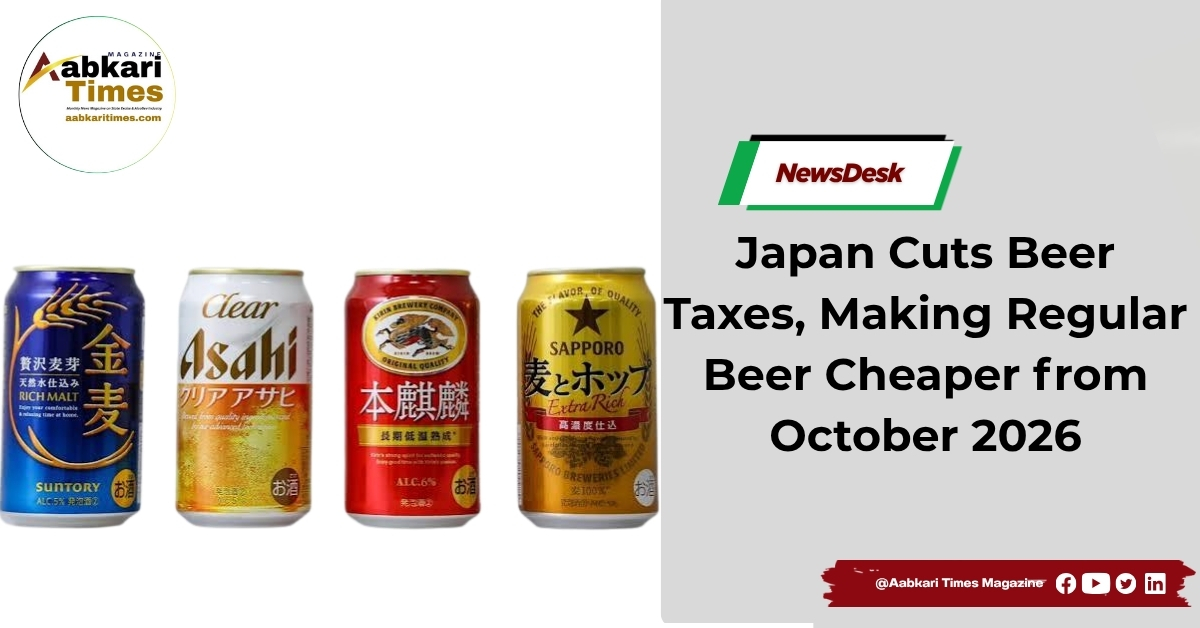
 Japan Cuts Beer Taxes, Making Regular Beer Cheaper from October 2026
The appointments are aimed at enhancing governance standards and bringing diverse expertise to the company’s leadership structure as it moves closer to becoming a publicly listed entity.
Industry experts note that strengthening the board is a critical milestone in the IPO process. Publicly listed companies are required to maintain a balanced board structure with adequate independent oversight to ensure transparency and protect investor interests.
According to Vimal Taparia, Partner at Morphis Management Services, companies seeking public listings must adopt stronger governance practices compared to privately held firms. Regulatory requirements mandate a mix of executive and independent directors to enhance accountability and safeguard minority shareholders.
Strong Financial Performance Supports Listing Plans
Carlsberg India reported robust financial performance during FY2024-25, posting net sales of approximately ₹8,939 crore and a net profit of ₹443 crore.
While rival beer manufacturer United Breweries Ltd. remains substantially larger with annual revenues of around ₹19,400 crore, its net profit stood at a comparable ₹442 crore during the same period, highlighting Carlsberg India’s improving profitability.
Market analysts estimate that a potential IPO could value Carlsberg India between ₹30,000 crore and ₹35,000 crore, placing it among the most significant listings in India’s alcoholic beverages sector.
Lessons from Previous Industry Listings
The move to become a public limited company often involves operational and regulatory complexities. Industry observers point to the experience of B9 Beverages, the maker of Bira beer, which underwent a similar transition in 2024.
The company reportedly faced challenges related to re-registration of product labels and state-level approvals following its conversion into a public entity. The process disrupted product availability and led to substantial inventory write-offs, impacting profitability.
Carlsberg Confirms IPO Exploration
Earlier this year, Carlsberg Group CEO Jacob Aarup-Andersen publicly confirmed that the company is evaluating the possibility of listing its Indian operations.
Speaking during an investor call in February, Aarup-Andersen said the company intends to explore an IPO in India but emphasized that no final decision has been taken. He noted that Carlsberg is assessing whether a public listing would create sufficient long-term value for shareholders.
India Remains a Strategic Growth Market
India continues to be one of the world’s most attractive beer markets, supported by favorable demographics, rising disposable incomes, and increasing urbanization.
The country’s beer industry is currently led by United Breweries, which commands nearly half of the market. Global brewing major AB InBev and Carlsberg are among the other leading players competing for market share in the fast-growing sector.
As Carlsberg advances its IPO preparations, investors and industry stakeholders will closely monitor the brewer’s next steps in one of its most important growth markets globally.
About the Author