
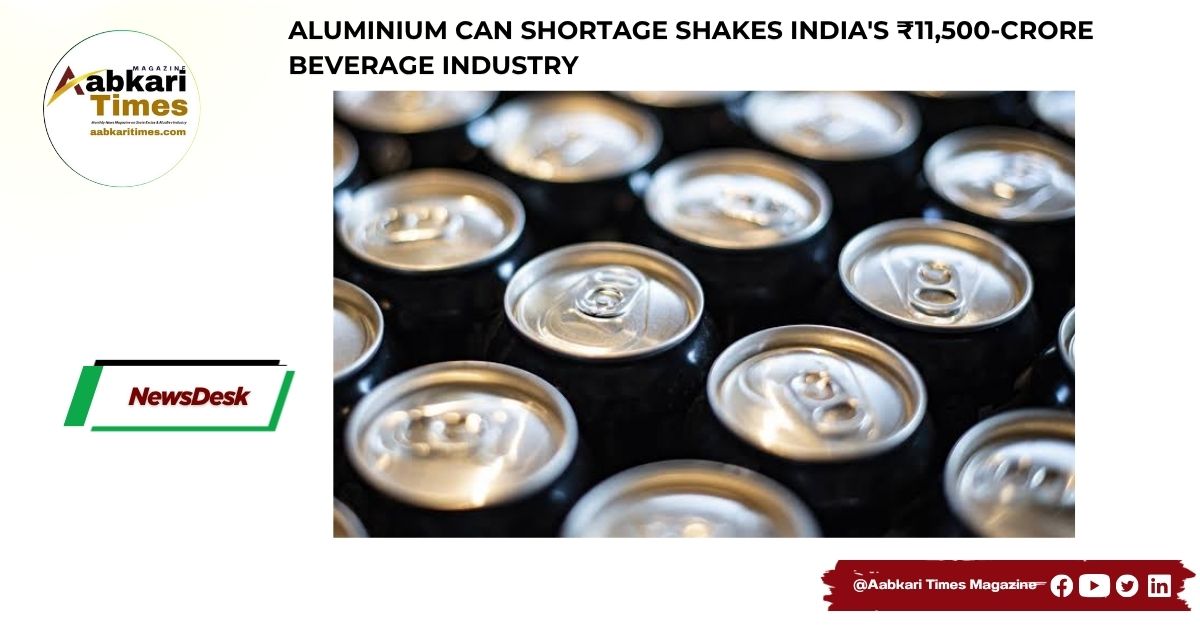
India’s beer and beverage industry is grappling with a severe packaging crisis due to a shortage of aluminium cans, raising concerns over disruptions in a market estimated at nearly ₹11,500 crore. Industry estimates suggest that a shortfall of 12–13 crore cans is affecting both production and supply chains across the country.
Global Aluminium Price Surge Behind the Crisis
The primary reason for the shortage is the sharp increase in global aluminium prices. International aluminium prices have reportedly risen to nearly $3,600 per tonne, significantly increasing procurement costs for manufacturers. Since India relies heavily on imported aluminium for can production, the rise in global prices has had a direct impact on domestic packaging costs.
Major can suppliers such as Ball Corporation and CANPACK are currently able to meet only around 10–20 percent of the industry’s requirements, further intensifying supply constraints.
 Monkey Shoulder Kicks Off 9th Ultimate Bartender Championship in India with New Delhi Round
 Tasmac to Invite Fresh Tenders for Bar Licences as Existing Permits Expire October 31
Sharp Rise in Bottle and Can Costs
The shortage has led to a significant increase in packaging costs. Empty beer bottles now cost around ₹12–15 per unit, while the cost of aluminium cans has climbed to ₹8–9 per unit. Bottle manufacturers have reportedly increased prices by nearly 20 percent.
Meanwhile, aluminium can producers are also facing higher import and logistics expenses, forcing them to pass on the additional costs to beverage companies.
Impact Begins to Show in the Market
The effects of the packaging crisis are now becoming visible in the marketplace. Bars, retail outlets, and quick-commerce platforms are witnessing reduced availability of several popular beverage brands.
Cities such as Mumbai, Bengaluru, and Pune have already reported shortages of canned beer, creating concerns among distributors and retailers ahead of peak demand periods.
Multiple Factors Worsening the Situation
Industry experts believe that rising raw material costs, import-related bottlenecks, and regulatory challenges have collectively contributed to the current crisis. Demand for cans of different sizes has also increased, putting additional pressure on available manufacturing capacity.
Due to limited resources, manufacturers are reportedly prioritizing 500 ml cans, affecting the supply of smaller-sized soft drink and beverage cans.
Beer Industry Faces the Biggest Risk
The beer segment is expected to be the worst affected, as nearly 60–70 percent of India’s approximately ₹51,000-crore beer market depends on aluminium cans for packaging.
Leading brands such as Kingfisher, Budweiser, and Tuborg could face supply challenges in the coming months if the shortage persists.
Industry Calls for Immediate Action
Industry stakeholders are urging policymakers and suppliers to address supply chain bottlenecks and improve access to raw materials. Without timely intervention, the shortage could affect product availability, increase prices for consumers, and put additional pressure on India’s rapidly growing beverage sector.
The ongoing aluminium can crisis highlights the vulnerability of the packaging supply chain and underscores the need for greater domestic manufacturing capacity and more resilient sourcing strategies for the beverage industry.
Rising Costs Deepen Pressure on India’s Beverage Industry
To manage the ongoing aluminium can shortage, beverage companies have increasingly started importing cans from countries such as China, Vietnam, and South Korea. However, these imports have further increased production costs due to higher transportation and procurement expenses.
At the same time, the cost of glass bottles has also risen by nearly 20 percent. Glass packaging presents additional challenges, including higher risks of breakage during transportation and handling. While PET bottles are being used as an alternative in some segments, they are not considered a suitable replacement for aluminium cans in the premium beverage category, where consumer preferences and brand positioning remain closely linked to can packaging.
Summer 2026 Could Be a Major Challenge
Industry experts estimate that the packaging crisis could affect beverage sales worth nearly ₹6,250 crore, while around ₹5,300 crore in industry margins may come under pressure. The beer sector is expected to bear the biggest burden of the crisis.
According to industry projections, beer companies could witness a decline of nearly ₹1,500 crore in profits, with operating margins likely to shrink by 2.5–3 percentage points. The situation has become more challenging because state governments regulate liquor pricing in many markets, limiting the ability of manufacturers to fully pass on higher packaging and raw material costs to consumers.
Profitability Under Pressure
As costs continue to rise and supply shortages persist, beverage manufacturers are being forced to absorb a significant portion of the increased expenses. This is placing considerable pressure on profitability, especially for companies operating in highly competitive segments such as beer and ready-to-drink beverages.
Industry leaders believe that Summer 2026 could prove to be one of the most challenging periods for the sector in recent years. Unless aluminium supply conditions improve and packaging costs stabilize, companies may continue to face disruptions in production, distribution, and profitability.
Recovery May Take Time
Experts caution that the industry may require up to one year for conditions to return to normal. Restoring supply chains, securing adequate packaging material, and stabilizing global aluminium prices will be crucial for ensuring uninterrupted availability of beverages across the country.
The ongoing aluminium can shortage has emerged as a significant test for India’s beverage industry, highlighting the need for stronger domestic packaging capacity, diversified sourcing strategies, and greater supply-chain resilience to withstand future disruptions.
Summer Demand Surge Raises Concerns for India’s Beer Industry
As temperatures rise across North India, demand for beer traditionally witnesses a sharp increase. However, this year the industry is facing a double challenge: a shortage of packaging materials and escalating input costs.
The beverage sector is already grappling with a severe shortage of aluminium cans, while inflationary pressures are pushing up the cost of alternative packaging solutions. Industry players fear that these challenges could affect product availability during the peak summer season, when beer consumption is at its highest.
Global Supply Disruptions Impact Glass Bottle Production
In addition to the aluminium can shortage, glass bottle manufacturers are also facing rising costs. Ongoing geopolitical conflicts and global supply-chain disruptions have increased the price of industrial gas used in glass manufacturing, making bottle production more expensive.
As a result, breweries are experiencing higher packaging costs at a time when demand is accelerating, creating additional pressure on margins and supply chains.
Glass Bottles Remain Critical for the Industry
According to Brewers Association of India Director General Vinod Giri, nearly 80 percent of beer sold in India is packaged in glass bottles. Furthermore, bottles account for approximately 40–45 percent of total packaging costs, making them one of the most significant cost components for brewers.
Given the industry’s heavy dependence on glass packaging, any increase in bottle prices has a direct impact on production economics and profitability.
Industry Faces a Difficult Summer
With beer demand expected to peak during the summer months, the simultaneous rise in packaging costs and shortage of key materials has become a major concern for manufacturers. Companies are being forced to manage higher expenses while ensuring uninterrupted supplies to retailers and consumers.
Industry stakeholders warn that unless supply-chain conditions improve and packaging availability stabilizes, the coming summer season could prove particularly challenging for India’s beer and beverage sector, affecting both sales growth and profit margins.
About the Author