
Gwalior, May 15, 2026: Madhya Pradesh, one of India’s fastest-growing beer markets is presently witnessing an emerging supply crisis during the peak summer season. Industry data and market trends indicate that the State may face a significant shortage of beer availability over the coming months, potentially impacting retail operations, consumer demand and excise revenue collections.
As per data available on the Madhya Pradesh Excise Department portal, total beer production in the State during FY 2025–26 stood at approximately 2,768 lakh bulk litres. During the same period, beer exports from Madhya Pradesh were recorded at nearly 475 lakh bulk litres, while imports into the State remained significantly lower at only around 81 lakh bulk litres.
Based on these figures, the estimated net beer consumption within Madhya Pradesh during FY 2025–26 is assessed at approximately 2,377 lakh bulk litres, highlighting the State’s growing dependence on local production capacities.
 Amrut Distilleries’ Sales Growth to Remain Under Pressure Until 2030 Amid Limited Whisky Supply and Cheaper Scotch Imports
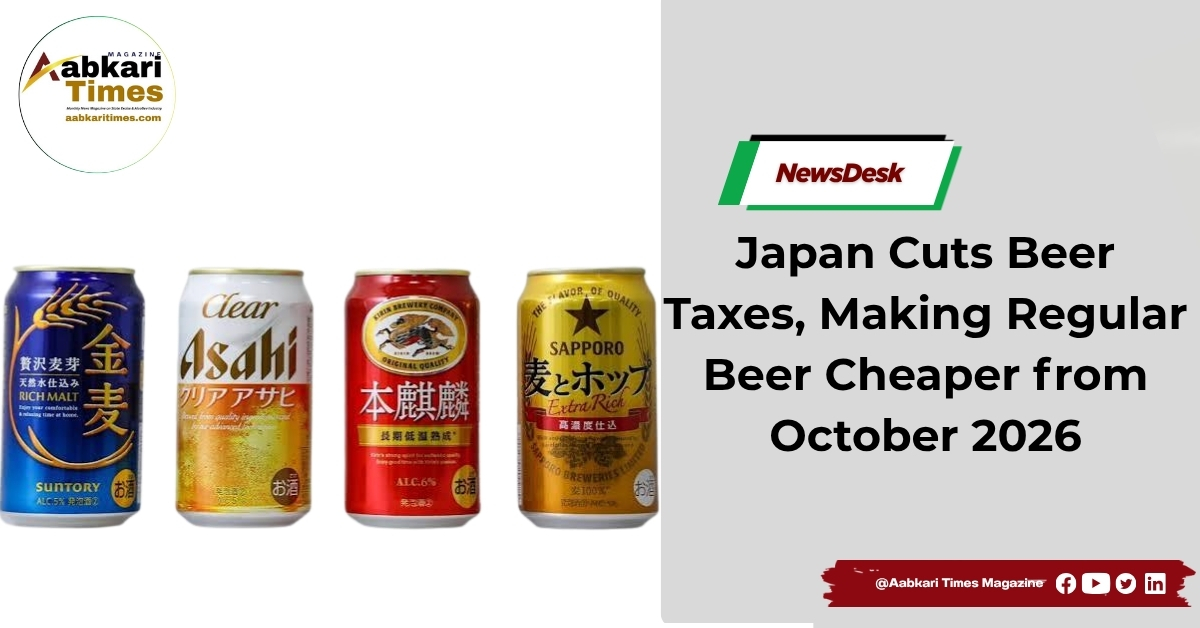
 Japan Cuts Beer Taxes, Making Regular Beer Cheaper from October 2026
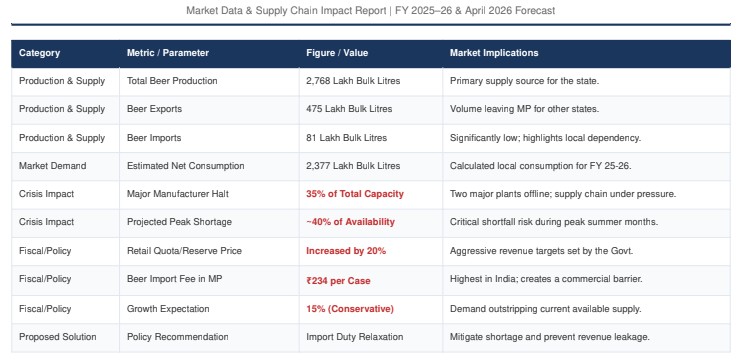 A critical aspect of the current situation is that nearly 35% of the State’s beer production capacity is contributed by two local & major manufacturers. Industry sources indicate that production of brands manufactured by both companies has reportedly been put on hold under prevailing circumstances and may remain impacted for a considerable period.
This development has created visible pressure on beer availability across multiple retail markets in Madhya Pradesh during April 2026. The situation becomes even more critical considering that the State Government, under the current Excise Policy, increased retail quota/reserve prices by nearly 20%, clearly indicating expectations of corresponding growth in beer consumption during the ongoing peak season.
However, despite higher projected demand, retailers in several districts, including Indore, Bhopal, Gwalior, and Jabalpur, are reportedly unable to meet even existing consumer requirements due to insufficient supplies.
Industry analysis based on historical consumption trends suggests that, even at a conservative annual growth estimate of around 15%, Madhya Pradesh may already be facing a supply shortfall of approximately 9–10 lakh cases during April 2026 alone.
The industry apprehends that if the situation persists during the peak summer months, the State could witness a shortage equivalent to nearly 40% of normal beer availability, potentially encouraging inter-state infiltration and unaccounted movement of beer, ultimately resulting in revenue leakage.
Imports May Offer Immediate Relief
Industry stakeholders believe that the immediate demand gap can be substantially mitigated through temporary imports from neighbouring States. Several national beer manufacturers are understood to be willing to support Madhya Pradesh markets over the next few months by supplying additional stocks.
However, a major challenge remains the exceptionally high import fee structure currently applicable in Madhya Pradesh. At approximately Rs. 234 per case, the beer import fee in MP is reportedly among the highest in the country, rendering interstate supplies commercially unviable for most manufacturers.
The rationale is straightforward: even if the State temporarily foregoes a portion of import fee collections, the increased movement of beer through licensed channels would substantially enhance realization through excise duty, transport fee, retail levies, and associated taxes.
Additionally, improved product availability during the peak season would help retailers achieve quota obligations, stabilize the supply chain, and reduce the possibility of illicit market activities.
A Critical Policy Window
The present circumstances highlight the importance of responsive policy intervention during periods of market disruption. Madhya Pradesh has emerged as a major beer-consuming State with strong growth potential, and maintaining uninterrupted supply during peak demand months is critical for both industry stability and State revenue protection.
A calibrated import-duty relaxation may therefore provide a practical solution until local manufacturing capacities normalize. Industry observers believe that timely intervention by the Madhya Pradesh Government could help avoid prolonged shortages, protect consumer markets and safeguard excise revenues during one of the most commercially significant quarters of the year.
About the Author