
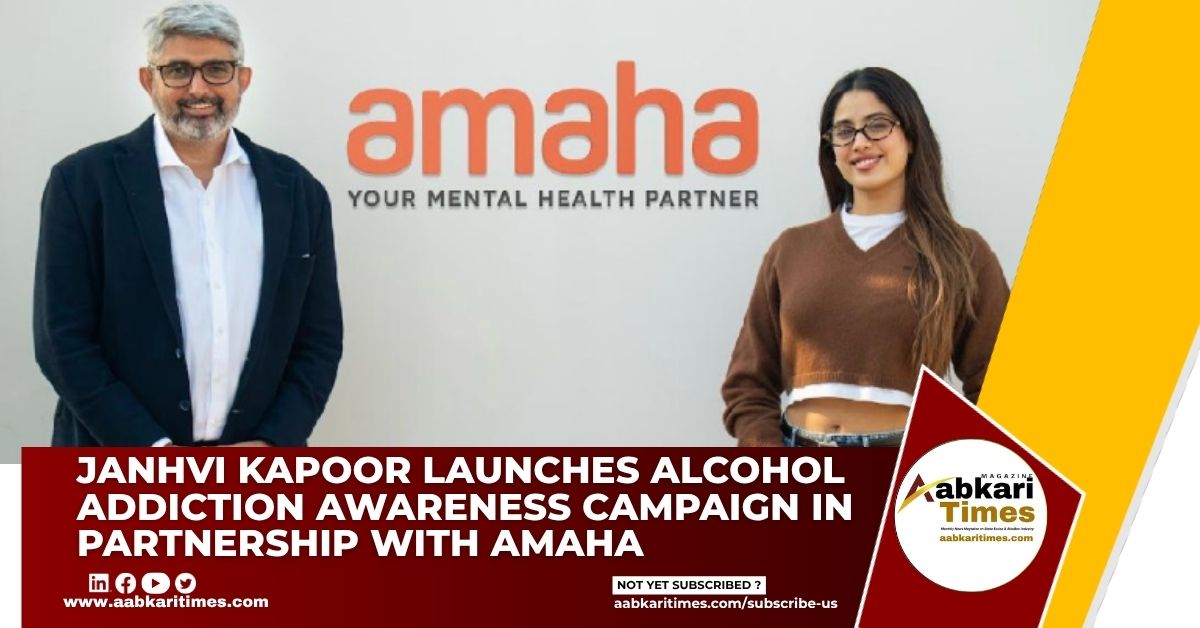
In a significant shift from the way alcohol consumption is typically portrayed in India, Janhvi Kapoor has joined hands with Amaha to launch ‘Off the Rocks’, an awareness initiative that reframes alcohol addiction as a clinical condition rather than a social stigma.
At a time when India’s alco-beverage industry is expanding rapidly, driven by premiumisation and evolving consumer preferences, the campaign introduces a parallel and necessary conversation—when does a casual social drink turn into emotional dependence.
 The idea took shape after Kapoor spoke candidly about her own experience on the Figuring Out podcast in May 2026. While clarifying that she has not struggled with addiction, she shared that she had gone through a phase of frequent drinking following a deeply difficult personal period, describing an urge to “just get drunk” as a coping mechanism. Her remarks brought attention to a reality often overlooked—the fine line between social drinking and emotional reliance.
 Tamil Nadu Introduces New Liquor Cess; TASMAC Price Revision Under Discussion
 Scotch Whisky Association Appeals Against England’s New Single Malt Whisky Rules
She emphasised that conversations around alcohol in India tend to swing between silence and judgment, leaving little room for understanding or support. By lending her voice to ‘Off the Rocks’, Kapoor aims to shift this narrative towards awareness, acceptance, and access to care.
To ensure clinical credibility, the initiative is backed by Amaha, a full-spectrum mental health organisation known for its evidence-based approach. With a network of over 200 mental health professionals and a global reach of more than 60 lakh individuals, Amaha provides structured support for those dealing with alcohol dependency through psychiatric care, therapy, and long-term recovery programmes.
 According to Dr. Amit Malik, addiction remains one of the most under-recognised yet widely prevalent mental health conditions. He notes that alcohol dependency sits at the intersection of neuroscience, psychology, and lived experience, and continues to be heavily stigmatised despite being clinically diagnosable and treatable.
Medical experts associated with the campaign highlight that the transition from social to dependent drinking is often gradual and difficult to detect. The shift typically occurs when alcohol moves from being a choice associated with social settings to a psychological need linked to stress, grief, or emotional triggers. Over time, neurological changes reinforce this dependency, altering how the brain processes reward and stress.
This is precisely the gap ‘Off the Rocks’ seeks to address. The initiative is designed as an ongoing, multi-platform effort that will include expert-led discussions, personal narratives, and clinically verified content aimed at helping individuals recognise early signs of Alcohol Use Disorder and seek timely support.
For stakeholders in India’s alco-beverage sector, the campaign serves as an important signal. As consumption patterns evolve, so too must the industry’s approach to responsibility. The focus is gradually shifting from basic disclaimers to more meaningful engagement with consumer well-being.
Rather than positioning itself against the industry, ‘Off the Rocks’ opens the door for a more balanced and sustainable conversation—one that acknowledges both responsible enjoyment and the risks of dependency.
With nearly one in five alcohol users in India estimated to be affected by some form of addiction, the campaign underscores the urgency of addressing the issue not as a matter of personal failure, but as a public health concern.
As awareness grows, initiatives like this could play a key role in shaping a more informed ecosystem—where seeking help is normalised, and conversations around alcohol are guided by understanding rather than stigma.
About the Author