

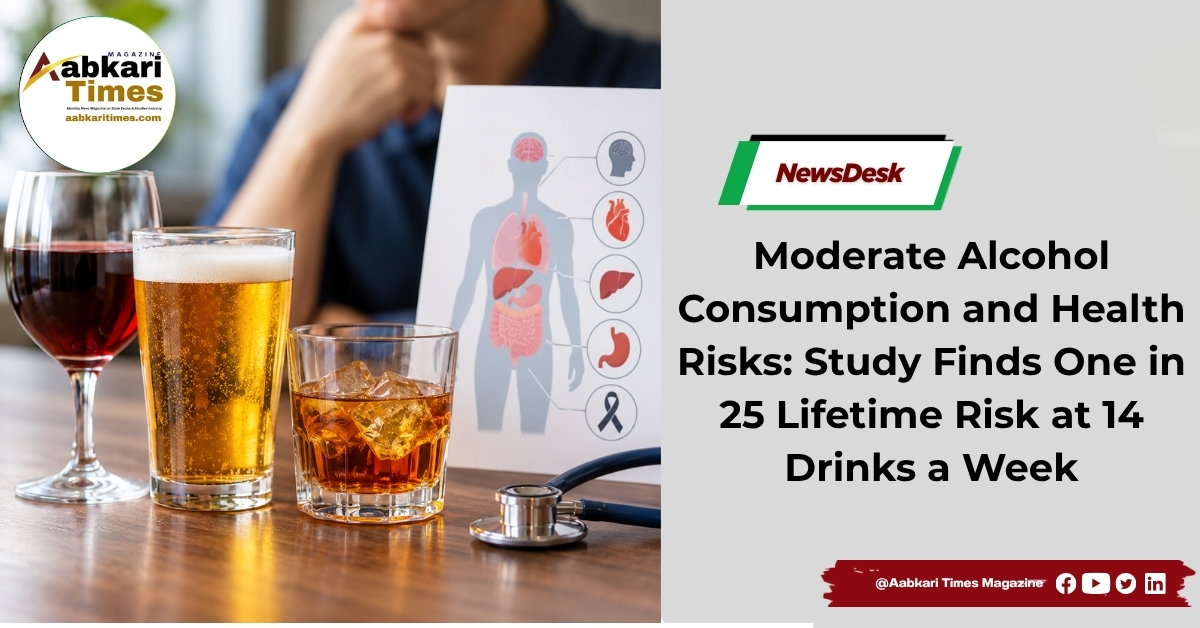
A recent analysis of alcohol consumption and long-term health risks has renewed debate over what constitutes moderate drinking and how it affects overall health. The research, associated with the Journal of Studies on Alcohol and Drugs, estimates that people consuming approximately 14 alcoholic drinks per week face a lifetime risk of around one in 25 of dying from alcohol-attributable causes. The findings highlight the importance of understanding alcohol-related risks rather than assuming that moderate consumption is harmless.
The analysis examined available health data and risk estimates to assess how different levels of alcohol consumption influence the likelihood of premature death and alcohol-related health complications. Its findings suggest that the level of risk varies with the quantity consumed, with the potential for harm increasing as weekly alcohol intake rises. People consuming around seven drinks per week were associated with substantially lower risks than those consuming 14 drinks, although lower consumption does not eliminate alcohol-related health risks.

The findings also challenge the widespread perception that drinking in moderation necessarily offers health benefits. Earlier observational studies sometimes suggested that light drinkers experienced better cardiovascular outcomes than people who abstained from alcohol. However, researchers have highlighted limitations in such comparisons, including differences in underlying health, lifestyle and the characteristics of people included in non-drinking groups.
The distinction between relative and absolute risk is also important when interpreting the results. A one-in-25 lifetime risk represents an estimated four per cent probability of an alcohol-attributable death under the study’s assumptions; it does not mean that every person consuming 14 drinks weekly will experience the same outcome. Individual risks can vary according to drinking patterns, age, sex, health status and other factors.
 Diageo Expands Whisky Strategy Beyond Premiumisation, Targets Value and Social Drinking Segments
 Monkey Shoulder Targets a New Generation of Whisky Drinkers with Global Brand Relaunch
Public health experts continue to emphasise that alcohol consumption is associated with several health risks, including certain cancers, liver disease and cardiovascular complications. The risks depend on both the quantity consumed and the pattern of drinking, while heavy episodic consumption can create additional immediate dangers.
The findings reinforce the need for clear, evidence-based public health communication about alcohol. Rather than describing moderate drinking as safe, the research supports a more cautious interpretation: lower consumption generally means lower risk. People who do not drink are not advised to start drinking for potential health benefits, while those who consume alcohol should understand the risks and follow applicable health guidance.
About the Author