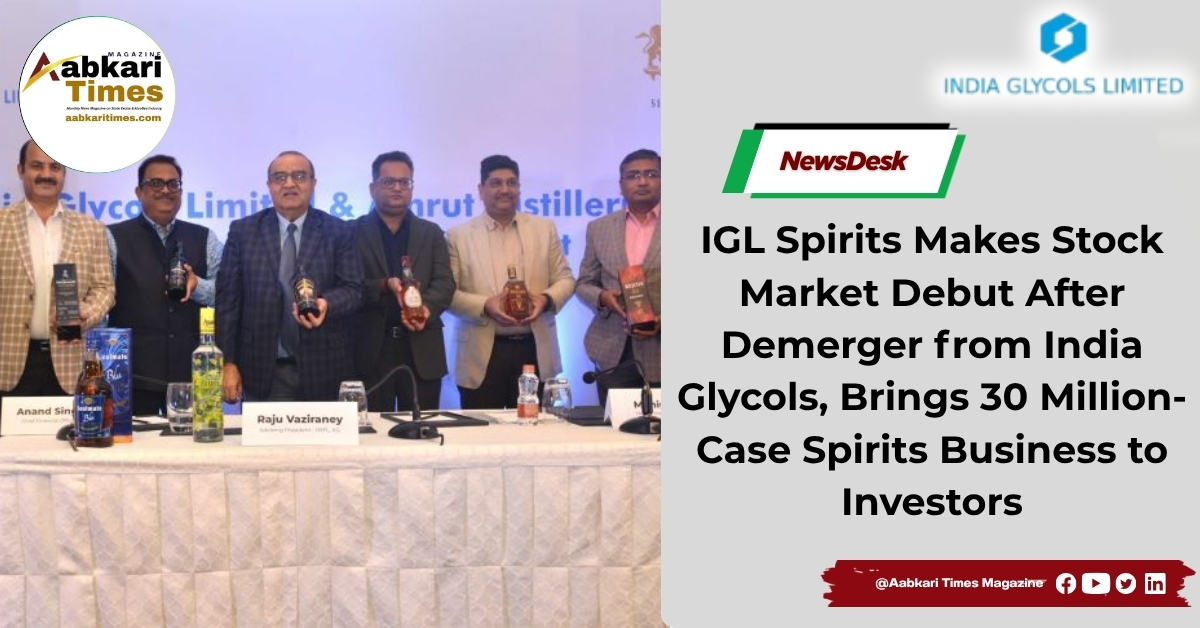

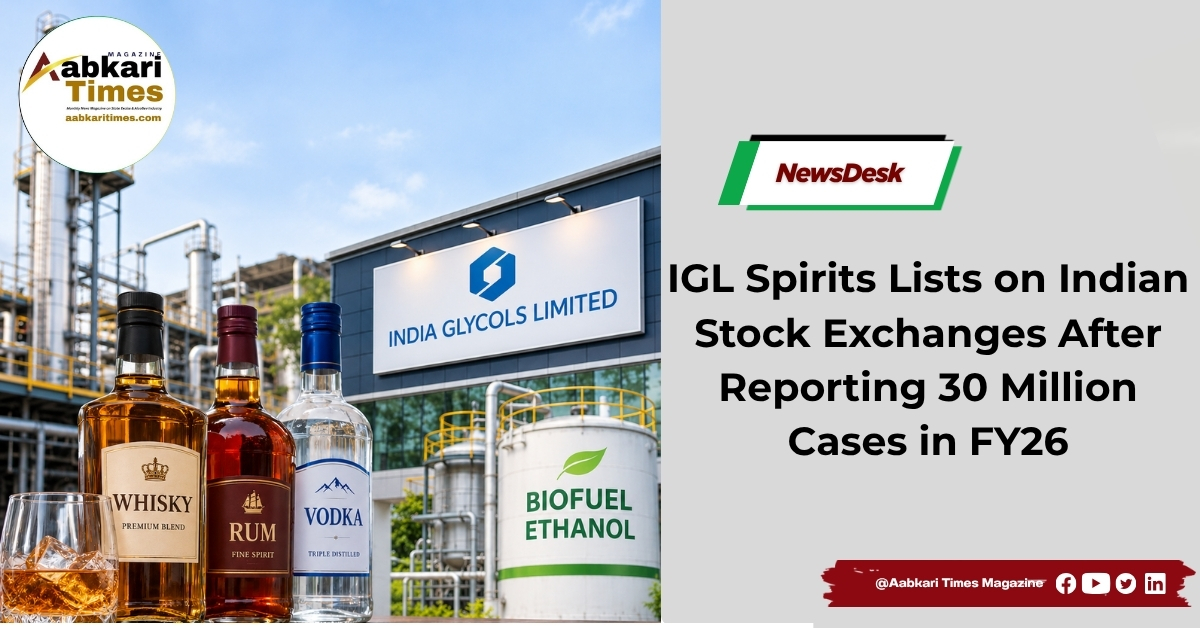
IGL Spirits, the demerged spirits and biofuels business of India Glycols, began trading on the BSE and National Stock Exchange on November 4, 2026, bringing greater visibility to one of India’s major mass-market alcoholic beverage businesses. The company reported potable spirits sales of approximately 30 million cases in FY26, placing it among the country’s five largest spirits companies by volume, according to its own estimates.
Despite its substantial beverage alcohol business, IGL Spirits generates a larger share of its revenue from biofuels. For FY26, the company’s spirits business recorded net revenue of ₹1,331 crore, while its biofuels division generated ₹1,470 crore. Together, the two businesses reported combined revenue of ₹2,801 crore. The company also reported EBITDA of ₹492 crore and profit after tax of ₹244 crore, compared with ₹224 crore and ₹88 crore, respectively, in FY24.
IGL Spirits’ portfolio covers whisky, rum, vodka and branded non-IMFL products. However, the company has not disclosed a category-wise breakdown of its 30 million cases, making it difficult to establish the exact contribution of whisky to overall sales. It claims a leading position in the branded non-IMFL segment in Uttar Pradesh and Uttarakhand, two important markets for its operations.
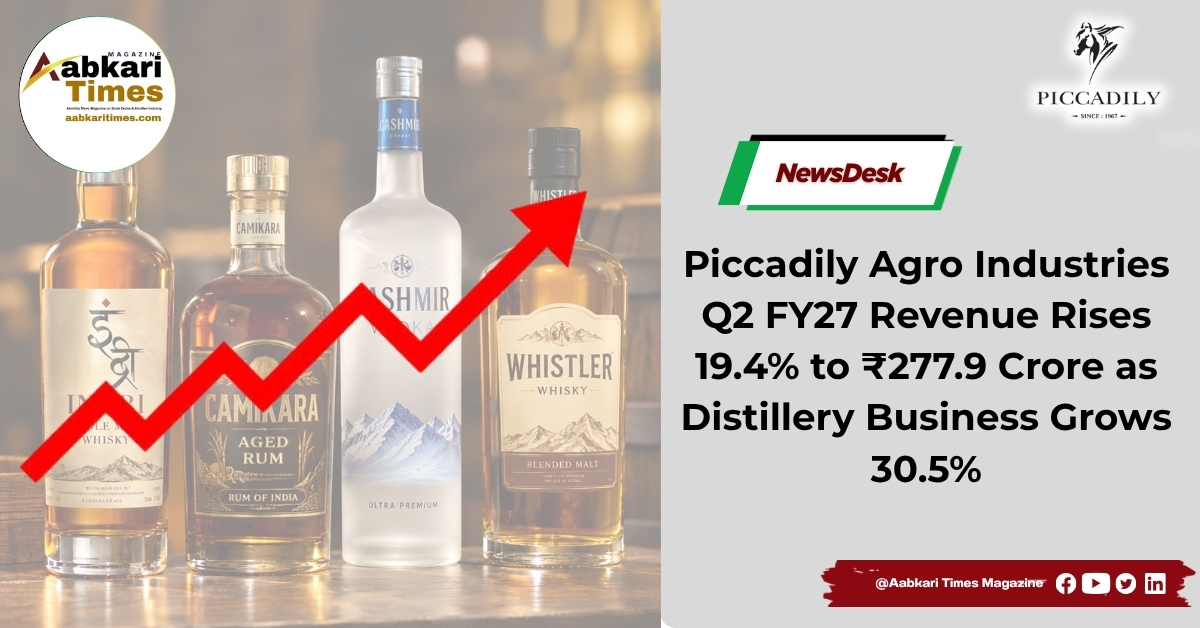
 Piccadily Agro Industries Q2 FY27 Revenue Rises 19.4% to ₹277.9 Crore as Distillery Business Grows 30.5%
 IGL Spirits Makes Stock Market Debut After Demerger from India Glycols, Brings 30 Million-Case Spirits Business to Investors
The company operates manufacturing facilities in Kashipur, Uttarakhand, and Gorakhpur, Uttar Pradesh. These facilities have an annual capacity of 379 million litres of ethyl alcohol and 136 million litres of potable alcohol. IGL Spirits also has a longstanding manufacturing relationship with Bacardi and supplies approved brands to the military’s Canteen Stores Department.
Its business portfolio includes arrangements involving Amrut brands such as MaQintosh whisky, Old Port rum and Bejois XO brandy for selected North Indian markets. These arrangements reflect the company’s focus on manufacturing, licensing and distribution across mass-market spirits categories.
The stock market listing marks an important development for India’s alcoholic beverages industry, separating the spirits business from its former parent structure. Future financial disclosures may provide greater clarity on category-wise sales, profitability and the contribution of individual brands. IGL Spirits’ debut highlights the scale of India’s mass-market liquor trade, where high-volume domestic spirits and fuel ethanol both play significant roles in business growth.
About the Author