
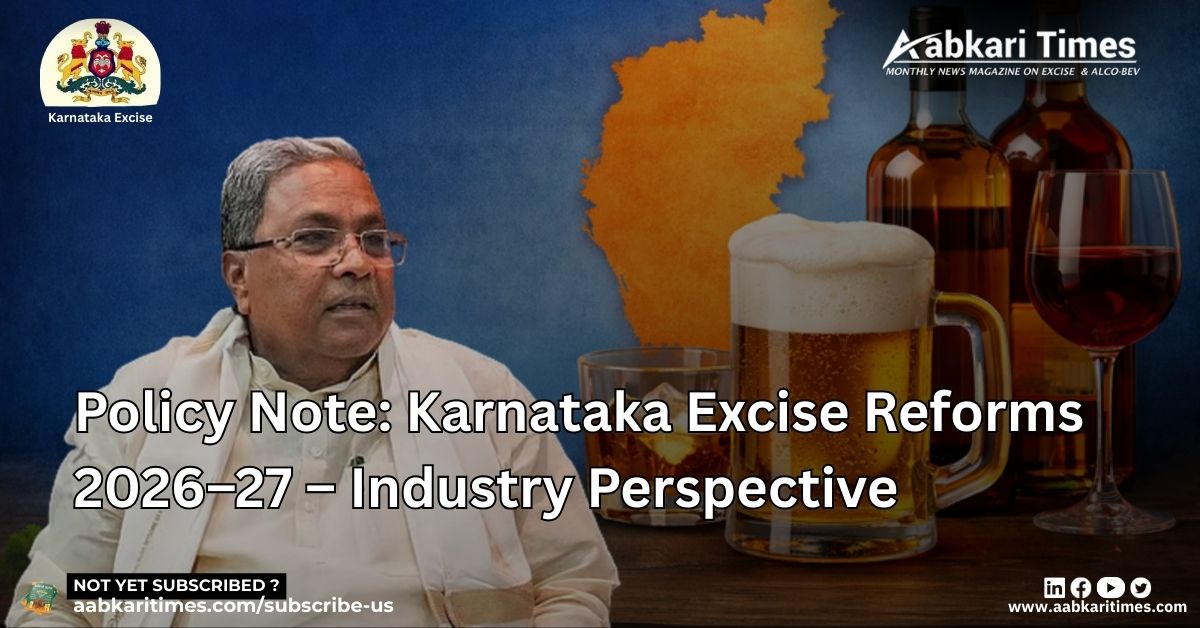
The Karnataka Government has announced a set of structural excise reforms including the introduction of an Alcohol-in-Beverage (AIB) based taxation system, deregulation of government-administered pricing and rationalisation of pricing slabs. These reforms aim to modernise the state’s alcohol regulatory framework, balance economic gains with social implications, enhance transparency and improve ease of doing business in the sector.
Key Reform Elements
1.Alcohol Content–Based Taxation (AIB)
Excise duty will increasingly be linked to the actual alcohol content in beverages, aligning Karnataka with globally recognised taxation principles of taxation based on “Risk/ Litre”
2.Deregulation of Price Fixation
The government will move away from fixing retail prices, allowing producers to determine product positioning within price slabs based on market considerations, thus enabling a free market environment
3.Rationalisation of Pricing Slabs for IMFL
IMFL Pricing slabs will be reduced from 16 to 8, simplifying the tax structure and reducing complexity in product classification.
4.Gradual Implementation
The transition to the new alcohol-content-based taxation framework will be implemented in stages over the next three to four years to ensure market stability.
Industry Implications
* The AIB model supports scientific and equitable taxation, as beverages with lower alcohol content bear proportionately lower tax.
* The reforms could encourage growth in lower alcohol beverages, including beer, Ready-to-drink Beverages, Low Alcoholic Beverages.
* Pricing deregulation is expected to promote innovation, premiumisation, and market-driven competition and in the process attract investments into the State
* Simplified slabs will reduce administrative complexity and facilitate faster product launches and more choices for consumers.
Policy Considerations
1.Ensure that AIB taxation is implemented in a balanced manner that protects both revenue stability and category growth.
2.Encourage a taxation structure that recognises beer as a moderate alcohol beverage.
3.Maintain predictability and transparency in tax calculations to support long-term investment.
4.Facilitate consultation with industry stakeholders during the transition phase.
Conclusion
The proposed Karnataka excise reforms represent a significant shift toward a modern, transparent and globally aligned alcohol regulatory framework of taxing alcoholic beverages on “risk/unit of alcohol”. If implemented effectively, these measures could enhance ease of doing business, support category growth for Beer, and potentially serve as a model for excise policy reforms in other Indian states.
Read the Policy here (PDF)
[3d-flip-book id=”108548″ ][/3d-flip-book]
About the Author